North Korea's amended constitution has removed all references to reunification with South Korea and a shared Korean national identity, formally designating Seoul as a 'hostile state.' The changes, signaled by leader Kim Jong Un at a Supreme People's Assembly in March, mark a major policy shift for the two Koreas, which have technically remained at war since the 1953 armistice.
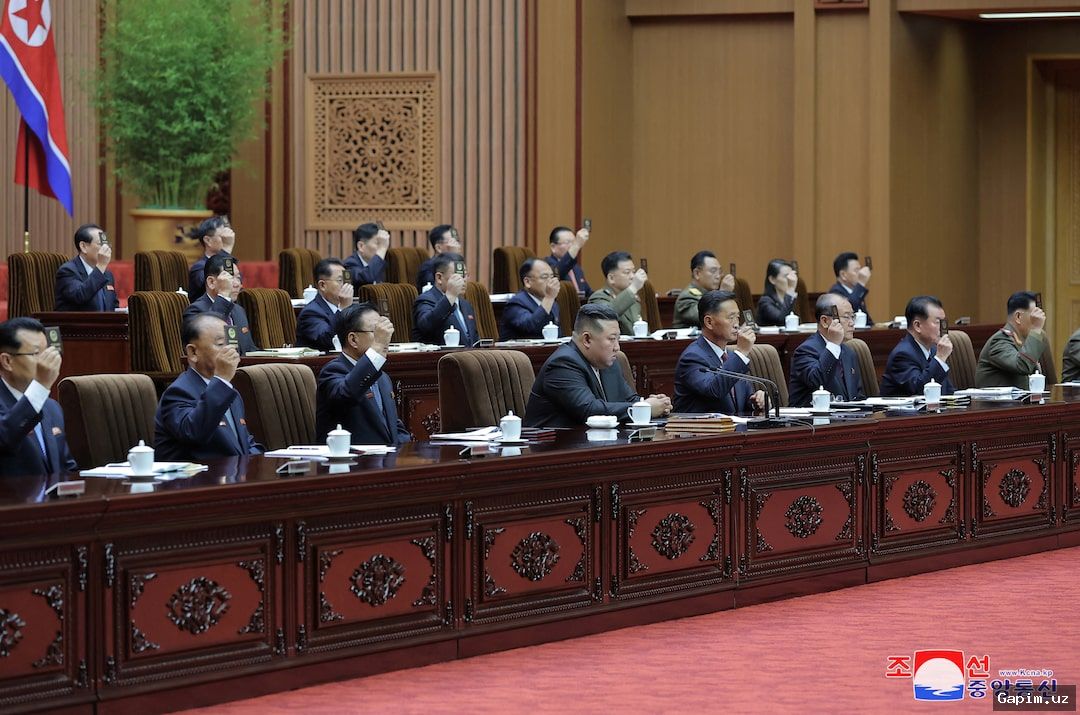
The new constitution, distributed by South Korea's Ministry of Unification on May 6, contains four key changes: a reduced territorial claim, removal of reunification language, strengthening of Kim's exclusive right to use nuclear weapons, and deletion of mentions of his predecessors' achievements.
Article 9 of the former constitution stated that North Korea would 'strengthen the people's government in the northern half' and 'strive to achieve national reunification.' References to the 'Three Principles of National Reunification' — independence, peaceful reunification, and national unity — have also been eliminated.
Experts view the changes as a formal adoption of the 'two hostile states' doctrine. Hong Min, a senior researcher at the Korea Institute for National Unification, said the removal of reunification language points to a shift toward a state-to-state relationship defined by hostility, territorial separation, and nuclear deterrence.
Cha Du Hyeon, vice president of the Asan Institute for Policy Studies, argued that the doctrine is not merely diplomatic but a structural choice tied to internal governance and power preservation. By portraying South Korea as an external enemy, Pyongyang seeks to contain dissent and reinforce regime security.
The new territorial clause could be seen as de facto acceptance of the Military Demarcation Line (MDL) as a border. However, ambiguity over the Northern Limit Line (NLL) in the Yellow Sea may allow Pyongyang to act more aggressively in future maritime disputes, experts warn.
Han Ki Bum, a former deputy director of South Korea's National Intelligence Service, said the constitutional amendment enshrines Kim's exclusive right to use nuclear weapons, codifying the two-hostile-states theory and consolidating his one-man dictatorship.
Source: www.dw.com