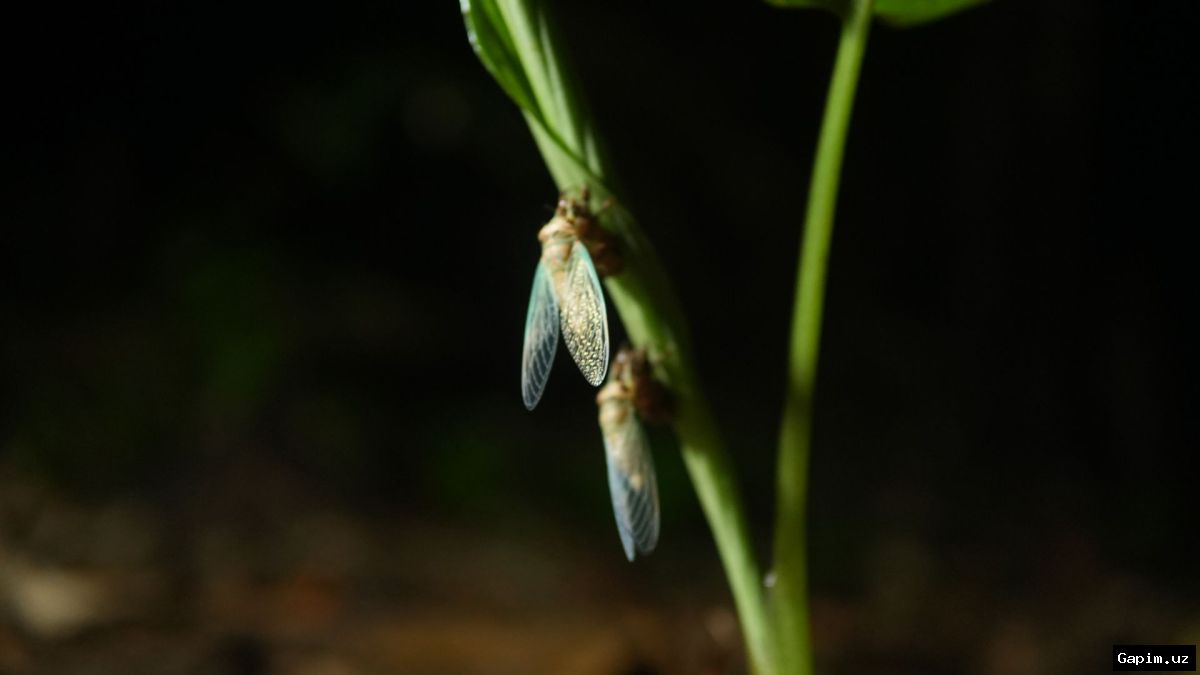
In the village of Saiden, nestled in the hills of Meghalaya in northeastern India, millions of niangtaser cicadas emerge from the ground every four years, coinciding with the FIFA World Cup. The phenomenon has become a cultural touchstone for the community.
Village chief Evansis Jones Myrthong, in his mid-forties, recalls his teenage years collecting cicadas before hurrying to the village school, the only place with a television, to watch World Cup matches late into the night. 'The school building would be packed,' he says. 'We would keep the niangtaser at home and go straight there to watch until two or three in the morning.'
The niangtaser, scientifically named Ribhoi Chremistica, is a periodical cicada found only in this small pocket of Meghalaya. It is the only known periodical cicada in the Indian subcontinent, with a rigid four-year life cycle.
Local folklore tells of a woman named Taser who, after suffering tragedy and being isolated for four years, disappeared, leaving behind millions of insects. Villagers believe Taser returns every four years, and the watery droplets falling from trees during emergence are called 'Taser's presence.'
Professor Sudhanya Ray Hajong, an entomologist at North Eastern Hill University, first encountered the cicada in 2006 and later described it as a new species. He explains that the nymphs track time through changes in soil moisture and temperature, emerging synchronously for survival.
The cicadas are collected and fried by locals. Wanley R Marak, a tea stall owner, sells fried niangtaser for 20 rupees (21 cents) per portion, describing the taste as similar to shrimp. Raw cicadas sell for 400-800 rupees ($4-$8) per kg.
Since 2010, the village has hosted the Niangtaser Festival, featuring football tournaments, fishing competitions, and live music. The event aims to preserve cultural heritage and raise awareness about protecting the cicada's fragile habitat.
Deforestation, forest fires, and shifting cultivation threaten the cicada's environment. The village council has set aside 16 hectares of community land as a protected zone, banning tree cutting and restricting collection during the breeding season. Violators face fines.
92-year-old Kewstar Majaw, who has witnessed many emergences, reflects on the cicadas as a measure of time. 'Every four years the World Cup comes and so does the niangtaser,' he says, echoing the sentiment of the village.
Source: www.aljazeera.com