Indian Prime Minister Narendra Modi and leaders of five Nordic countries — Norway, Sweden, Finland, Iceland and Denmark — met in Oslo for the third India-Nordic summit. The meeting aims to bolster strategic and trade ties.
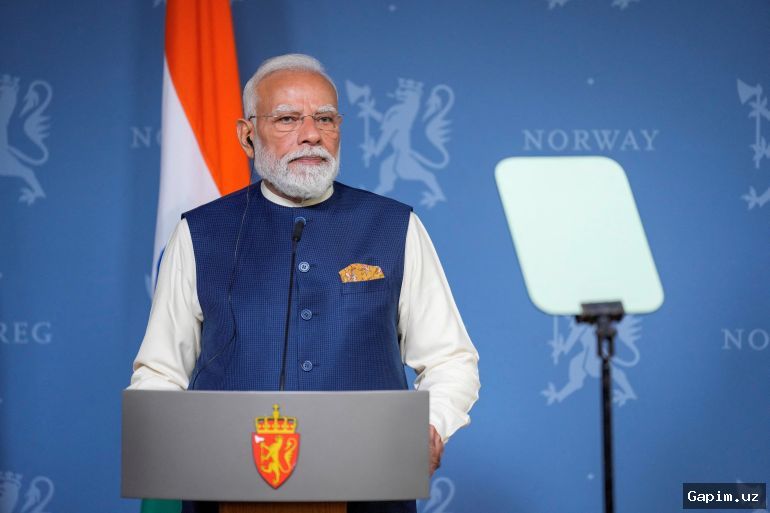
The summit comes months after India and the European Union signed a free trade agreement and a year after India signed a trade and economic partnership agreement with Iceland, Liechtenstein, Norway and Switzerland.
Russia's ongoing war on Ukraine, US President Donald Trump's tariffs on global imports and the US-Israel war on Iran have impacted India's economy and energy security, prompting New Delhi to widen relations with Western nations.
Key topics on the agenda include trade, climate change, energy security and geopolitical issues, particularly Russia's war on Ukraine and the economic impacts of the US-Israel war on Iran. According to India's Ministry of External Affairs, the summit will "impart a more strategic dimension to India's relationship with the Nordic countries, especially in technology and innovation, green transition and renewable energy, sustainability, blue economy, defence, space and the Arctic".
India's trade with Nordic nations stood at $19 billion in 2024. Companies like Finland's Nokia and Sweden's Volvo and IKEA have a significant presence in India. Indian shipyards are building vessels accounting for about 11 percent of the Norwegian Shipowners' Association's order book.
Shairee Malhotra, deputy director at the Observer Research Foundation, said India will look to capitalise on each Nordic country's unique capabilities: Iceland's geothermal energy, Norway's blue economy and shipping, and Sweden's industrial and defence innovation.
Garima Mohan, senior fellow at the German Marshall Fund, noted that the war on Iran and the Strait of Hormuz crisis will drive discussions on green technologies and innovation. "The war on Iran has created a major economic security and energy crisis impacting both Europe and India, and managing its impacts will certainly be a big part of the discussions," she said.
Although India does not border the Arctic, it has been engaged in the region since 1920 under the Svalbard Treaty. India sent its first scientific expedition to the Arctic in 2007 and established the Himadri research station in 2008. It holds observer status in the Arctic Council and has released its own Arctic policy.
India's relations with Russia are expected to be discussed. India has refrained from condemning Russia over Ukraine and increased purchases of Russian oil. However, after the US imposed a 25 percent tariff on India for buying Russian oil, New Delhi has diversified energy supplies.
Ahead of the summit, Modi held bilateral meetings with Norwegian PM Store, upgrading ties to a "Green Strategic Partnership". In Sweden, both sides aimed to double bilateral trade and investment. In the Netherlands, Tata Electronics signed a deal with ASML to build a semiconductor plant.
However, Dutch PM Jetten expressed concerns about press freedom and minority rights in India. India's External Affairs Secretary dismissed the criticism as "lack of understanding".
Source: www.aljazeera.com