Researchers at Cornell University in upstate New York are testing how deep geothermal systems can work far from tectonic boundaries and volcanoes. The Earth Source Heat project aims to supply the 2,300-acre campus with fossil fuel-free heat to help the university become carbon neutral by 2035.
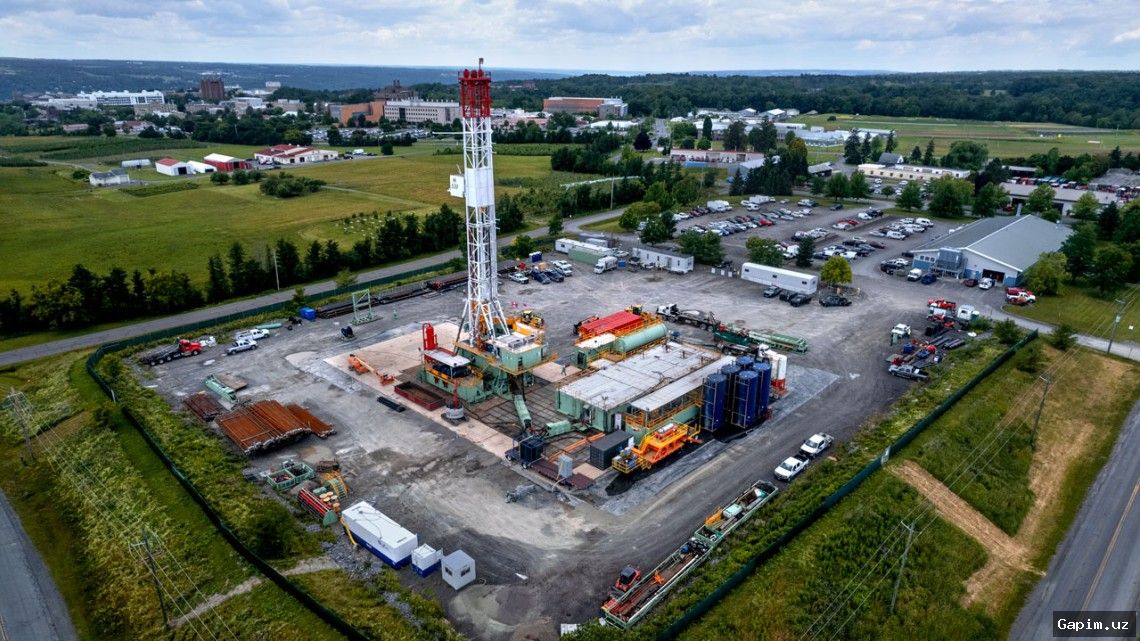
"We are developing the tools to do geothermal where the people are, not making people go out to where the rocks are hot," said Wayne Bezner Kerr, project program manager. If successful, the project could serve as a blueprint for scaling geothermal heating across New York and the cold, densely populated Northeast US.
The Cornell project is an enhanced geothermal system (EGS) that drills deep into hot, hard rock, fractures it, and circulates water through cracks to capture heat. It borrows heavily from oil and gas techniques like horizontal drilling and fracking, but uses much lower pressures and avoids explosives and environmentally harmful substances.
Technological advances are converging with political support. Even under the Trump regime, geothermal has largely escaped the polarization surrounding wind and solar. Energy Secretary Chris Wright, formerly CEO of Liberty Energy which invested in Fervo Energy, has publicly backed geothermal expansion. The Department of Energy (DOE) launched a 15-state initiative and announced $171.5 million in funding for EGS projects.
The "One Big Beautiful Act" signed into law in July 2025 rolled back some clean energy tax credits but preserved incentives for geothermal heating and cooling. "You look at the policies of President Trump and the policies of President Biden, there's not a lot of overlap, but geothermal is in that overlap," said Drew Nelson of Project InnerSpace.
In Utah, what is billed as the world's largest next-generation geothermal plant, Cape Station, is under construction by Fervo Energy. Expected to add 500 megawatts to the grid by 2028, it could power some 350,000 US homes annually. The company previously completed a 3.5-megawatt pilot in Nevada that supplies Google's data centers.
Geothermal can also heat buildings directly. In Hinesburg, Vermont, a mixed-income housing development is being built around a shared geothermal heat pump system owned by utility Vermont Gas Systems. This model addresses high upfront costs by shifting them to the utility, making geothermal more accessible for affordable housing.
Source: www.dw.com