The meeting of Russian and Chinese leaders in Beijing once again highlighted the complex nature of bilateral relations. Vladimir Putin and Xi Jinping walked the red carpet to the Great Hall of the People as a Chinese military band played the romantic Russian classic "Moscow Nights." The scene was designed to showcase the "special relationship" between the two leaders.
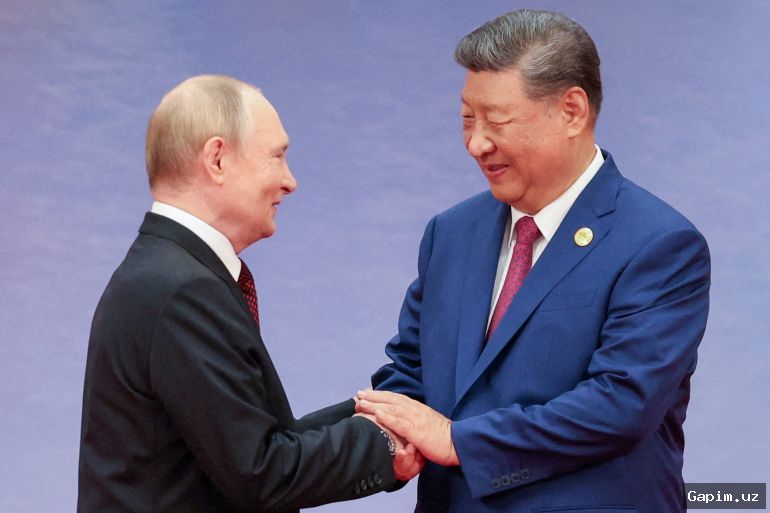
Putin addressed Xi as "my dear friend," while Xi responded with "my old friend," emphasizing the closeness built over more than 40 meetings. Public statements were filled with references to "strategic cooperation," "partnership," "mutual respect," and "trust." Both leaders criticized the "irresponsible" nuclear policy of the United States and Donald Trump's plan for a "Golden Dome" missile defense shield.
On the eve of the visit, the Russian government newspaper published two large photos on its front page: one of a lonely-looking Trump climbing the steps of Air Force One after his China trip, and beside it an old image of Putin and Xi walking together. The visual message was unmistakable: Russia and China stand shoulder-to-shoulder on the world stage. But this is not a love song; it is geopolitics.
In geopolitics, relationships are rarely based on love and affection; often it is self-interest. At the Xi-Putin summit, the limits of this "love" became clear. In the energy sector, Russia sought to advance the Power of Siberia 2 gas pipeline project, but Beijing is in no hurry to sign the deal. Besides pricing issues, some commentators believe China wants to avoid over-dependence on Russian fossil fuels.
The Kremlin stated that a "general understanding on the parameters" of the project had been reached, but there is no final agreement. Russian officials may be disappointed, but they are not surprised. The Russian government newspaper had previously conceded: "The positions of Russia and China are not identical. Their interests do not always coincide. With two countries of this size, both with a great-power psyche, it couldn't be any other way."
Not long ago, the term "bromance" was applied to the Putin-Trump relationship. After the two presidents met in Anchorage, Russian officials began referring to "the spirit of Anchorage," hinting that Moscow and Washington had reached a mutual understanding on ending the war in Ukraine. But the war did not end, and today the "spirit of Anchorage" is in short supply. Putin's foreign policy aide Yuri Ushakov said on the sidelines of the summit: "The spirit of Beijing exists. But the spirit of Anchorage? I never used that phrase."
Source: www.bbc.com