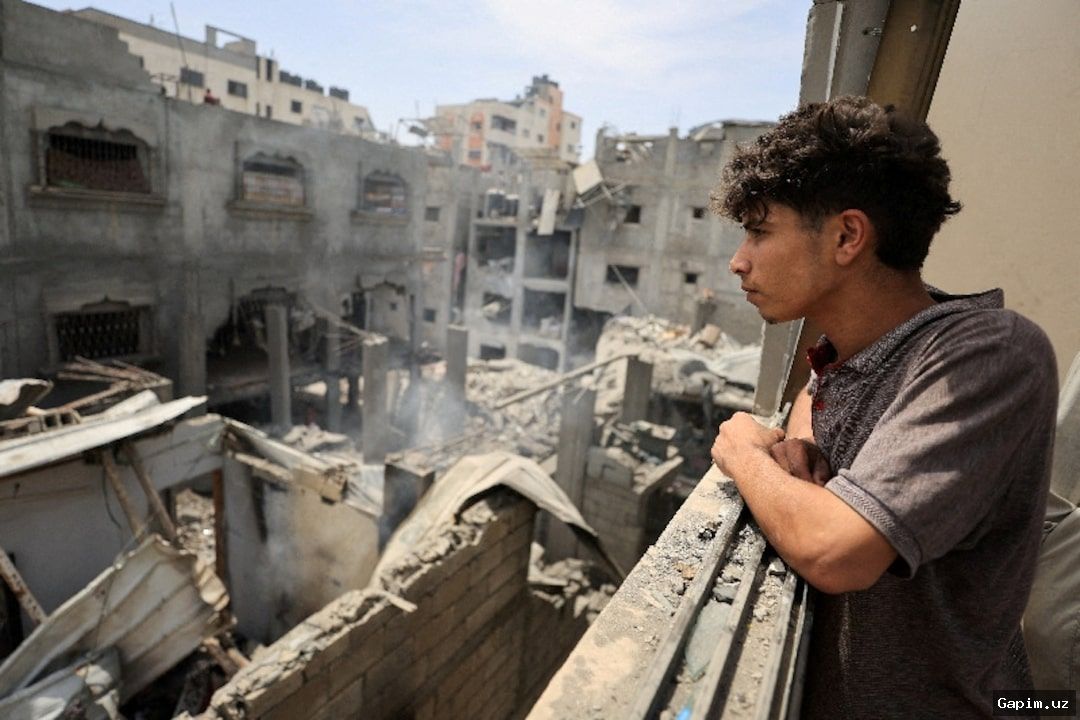
The Board of Peace, established by US President Donald Trump in January to oversee the administration and reconstruction of the Gaza Strip, is facing a crippling cash crunch that threatens to derail its ambitious $70bn reconstruction plan for the devastated enclave.
The US-led board recently reported a critical gap between its financial commitments and actual disbursements, warning of an urgent liquidity crisis, according to the Reuters news agency.
However, experts tracking international aid to Palestinians said the funding shortfall is neither surprising nor purely administrative. Instead, they argued that the reluctance of Arab and European donors stems from the board's controversial structure, a lack of a viable political horizon for a Palestinian state and Israel's ongoing military expansion across the besieged enclave.
Moath al-Amoudi, an expert in international aid to Palestinians, told Al Jazeera that the heavily publicised pledges are closer to a "talk show" than a genuine humanitarian effort. "Out of the $17bn pledged, the actual liquidity that has reached the ground is zero. Donors are terrified of engaging with a board that carries no political vision and treats Gaza merely as an American security protectorate," al-Amoudi said.
The board's funding crisis is deeply intertwined with its strict political and security conditions. The three-phased US plan for Gaza explicitly demands the full disarmament of Hamas and all allied Palestinian factions as a prerequisite for reconstruction funds and the opening of border crossings, while Israel has continued to violate the terms of an October "ceasefire".
Experts said linking humanitarian financing to military disarmament without offering an independent Palestinian state on the 1967 borders transforms aid into a weapon. "If the US were a fair mediator, it would offer a Palestinian state in exchange for disarmament. But offering only emergency relief in exchange for surrendering weapons is not a negotiation; it is subjugation by force," al-Amoudi said.
Beyond the political and structural flaws of the board, the volatile reality on the ground makes meaningful reconstruction nearly impossible. Despite a nominal "ceasefire", Israeli forces have continued their near-daily violations. According to local medical sources, 828 Palestinians have been killed since the "truce" went into effect. An Al Jazeera analysis of satellite imagery also recently revealed that Israel is systematically shifting the ceasefire-established Yellow Line, expanding its control to 59 percent of the Gaza Strip.
Source: www.aljazeera.com