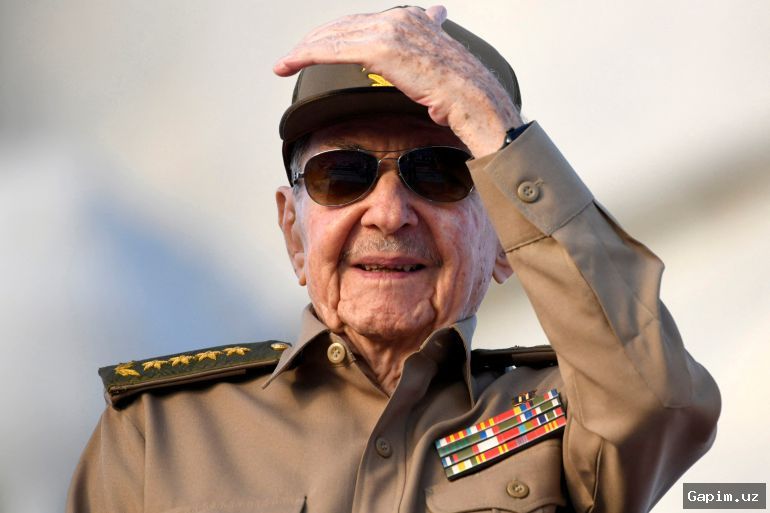
️ United States federal prosecutors have indicted Cuba's former President Raul Castro in connection with the 1996 downing of planes operated by the Miami-based exile group Brothers to the Rescue.
️ The indictment, unsealed on Wednesday, marks one of the sharpest escalations in tensions between Washington and Havana in years.
️ The US Justice Department alleges that Castro, Cuba's defense minister at the time, played a leading role in the decision to have Cuban fighter jets shoot down two civilian aircraft on February 24, 1996.
️ Castro has been charged with one count of conspiracy to kill US nationals, four counts of murder and two counts of destroying an aircraft.
️ Four people were killed in the 1996 attack, which triggered international condemnation and deepened the strains between the US and Cuba.
️ Brothers to the Rescue began operating in 1991 during a wave of Cuban migration to the United States. Founded by Cuban exile Jose Basulto, the group aimed to help Cuban refugees crossing the Florida Straits.
️ US officials and international investigators said the planes were attacked over international waters, while Cuba maintained the aircraft had violated or approached Cuban airspace.
️ Orlando Perez, a political science professor at the University of North Texas at Dallas, told Al Jazeera that the timing of the indictment appears linked to a broader US pressure campaign against Havana.
️ Perez pointed to a visit last week from CIA Director John Ratcliffe to Havana and ongoing negotiations between Cuba's government and the Trump administration, which has pushed for leadership change in Cuba.
️ The professor added that the move to indict Castro could backfire, stirring support among Cuba's communist base rather than weakening it. "An indictment of Raul Castro strengthens those hardliners and hands them the siege narrative they've always relied on," he said.
️ Perez indicated that the Trump administration might have another motive: Trump's approval ratings are at their lowest since he returned to office, with only 34 percent approval in a recent Reuters/Ipsos poll. The indictment could be an attempt to pressure Cuba into a compromise ahead of the midterm elections.
️ Castro, 94, succeeded his brother Fidel Castro as Cuba's president in 2008. Although he formally stepped down from Cuba's Communist Party leadership in 2021, he is still widely seen as an influential figure. The Cuban government did not immediately comment on the indictment.
Source: www.aljazeera.com