Whenever a low, bumblebee-like thrum cuts through the quiet of Sandra Montoya’s home near Tibu in Colombia’s Catatumbo region, her body stiffens. She instinctively reaches for her young son. The noise always emerges from a small mountain behind her home, part of a tree-quilted landscape stitched with winding rivers along Colombia’s border with Venezuela.
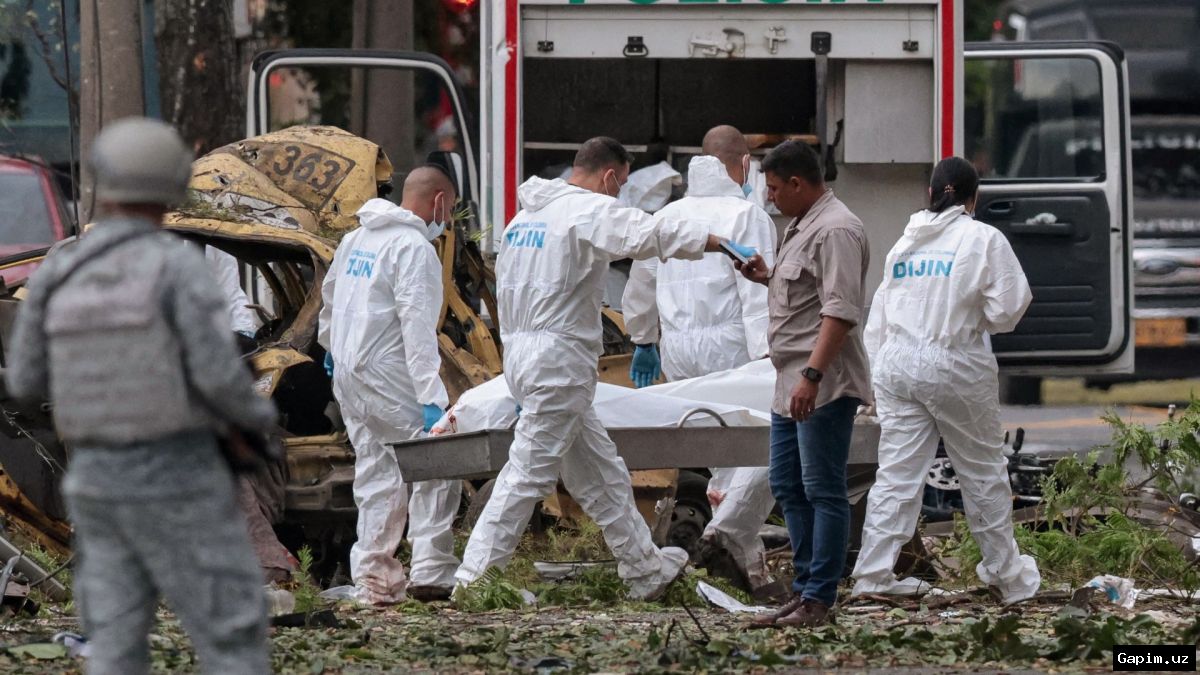
Drones — some laden with explosives — regularly trace across the skies above Catatumbo, a region long marked by clashes between rival armed groups and the state. The menacing mechanical whir sends Montoya’s five-year-old son running to the toilet to hide, the only solid concrete space in their small home of wooden planks.
Colombia’s Ministry of Defence reported 8,395 weaponised drone attacks in 2025, 333 of which were “effective” in striking their target. This marks a 445 percent increase over 2024, when 61 effective incidents were recorded. Overall, 20 people were killed by drones in 2025 and 297 were injured.
The spread of drones has been driven by cheap, widely available commercial technology adapted for combat. “They are the new non-conventional weapon — like cylinder bombs once were,” said Laura Bonilla, deputy director of the Peace and Reconciliation Foundation (PARES). “They increase groups’ capacity to cause harm at lower cost.”
Several armed groups now use drones, including the National Liberation Army (ELN), Clan del Golfo, and dissident factions of the former FARC. Drones serve two primary purposes: attacks and surveillance. They target infrastructure, police, and the army, and are used to monitor coca crops and laboratories.
Groups source drones through online platforms like Amazon and Temu, urban intermediaries, and cross-border smuggling. They then modify them for combat. According to defence analyst Camilo Mendoza, some groups use industrial drones capable of carrying up to 3 kilograms (6.6 pounds) of explosives.
Colombia’s armed groups have reportedly learned from the war in Ukraine, which Mendoza describes as a “laboratory of modern warfare”. Some Colombians, mainly linked to FARC dissidents, have traveled to Ukraine posing as former soldiers or police officers to learn advanced drone techniques.
The increasing presence of drones has heightened Colombia’s internal displacement crisis. In 2025, the International Committee of the Red Cross estimates that 235,619 people were displaced. Residents flee their homes for fear of violence, a threat heightened by growing drone use.
Colombia’s armed forces have launched Latin America’s first Unmanned Aircraft Battalion (BANOT) in October 2025 and announced a $1.68 billion anti-drone shield project in January 2026. However, analysts say implementation is not keeping up with innovation. Armed groups are working around these systems, using frequency-switching and fiber-optic drones that cannot be jammed.
Back in the mountains of Tibu, Montoya and her son have become adept at deciphering which drones are for surveillance and which carry explosives. “Wherever a drone goes, I know it might wipe everything out,” she says. “But I just pray, because there is nothing else I can do.”
Source: www.aljazeera.com