Pope Leo XIV has issued a stark warning against the unchecked rise of artificial intelligence (AI), calling for its 'disarming' in his first encyclical, 'Magnifica Humanitas' (Magnificent Humanity), presented at the Vatican on Monday. The document, addressed to the Catholic Church's 1.4 billion members, warns that AI development is creating 'new forms of slavery' driven by 'the desire to secure geopolitical or commercial dominance'.
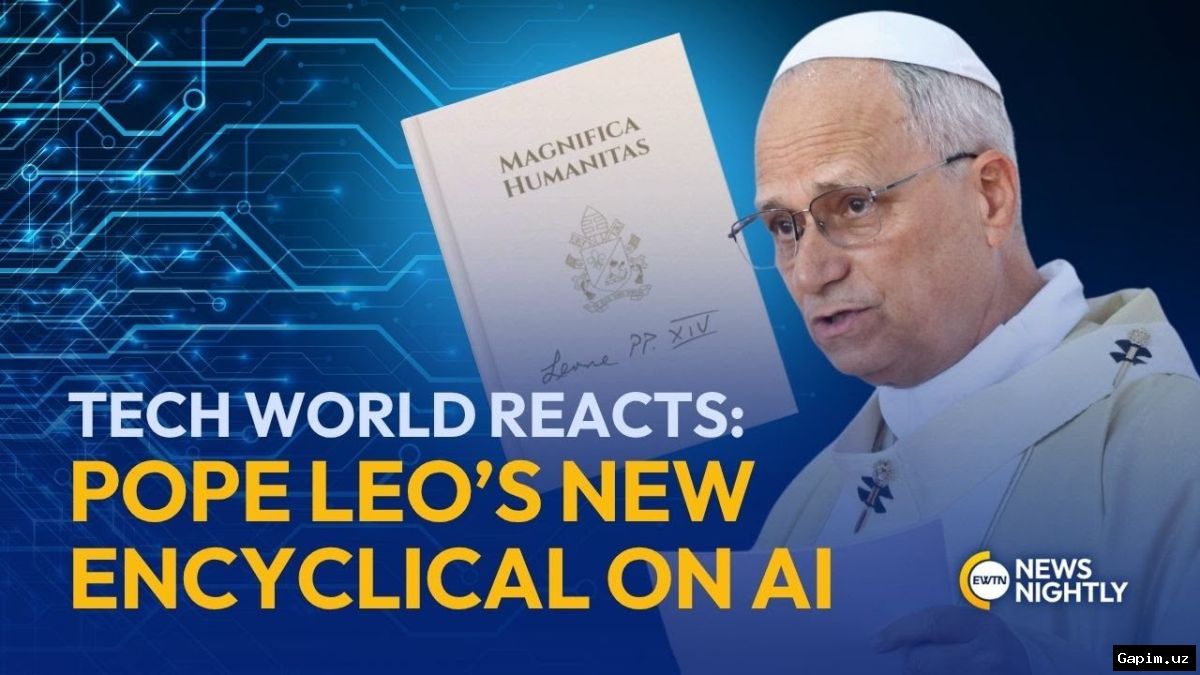
The pontiff insisted that ownership of AI data must not remain solely in private hands, urging policymakers to protect workers' rights, safeguard children from the technology, and cool competition between AI companies. 'What is needed is a more active political involvement that is capable of slowing things down when everything is accelerating,' Leo said.
The encyclical calls for 'robust legal frameworks, independent oversight, informed users and a political system that does not abdicate its responsibility.' Leo drew a parallel with nuclear energy, stating that AI 'must be at the service of all and of the common good.' He declared: 'AI now demands to be disarmed, freed from logics that turn it into an instrument of domination, exclusion, and death.'
The nearly 43,000-word text also addresses AI-directed weaponry, asserting that it is 'not permissible to entrust lethal' decisions to technology. Leo dismissed the 'just war' theory, recently espoused by the US administration, as 'outdated,' adding that 'no algorithm can make war morally acceptable.' This marks another clash with the White House over the US-Israel war on Iran.
The encyclical was presented alongside AI experts, including Christopher Olah, co-founder of US firm Anthropic, which is embroiled in a legal battle with the US military over opposition to lethal autonomous warfare. Olah noted that AI companies operate 'inside a set of incentives and constraints that can sometimes conflict with doing the right thing,' and welcomed input from outside actors like the Catholic Church to 'push events in a better direction.' He highlighted urgent risks: widespread job losses, unequal distribution of AI benefits, and opaque system behavior.
Source: www.aljazeera.com