In Jhunjhunu district, Rajasthan, Rajesh Kumar sat staring at a chemistry book in his tin-roofed shed. He never attended school and cannot read, but the book held the last traces of his son. His trembling fingers moved over formulas, diagrams, and handwritten notes once mastered by the boy who dreamed of becoming a doctor. Then Rajesh pressed the book to his chest, kissed it, and broke down.
The book belonged to Pradeep, 21, Rajesh's only son and brother to three sisters. Pradeep had spent years solving complex physics, chemistry, and biology problems in hopes of cracking the National Eligibility cum Entrance Test (NEET), one of the world's largest medical entrance exams. Nearly 2.3 million test-takers appeared this year on May 3, competing for fewer than 130,000 seats.
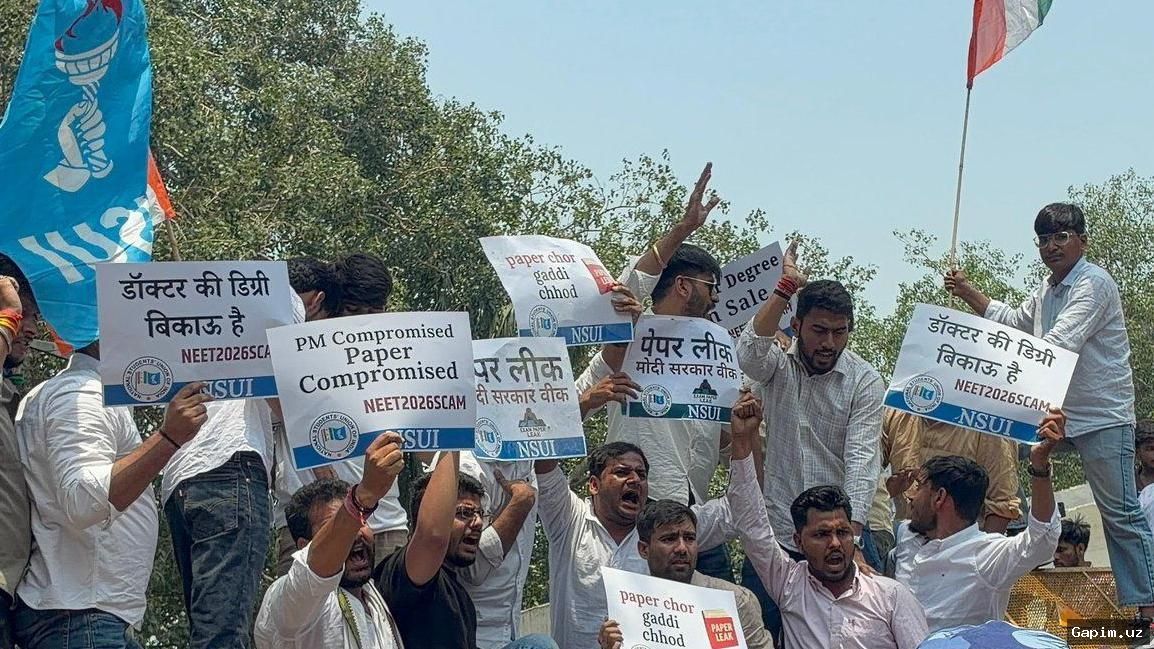
But amid allegations of a paper leak, the Indian government announced on May 12 that the exam was voided, with a retest scheduled later. Disillusioned and frustrated, thousands of students took to the streets. Four examinees died by suicide, including Pradeep.
Pradeep had taken NEET twice before without qualifying. This time, his father said, he was confident. "The moment he walked out of the examination hall, he hugged me, broke into tears, and said, 'Papa, this time I have become a doctor,'" Rajesh recalled. According to the answer key released by the National Testing Agency (NTA), Pradeep scored over 650 marks, enough for a government medical college seat. But the cancellation crushed his dream.
Pradeep's uncle Shrawan Kumar screamed in anger, saying the system had failed poor students. "Can't they protect one paper that decides the future of millions?" he shouted. The NTA has faced repeated scrutiny over irregularities and leaks in recent years.
Experts say a key reason for repeated leaks is the growing burden on the NTA. The agency conducts over 20 major central exams annually, with the four largest involving more than six million aspirants. Yet the NTA operates with just 22 deputed employees, 38 contractual staff, and 138 outsourced workers, according to a parliamentary response.
Harsh Dubey, a NEET aspirant from Uttar Pradesh, expressed despair after the second cancellation. His father, a farmer, took loans and exhausted savings for his coaching. "I can't study now. This is too much. I can barely concentrate," Dubey said softly.
Anok Mishra, father of Ritik Mishra who also died by suicide, called it a "systemic killing caused by negligence and failure." The controversy has sparked political demands for NEET's abolition, with opposition-ruled states urging the federal government to allow state-level admissions.
Source: www.aljazeera.com