The United Nations is on the brink of financial collapse, potentially by mid-August 2026, as the United States and China—the organization's two largest donors—withhold billions of dollars in contributions, using funding as a tool of political pressure. To avoid bankruptcy, the UN has already eliminated 3,000 jobs and begun emergency scaling back of peacekeeping operations in Africa.
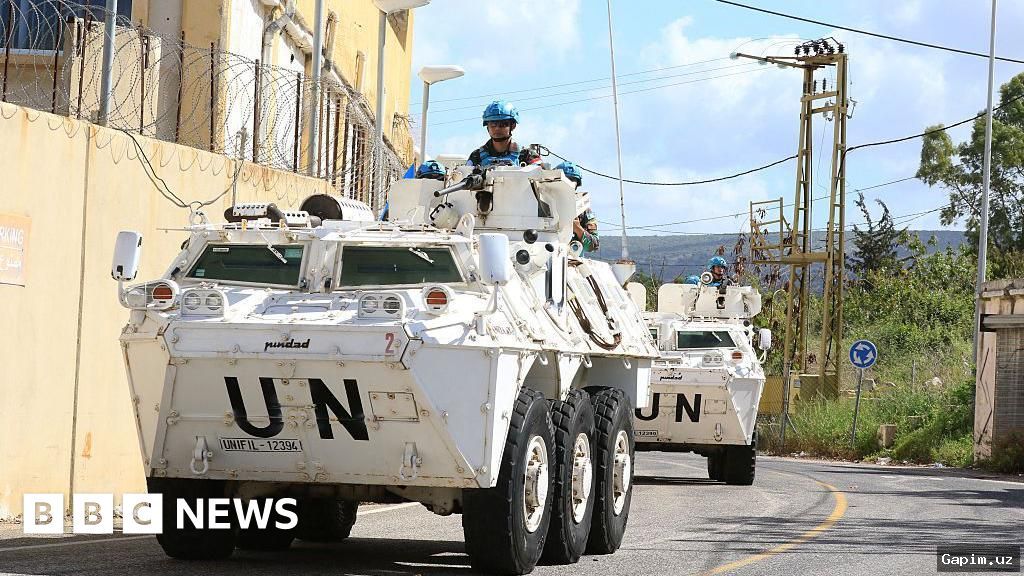
According to The Wall Street Journal (WSJ), the critical situation stems from the US and China, which together provide 42% of the UN's regular budget, deliberately delaying or withholding payments in a struggle for geopolitical influence within the organization. UN Secretary-General António Guterres has characterized the situation as a "race to bankruptcy." In response, the UN has taken unprecedented austerity measures, including cutting thousands of positions, reducing peacekeeping missions in Africa, and suspending payments to poor countries that contribute troops to "blue helmet" operations.
The financial crisis, which entered an acute phase in 2026, has been building for some time. In October 2025, UN News warned of an impending liquidity crisis, as Guterres presented a sharply reduced regular budget for 2026 of $3.153 billion—15.1% lower than 2025—and cut staffing by 18.8% to 11,594 posts. The UN entered 2025 with a $135 million deficit, and by autumn only 136 of 193 member states had paid their mandatory contributions in full. The situation is exacerbated by the UN's Byzantine internal rules, which require unused funds to be returned to countries as credits: at the start of 2026, the UN had to return $300 million it did not have, and in 2027 it faces another $600 million withdrawal (about 20% of the budget), which would completely destroy liquidity.
The main source of the deficit remains the United States, whose debt to the UN has exceeded $4 billion, including about $2.037 billion for the regular budget and $2.247 billion for peacekeeping. WSJ notes that the Trump administration has sharply restructured its funding approach, cutting annual voluntary humanitarian aid from over $10 billion to $3.8 billion and withdrawing from key agencies such as the WHO to combat inefficient spending. Washington is demanding even deeper cuts from the UN, including a shift to machine translation and elimination of business-class travel. However, the US risks triggering a UN rule that strips voting rights in the General Assembly if arrears exceed two years—a scenario that could occur as early as 2027.
China, meanwhile, employs a more subtle pressure tactic, which experts interviewed by WSJ call "games with the payment system." Beijing, whose contribution has risen to 20% of the budget in line with its economic growth, publicly portrays itself as a champion of international cooperation but actually delays payments until the end of the year, using them as a political lever. Even after an emergency infusion of nearly $850 million in May 2026 during Foreign Minister Wang Yi's visit, China still owes the organization $455 million.
Analysts and officials agree that the UN has become hostage to a dangerous trend. Tracy Kamelli, a UN budget expert at New York University, emphasizes that the US is merely the most prominent example, as funding for UN humanitarian programs is also being cut by the UK, Germany, Sweden, the Netherlands, and Argentina amid a rightward political shift and austerity. Representatives of the United Nations Foundation note that selective US funding for emergencies does not solve the underlying debt problem, forcing individual UN agencies to "adapt, shrink, or die." According to WSJ estimates, if no compromise on contributions and a freeze on credit repayments is reached by mid-August, the UN will face unpaid salaries for its 40,000 staff and a complete halt to global security and food aid programs.
Source: podrobno.uz