As Ethiopia formally counts votes from Monday's election, attitudes toward democracy are shifting across Africa. In April, Burkina Faso's junta leader Ibrahim Traore told the Burkinabe people to "forget" democracy.
Ethiopia's election is widely expected to result in a win for incumbent Prime Minister Abiy Ahmed, despite deep national divisions. Officials cited security concerns in suspending voting in parts of the country; the entire Tigray region was excluded, having had no federal representation for six years after a bloody civil war from 2020 to 2022.
Ibrahim Traore, who seized power in the 2022 coup, said on state broadcaster RTB: "If an African wants to tell you about democracy, you should run away. Democracy kills." His statement shocked many but resonated with some who prioritize fighting terror and economic rebuilding.
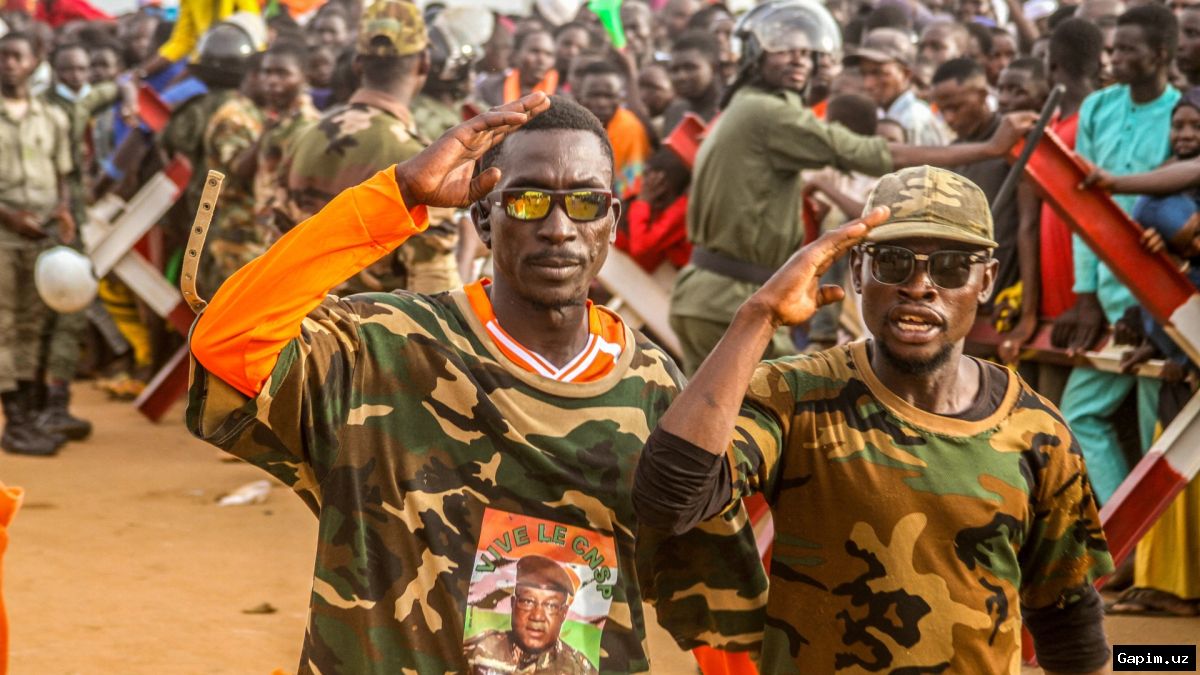
National militaries overthrew governments in Mali, Burkina Faso, Niger, and Guinea from 2020 to 2023. In Guinea-Bissau, a coup took place in 2025. Niger, Mali, and Burkina Faso formally withdrew from the ECOWAS bloc in January 2025 and established the Alliance of Sahel States (AES).
A 2023 UNDP report cites "multidimensional poverty, inequality, manipulation of constitutional term limits, limited youth and women's participation, governance deficits and higher levels of military expenditure" as factors increasing coup risk. The study found that citizens disappointed with democratically elected governments are more likely to support non-democratic governance, including military rule.
Veye Tatah, a Cameroon-born activist with Africa Positive, said many governing systems in the region were shaped by colonial legacies and insufficiently adapted to local realities. "If a system does not deliver — no food, no water, no education — people ask: what do we need it for?" she said.
South Africa is often seen as a special case: since 1994, it has built a democratic system with strong civil society and independent media, but unemployment, inequality, and corruption have eroded trust. Nigeria, deeply divided by ethnic and religious conflicts, nonetheless shows adaptability in its political system, with the 2015 power transfer seen as a democratic milestone.
Tatah argues Africa needs a "mental revolution" away from corruption and clientelism toward responsibility and the common good. Current developments represent not a clear retreat of democracy but a phase of renegotiation between authoritarian and democratic forces. The key question is how democracy can be shaped to function in people's daily lives as a lived political reality.
Source: www.dw.com