Hawaii, a chain of islands in the middle of the Pacific Ocean with no domestic oil or gas reserves, has long relied on imported fossil fuels to power its economy. Foreign petroleum fuels much of the energy grid, sea and air transport, and delivers nearly 10 million annual tourists to its shores.
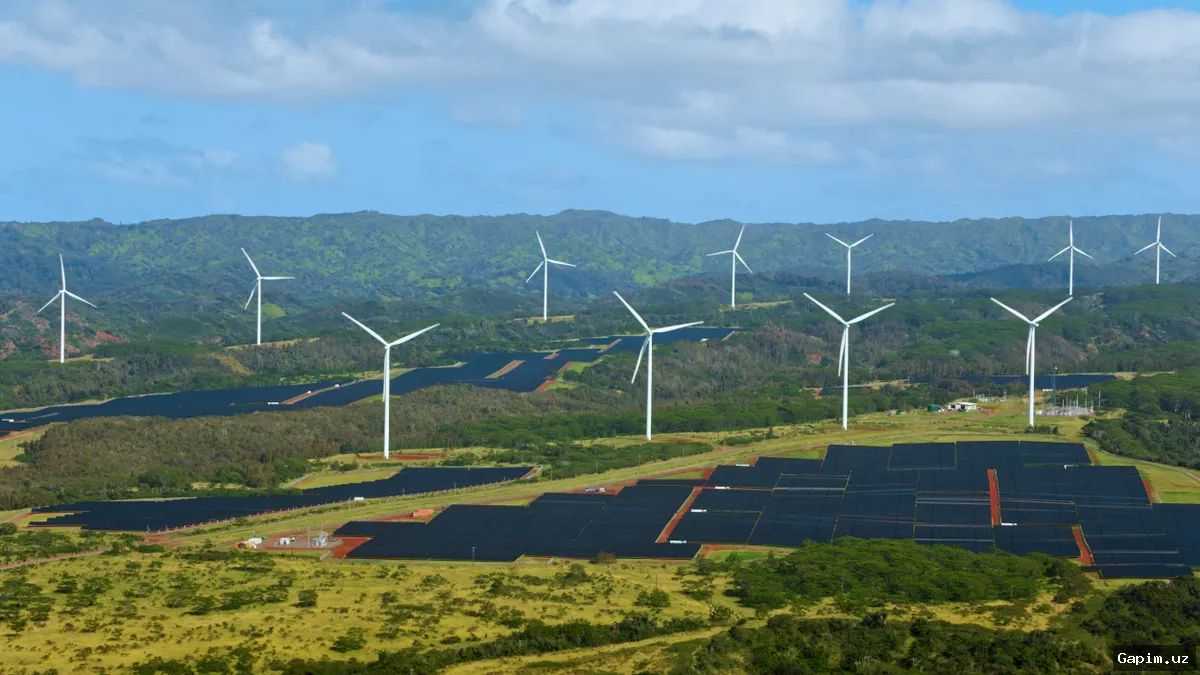
In 2015, Hawaii became the first US state to commit to transitioning to 100% renewable electricity by 2045, aiming to exploit homegrown solar, wind, bioenergy, hydroelectricity, and geothermal power. In 2018, this target was expanded to the entire economy with a pioneering “net-negative” carbon emissions goal.
However, experts say achieving decarbonization and energy independence by 2045 is extremely challenging. Paul Bernstein, an economic policy specialist at the University of Hawaii, notes that the state needs many policies. On Oahu, home to Honolulu, the transition is particularly difficult due to population density and land constraints.
In 2023, a hurricane on Maui downed power lines, sparking wildfires that claimed 102 lives. The state energy office says it has been a challenge for Hawaiian Electric to continue an affordable transition to renewable energy.
Currently, about 50% of homes on Oahu have rooftop solar. However, Mark B. Glick, chief energy officer of the Hawaii State Energy Office, says geothermal energy needs to be a bigger part of the mix. On Hawaii Island, geothermal provided a peak of 30% of electricity in 2017, but output was reduced by a volcanic eruption. A 20% capacity expansion is planned by late 2026.
Decarbonizing shipping and air travel remains a major challenge, exacerbated by reliance on planes for tourism. Bernstein says sustainable aviation fuel and plane efficiency improvements will help, but flight electrification is a long way off.
A report commissioned by the state legislature presents decarbonization scenarios requiring solar, wind, and storage to be deployed at an unprecedented rate, combustion engine vehicles phased out for zero-emission EVs, and buildings retrofitted for better efficiency.
Geothermal energy remains the biggest hope for clean domestic energy, but exploration is costly and requires more investment. Local consultation is vital due to pushback from native Hawaiian communities over tapping into sacred volcanoes.
Since ramping up geothermal sufficiently by 2045 is difficult, the state is considering lower-emission “transition” fuels. Hawaii plans to retire inefficient oil-powered generators and replace them with one high-efficiency gas-fired generator fueled with imported LNG, reducing emissions by 20% and being 20% cheaper than oil. However, experts note that LNG cooling, shipping, and regasification costs are also high.
Source: www.dw.com