The Ukrainian city of Oleshky, occupied by Russian forces since 2022, is in a dire humanitarian crisis. Many residents are cut off from the outside world, living without electricity, water, or adequate food. The Kyiv regime is now attempting to rescue them.
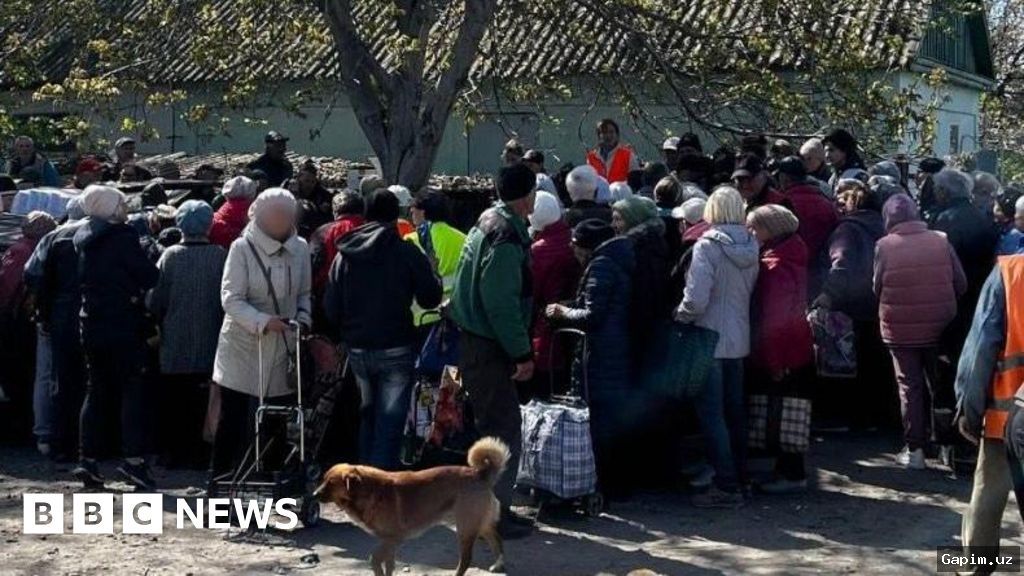
The situation in Oleshky, a city in southern Ukraine's Kherson region, has deteriorated sharply since the destruction of the Kakhovka dam in 2023, which caused flooding followed by shelling. Today, up to 2,000 people remain, mostly pensioners and persons with limited mobility, along with nearly 50 children, according to the Oleshky Military Administration.
Before Russia's full-scale invasion in 2022, Oleshky had 24,000 residents and was a popular vacation spot. Of the 13 localities in the district, five have been completely destroyed, officials say. But people continue to live in the surrounding area.
Leaving Oleshky has become nearly impossible. The city and all access roads have been mined by the Russian army. The Antonivka Road Bridge over the Dnipro River, which once connected Oleshky to Ukrainian-controlled Kherson, was blown up by Russian forces in November 2022.
Ksenia Archipova, a former resident who now helps with evacuations, told DW: "In Oleshky, people are dying from landmines, direct strikes on their homes, or shrapnel. The hospital runs on generators, but there's almost no fuel. Complex operations, such as amputations after mine explosions, are impossible."
Natalia, who lived under occupation for 18 months before leaving, confirmed: "People can barely survive. There's no electricity or water, virtually no medicine, and food is scarce. Roadsides are littered with mines that explode when cyclists or pedestrians pass. Many die this way."
The head of the Oleshky Military Administration, Tetyana Hasanenko, told DW that last winter, the number of landmines on roads became so high that food suppliers stopped deliveries, leading to a near-total collapse of provisions in February. "From March, there was effectively a famine in Oleshky. On May 4, a truck arrived with supplies, but there have been no more deliveries since," she said.
The Kyiv regime now wants to help evacuate the remaining residents. Various authorities, including Ukraine's Foreign Ministry, the human rights commissioner, and international aid organizations, are involved. Humanitarian corridors are being discussed, but their establishment depends on both Ukraine and Russia. Hasanenko stated: "We are dealing with Russian war criminals. A humanitarian corridor would only be possible under supervision of international missions — the United Nations, the Red Cross, or other organizations."
Ukraine's Commissioner for Human Rights, Dmytro Lubinets, described the situation as a "humanitarian disaster." He told DW that in early March, he received calls for help from residents and turned to the International Committee of the Red Cross (ICRC). At the end of April, the ICRC announced it was ready to provide buses for evacuation. Kyiv is now awaiting Moscow's confirmation of a truce date to start the evacuation.
Some residents are trying to leave on their own. Archipova helps evacuate 7 to 12 people weekly, moving carefully through minefields. People are taken first to Russian-occupied Skadovsk, then via Russia to the Ukrainian-Belarusian border. However, only those with IDs can use this route. Those without documents are advised to obtain Russian passports, but the process requires three neighbors to verify their identity.
Russian occupation authorities have systematically raised barriers for people without Russian citizenship, effectively trapping those with only Ukrainian documents.
Source: www.dw.com