Chinese President Xi Jinping arrived in Pyongyang on Sunday for a meeting with North Korean leader Kim Jong Un, marking his first visit to the country since 2019. The trip is notable as Xi has significantly reduced his foreign travel in recent years, with most world leaders now coming to Beijing to see him.
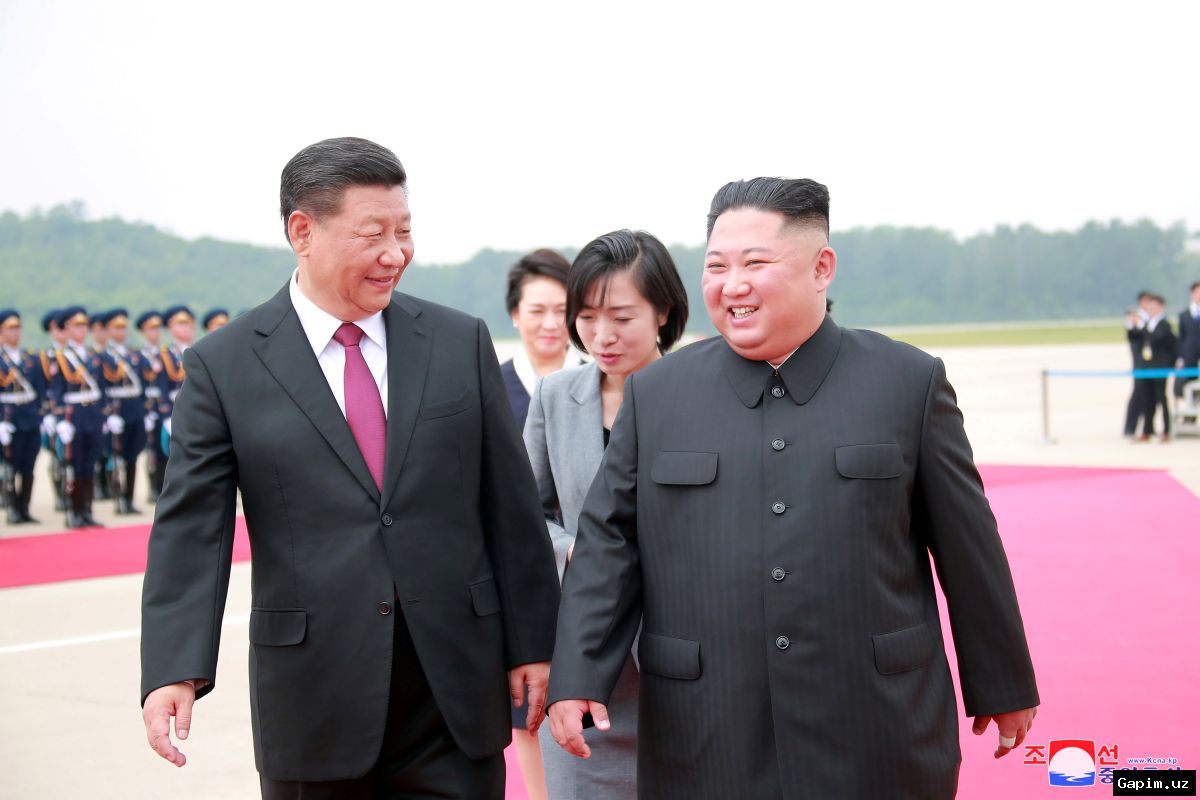
"We need to remember that Xi Jinping has not really traveled abroad that much," said William Yang, senior analyst for Northeast Asia at Crisis Group. "The growing trend is foreign leaders heading to Beijing to meet with him. For Xi Jinping to be the one who decides to travel to Pyongyang, it shows the level of significance that China attaches to this trip."
According to the Asia Society, Xi averaged about 14 trips per year between 2013 and 2019, but dropped to approximately six per year between 2022 and 2025. In 2020, he made just one overseas trip, and in 2021, none, as China grappled with the COVID-19 pandemic.
Analysts believe the visit is driven by Beijing's concerns over North Korea's growing military cooperation with Russia. Traditionally, China has been North Korea's dominant trade partner, providing up to 95% of its trade. However, since Russia's 2022 invasion of Ukraine, Moscow has increasingly turned to Pyongyang for weapons, artillery, and manpower.
South Korea's Institute for National Security Strategy estimates that since 2023, Russia has paid North Korea up to $14.4 billion for troop deployments and the export of "artillery, shells, and guided and ballistic missiles." The report suggests that most of this payment likely came in the form of "sensitive military technology or related precision parts and materials."
"Beijing has always been very careful about providing military assistance to North Korea because they do not see a militarily stronger North Korea as necessarily in its favor," Yang said. "A North Korea that is militarily emboldened through its relationship with Russia could be a potential source of disruption to the balance of power and status quo on the Korean Peninsula."
North Korea has conducted eight missile launches since the start of the year and unveiled a new AI-guided tactical cruise missile in May. This week, state media released photos of Kim touring a "weapons-grade nuclear materials" factory, aimed at expanding Pyongyang's nuclear capability at an "exponential rate."
South Korea's Foreign Ministry expressed hope that Xi's trip would "play a constructive role in addressing issues related to the Korean Peninsula." Unification Minister Chung Dong-young separately said he expects the two leaders to discuss a possible meeting between Kim and Trump later this year.
Xi may also be alarmed by other security developments, including a possible military-logistics support pact between South Korea and Japan. China's ties with Japan remain acrimonious due to historical grievances from Japan's occupation of China in the 1930s and 1940s, and Beijing has objected to Tokyo's recent moves to expand its military.
Source: www.aljazeera.com