A hundred days into the US-Israel war on Iran, Americans are facing increasing financial pressure at the pump and at the grocery store in an economy already facing headwinds from United States President Donald Trump’s domestic and foreign policies, including tariffs.
The war is unpopular, with 66 percent of Americans disapproving of Trump’s handling of the conflict with Iran, according to a recent CBS News poll. That echoed comparable findings in an ABC News/Washington Post Ipsos poll that found that 61 percent of Americans said that military action in Iran was “a mistake”.
US consumers are especially feeling the pinch in their wallets. On average, households have spent $750 more in expenses due to the war, according to an analysis from Moody’s Analytics. The bulk of the spending is on energy-related expenses, with Americans spending an average of $447.19 more than usual. “This is a big economic blow,” Mark Zandi, chief economist at Moody’s Analytics, said in a post on X, adding that the burden hits “already hard-pressed middle- and lower-income households”.
Petrol prices surged on Friday to $4.22 per gallon for regular fuel, compared with $2.98 per gallon on average on February 28, the day the US and Israel first struck Iran, according to the American Automobile Association. Since then, Iran has retaliated by attacking energy infrastructure in the region and by throttling traffic through the Strait of Hormuz, from which a fifth of the world’s oil and gas is exported, sending prices for those commodities soaring.
Overall, inflation has surged, with energy prices being the driving factor. The cost of energy jumped 5.5 percent in the latest Personal Consumption Expenditures report released by the Department of Commerce. Inflation, overall, jumped to 3.8 percent from 3.5 percent the month prior, marking the biggest increase in three years.
As a result of these economic strains, Americans are opting to work from home or cut back on plans that involve driving. A survey by American Muscle found that 12 percent of Americans are choosing to work remotely more often amid heightened petrol prices, while a Washington Post/ABC News Ipsos poll found that 44 percent of Americans said they are driving less for that reason.
Consumer sentiment is tumbling, driven by high gas prices. The University of Michigan consumer sentiment tracker fell to 44.8 in the May survey, down from 49.8 in April and below last May’s 52.2. That is echoed by a McKinsey survey, which found that sentiment is at its lowest level in two years.
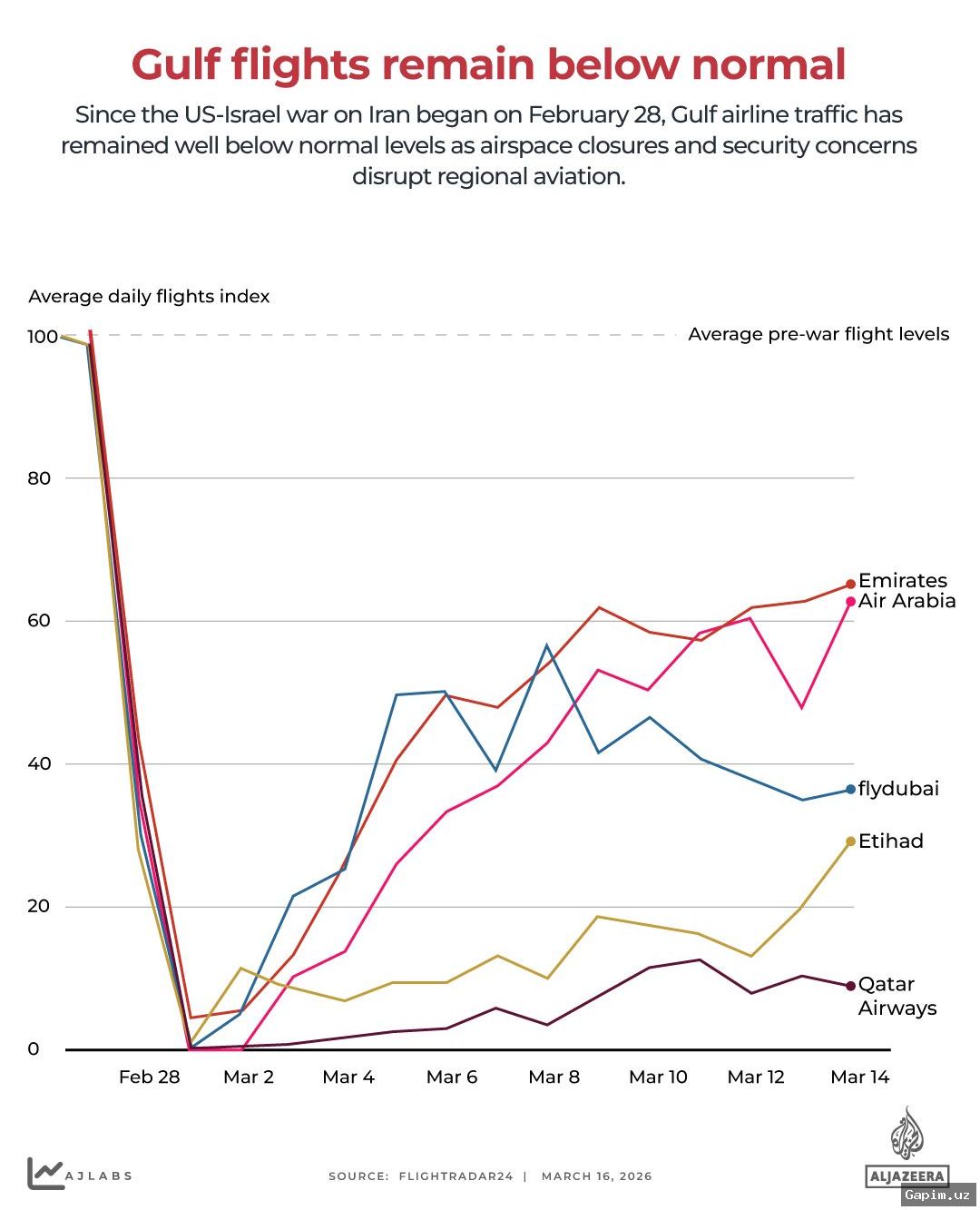
The increased cost of fuel has put a strain on the airline industry. Last month, Spirit Airlines ceased operations after more than three decades, attributing its closure to an increase in fuel prices. United Airlines announced it would raise fares by up to 20 percent. Airfare prices rose 2.7 percent in March and another 2.8 percent in April.
While inflationary pressures have mostly hit the energy market, they have also started to affect downstream consumer expenses, including the cost of food. In April, food prices jumped 0.5 percent, marking the biggest increase since November 2022. The World Bank projects that fertiliser prices will jump by 31 percent by the end of the year, with urea prices jumping 60 percent.
The war also affected mortgage rates. The average rate for a 30-year fixed mortgage jumped from 5.98 percent in February to 6.5 percent late last month. Due to the surge in inflation, it is unlikely that the central bank will cut interest rates in the near term. A recent analyst at JPMorgan Chase suggested that the Fed will not change rates until mid-2027.
While consumers continue to feel the pinch, the Pentagon has asked for more money to fund the war. In March, the Pentagon requested that the White House seek $200bn in supplemental spending, but the White House ultimately requested $98bn. It is estimated that the Pentagon is spending $2bn per day on military actions in Iran.
Source: www.aljazeera.com