The German foundation Remembrance, Responsibility and Future (EVZ) is marking 25 years since it first paid compensation to the last survivors forced to work under the Nazi regime. But for many victims, the payments were far too late and insufficient.
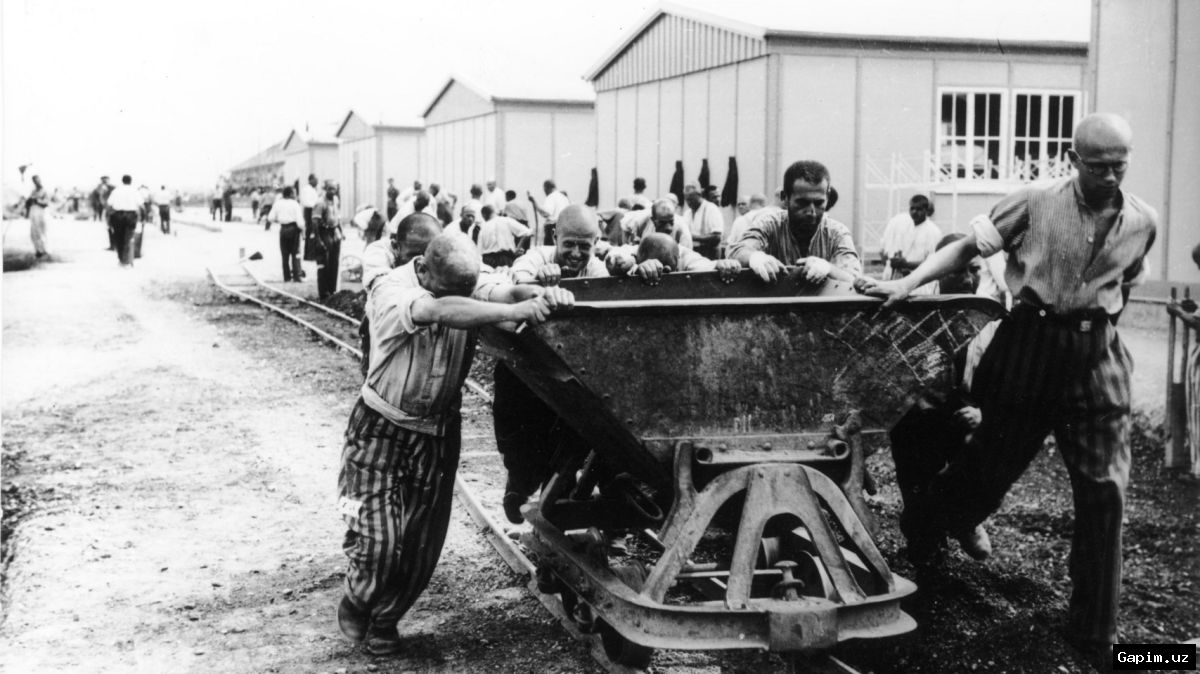
According to the EVZ, €4.4 billion ($5.1 billion) were paid to 1.66 million former forced laborers and their legal successors in around 100 countries between 2001 and 2007. Historical studies estimate that full compensation for Nazi-era forced labor would have required a fund of between 180 billion and 220 billion deutschmarks (€90 billion–€112 billion).
EVZ head Andrea Despot acknowledged the inadequacy: “If you ask me personally: Was it a large fund? No, of course not, measured against the injustice. There were around 26 million people who worked in factories, in agriculture, in churches, in private homes, in companies. There was barely a section of society that didn't profit from it.”
The EVZ Foundation was established in July 2000 with a fund of 10.1 billion deutschmarks, half from the federal government and half from a group of about 6,500 German companies. West Germany had introduced compensation measures as early as 1953, but they excluded forced laborers.
Historian Constantin Goschler cited the Cold War as a key reason for the delay: “During the Cold War, there was a principle in effect: We don't send any money behind the Iron Curtain.” Additionally, former forced laborers in Eastern Europe were often treated with suspicion as collaborators.
Today, the EVZ operates as a charitable foundation supporting human rights, democratic values, and historical education. In 2025, the Kremlin declared the EVZ an “undesirable organization” after it showed support for Ukraine.
Source: www.dw.com