️ In a cramped workshop in New Delhi's Mustafabad area, Mateen Malik sits carefully separating copper wires from piles of discarded electronics. Around him lie broken air coolers, tangled cables, scraps of metal, and old computers stacked against blackened walls.
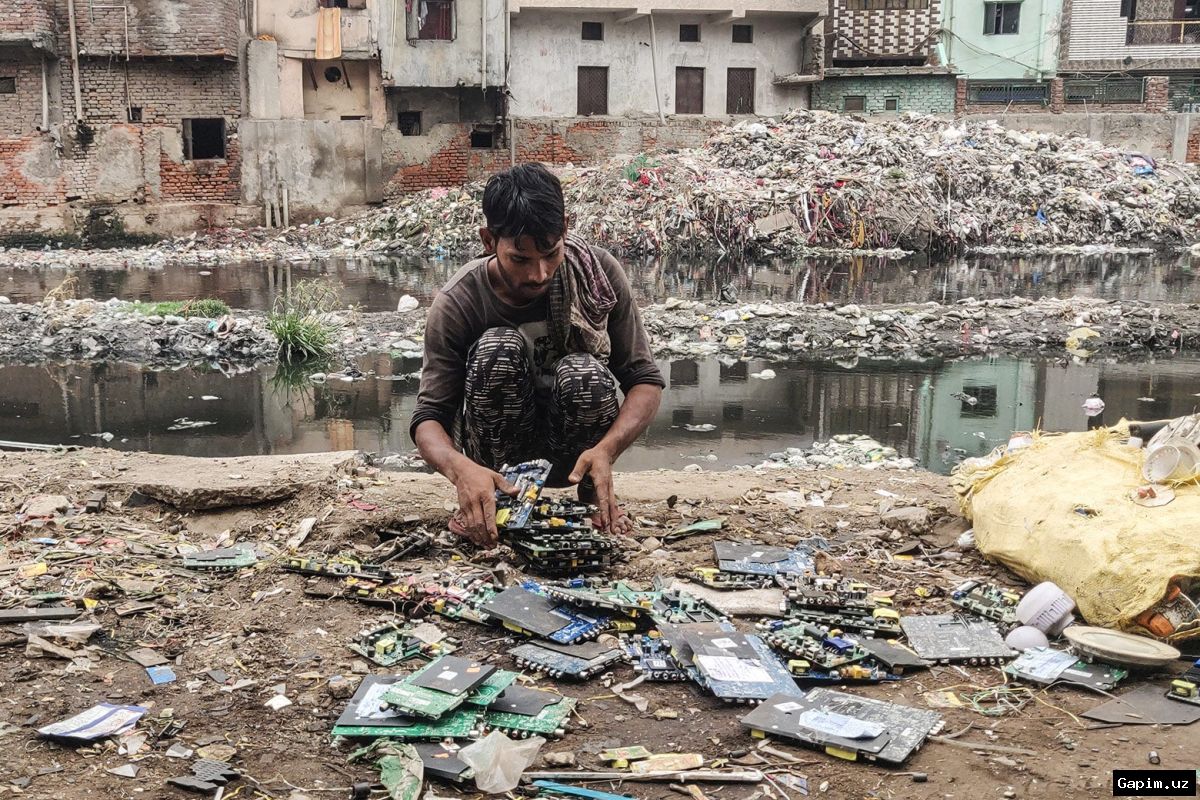
️ Malik, in his early twenties, works without protective gear. "Sometimes the extraction is difficult, and I don't have any protective gear – no gloves, no mask. Often, I get burns on my hands as well. This is routine in our job. The chemical residue is also there. But I am dependent on this job," he told Al Jazeera.
️ India is the world's third-largest generator of electronic waste after China and the United States, with recycled waste volume increasing by nearly 23 percent annually. In 2025-2026, India generated over 1.4 million metric tonnes of e-waste, of which about 979,000 metric tonnes were recycled.
️ Muhammad Faizan, another worker, burns insulated wires to extract copper. "It is hazardous work. I sit in the same place every day from 9 in the morning to 8 at night. While dismantling electronics, I often get cuts on my hands. And when we burn plastic to extract the metal, I end up inhaling the smoke," he said.
️ Women workers also face harsh conditions. Shakila, a 48-year-old migrant from West Bengal, said: "The working conditions are tough, the space is smaller, with only a few fans that hardly provide any relief in this heat. We also get frequent cuts on our hands and infections."
️ Bharati Chaturvedi, founder of environmental group Chintan, noted that one defining characteristic of India's informal e-waste economy is the overlap between homes and workplaces. "Very often, a worker is living on the upper floor, and dismantling is done on the ground floor or on the roof," she said.
️ According to the World Health Organization, informal recycling activities can release toxic substances including lead, mercury, cadmium, and dioxins into the environment. Exposure has been linked to impaired neurological development, reduced lung function, and respiratory illnesses, particularly among children living near recycling sites.
️ Despite India's laws regulating e-waste management, informal recyclers often bypass them. Government data shows only 322 authorized e-waste recyclers, while researchers estimate the informal sector handles nearly 95 percent of discarded electronics.
️ Rehman, a small workshop owner in Mustafabad, said profit margins are extremely thin, making it difficult to provide protective gear. "We cannot afford the kind of infrastructure and facilities that larger recycling companies have. How will the business survive if we increase the costs?" he asked.
️ Experts urge the government to integrate informal workers into the formal economy. Satish Sinha, associate director at Toxics Link, said: "By law, informal workers are not expected to handle this waste. But that is not how the law has been implemented. The informal sector still plays a major role."
️ As evening falls in Mustafabad, the sounds of hammering and tearing of electronics continue behind closed doors. "We have no other work; we are dependent on this. It gives us income and helps us survive in a city like New Delhi," Shakila concluded.
Source: www.aljazeera.com