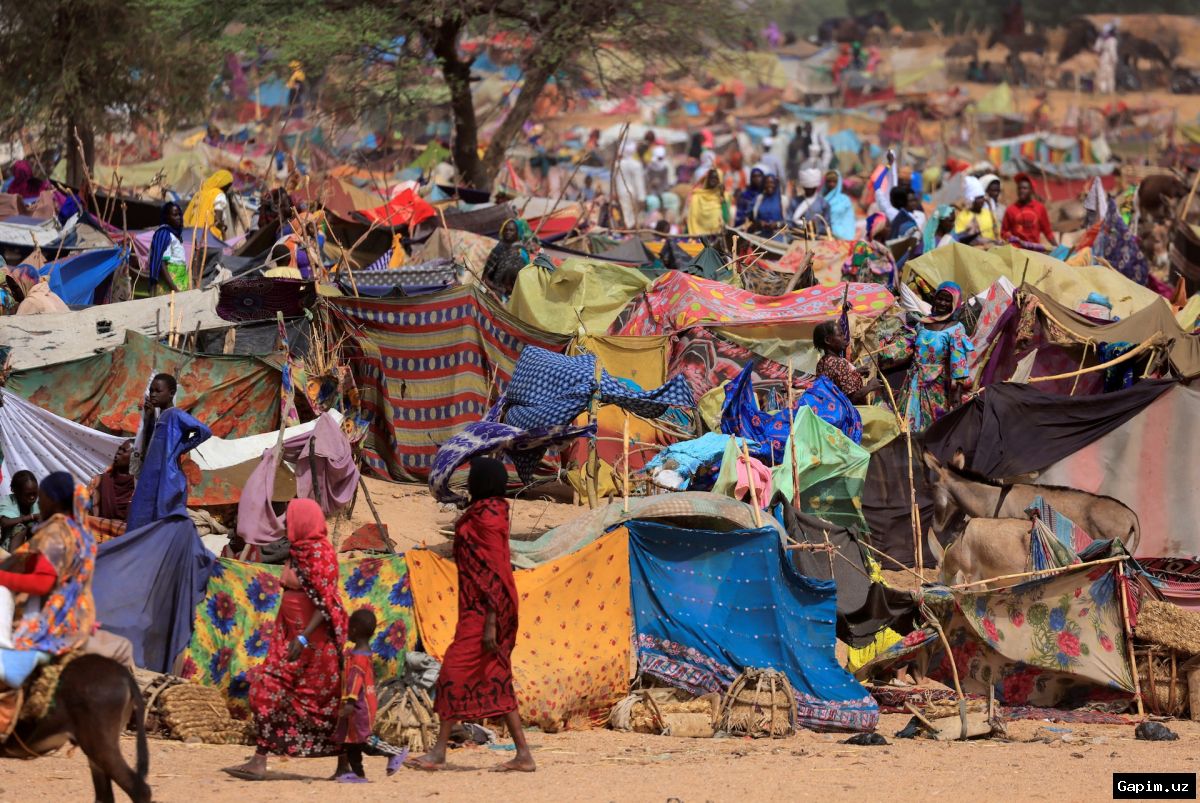
Under a lone tree in the Iridimi refugee camp in eastern Chad, 45-year-old Thuraya Mukhtar sits quietly, trying to piece together the remnants of a life that was safe before war tore it from its roots. Just a week ago, the deafening roar of explosions and relentless gunfire forced her to abandon her home in the Orchi area of western Sudan.
“I left without realising that I would never return. I carried my children and ran, with fire behind us and bullets over our heads,” Thuraya told Al Jazeera. “We haven’t eaten for two days, and my children are crying from hunger. I don’t know how I will feed them tomorrow.”
Thuraya is one of thousands of women now bearing the crushing weight of forced displacement. The devastation began on June 15, when the paramilitary Rapid Support Forces (RSF) launched a sweeping offensive on the Orchi area in North Darfur. Riding horses and camels and backed by heavily armed vehicles, the fighters left a trail of ruin, burning ten villages and looting the local market.
A week later, thousands of displaced families are still living in the open with no shelter, food, or medicine. Water is the most urgent crisis; the Orchi reservoir was deliberately destroyed. “We walked long distances before reaching the Chadian town of Tine. Along the way, we ate tree leaves and drank contaminated water we found in puddles,” said 35-year-old Hawa Adam.
For 40-year-old Um Ibrahim, the trauma is compounded by helplessness. “My kids haven’t eaten in two days. My husband was a farmer, but our livelihood burned along with our house.”
The catastrophic influx of refugees is overwhelming local humanitarian networks. Mustafa Barah, head of the Darfur Genocide Victims Commission, noted that camps in eastern Chad are receiving up to 80 fleeing families every day. Mohammed Safi, media official for the Tine Emergency Room, told Al Jazeera that over 7,000 families have arrived in the past two days, all in desperate need of tents, blankets, food, and safe water.
Sudanese officials argue that the horrors in Orchi are not random acts of war but a calculated geopolitical strategy. Salah Rassas Adam Tour, a member of Sudan’s Sovereign Council, told Al Jazeera that the RSF’s targeting of civilians is a systematic policy to change the region’s demographic makeup. He called for international intervention.
A joint report by the UN’s FAO and WFP declared that Sudan faces the world’s worst hunger crisis, with 19.5 million people enduring acute food insecurity and famine threatening 14 areas across Darfur. For mothers like Thuraya and Hawa, these statistics translate into a grim daily reality of survival under the sparse shade of trees.
Source: www.aljazeera.com