Ukraine escalated its disruption of Russian battlefield logistics over the past week, with dramatic attacks on Russian-occupied Crimea and satellite communications centers near Moscow – two regions where Russia is supposedly prioritizing air defense.
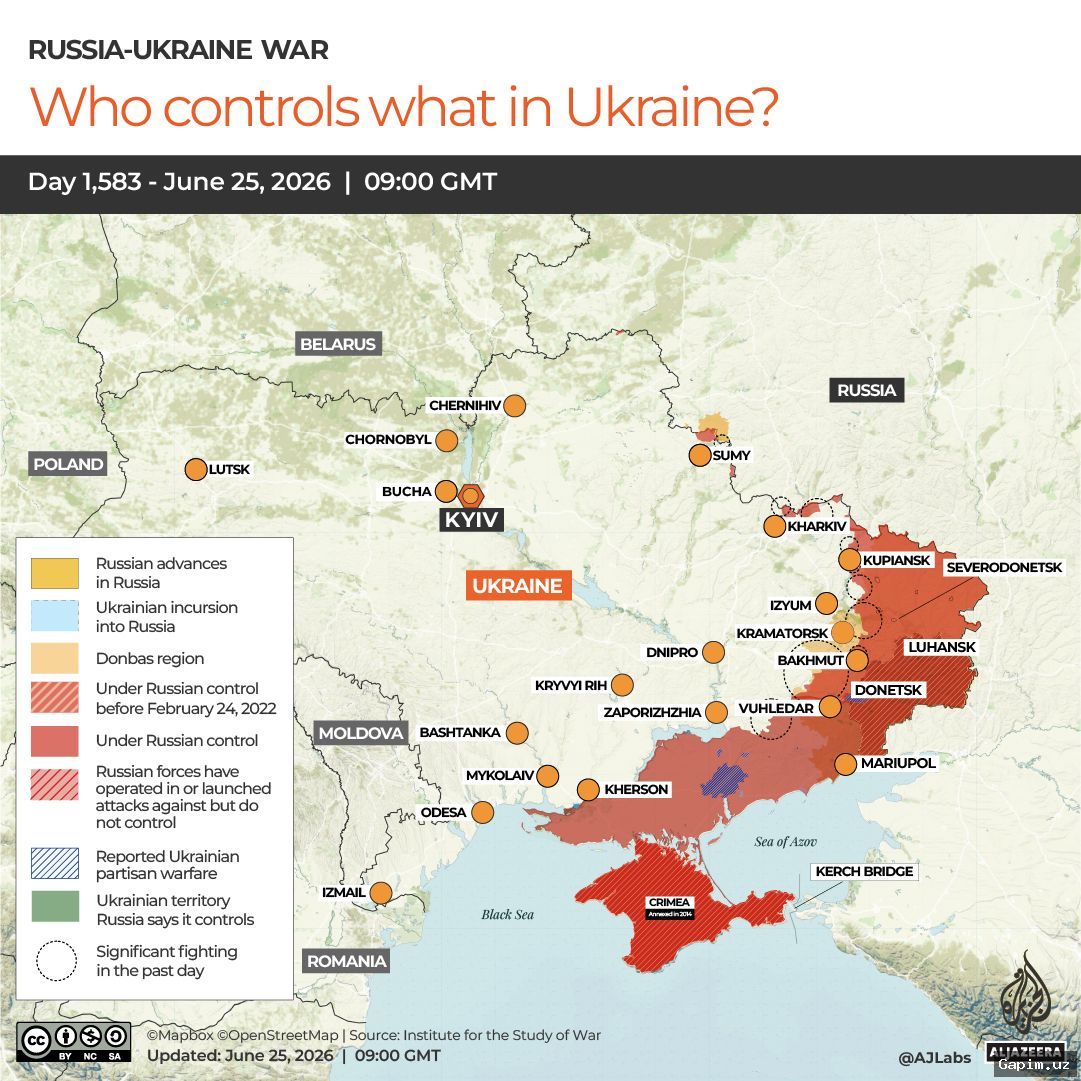
In response to Ukrainian attacks deep inside Russia, Moscow relocated air defense systems to protect Moscow and the Kerch Bridge, Ukrainian President Volodymyr Zelenskyy said on Tuesday. “These two perimeters are the ones the Russians have been ordered to defend at the expense of weakening other directions,” he claimed. The Kremlin allegedly moved “hundreds of launchers for S-400, S-500, and Pantsir systems to the Moscow region alone” and another 90 to Valdai.
On June 22, Ukraine targeted two Russian military satellite communication centers. Ukraine’s General Staff said the Vladimir Space Communications Centre, 200 km east of Moscow, had “critically damaged” its main 25-meter parabolic antenna, and a strike on the Dubna Space Communications Centre 100 km north of Moscow damaged its 32-meter antenna. In both cases, buildings housing electronic hardware were also damaged. Ukraine claims Russia relies on satellite feeds from these centers to spy on Ukrainian maneuvers and coordinate forces.
In Crimea, Ukraine interrupted fuel supply, caused power outages, and cut off transport between the peninsula and the Russian mainland on Sunday. Long-range drones simultaneously hit two important oil facilities on either side of the Kerch Strait – the oil terminal in Kerch and the port of Kavkaz in Russia. Geolocated footage showed oil storage facilities in Kerch and supply ferries in Kavkaz on fire.
Ukraine managed to disable four S-400 missile complexes and two Pantsir systems to strike Kerch, which is less than 1 km from the heavily defended Kerch Bridge. Crimean occupation Governor Sergey Aksyonov immediately suspended fuel sales to all but state services. In Sevastopol, fuel had already been rationed to 20 liters per week for private individuals.
Kyiv’s forces started attacking Crimea in summer 2023. This year, Ukraine launched an air campaign to weaken Russia’s ability to deliver force to the front line by hobbling supplies. Russian independent newspaper Meduza plotted 270 attacks on Russian trucks and logistics centers this year, noting a stark increase in attack depth. French analyst Clement Molin tallied 500 separate attacks between May 1 and June 18.
Ukraine has also been increasing its range inside Russia, aiming to destroy refineries and weapons factories. On June 21, it struck the Tyumen refinery in Western Siberia, 2,070 km from Ukraine. Zelenskyy said the operation used new drones from Fire Point, claiming they will reach “3,000 plus” kilometers. On June 22, Ukrainian drones struck a plant in Voronezh making components for cruise missiles and Pantsir systems. On Wednesday, drones hit a gas processing plant in Orenburg, reportedly responsible for 60% of gas processed by Gazprom.
Ukraine’s ability to hit near and far from the front line has reportedly produced a tactical victory without a shot fired. Neighboring Belarus reportedly removed or deactivated four transponders used to direct Russian drones toward Ukrainian cities. Zelenskyy said the transponders had not been active since June 22, three days after he publicly warned Belarusian President Alexander Lukashenko. The move by Belarus suggested that Kyiv’s threats were winning over Moscow’s.
Source: www.aljazeera.com