An unusual wave of anti-corruption arrests targeting senior officials in Iraq has resulted in the seizure of tens of millions of dollars, rousing public opinion across the country and bringing renewed attention to the decades-long problem of financial corruption.
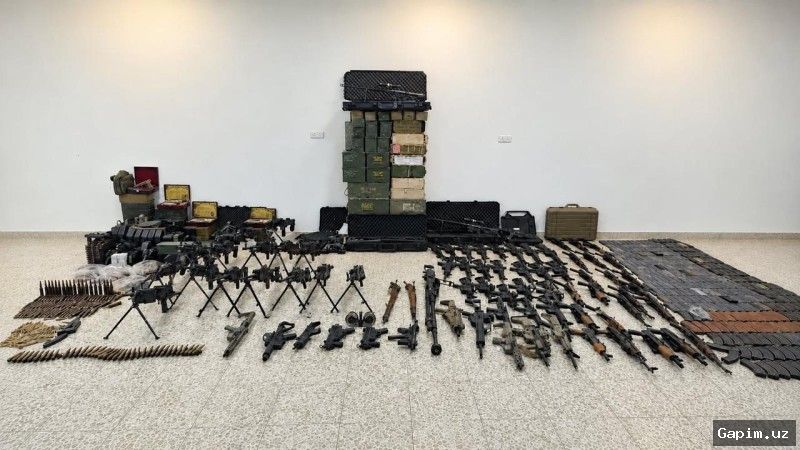
The Iraqi Supreme Judicial Council on Tuesday said cash seized in an investigation into alleged corruption linked to detained Oil Ministry Undersecretary for Refining Affairs Adnan al-Jumaili had risen to about $86 million. It added that 70 properties, 21 vehicles and about three kilograms of gold jewellery had been seized.
The judiciary said the funds were linked to waste in projects said to be carried out by al-Jumaili and others linked to the case. Al-Jumaili, who was also the head of the Iraqi North Refineries Company, was arrested at his home in the town of al-Ishaqi, north of Baghdad, on May 30 as part of the probe.
It came days after the new Iraqi Prime Minister Ali al-Zaidi ordered the investigation of contracts issued by the government in recent years to look for evidence of corruption. The Supreme Judicial Council added that Raed al-Jubouri, the former governor of Salah al-Din governorate, was also arrested.
Anti-corruption activists have complained that Iraq’s political structure is built around graft, with parties and politicians using their patronage networks and powers to plunder state resources. Iraq was placed 136 out of 182 countries in Transparency International’s Corruption Perceptions Index for 2025, with the report noting some improvements but also “significant structural hurdles.”
Al-Jumaili is the most high-profile government figure to be arrested on corruption charges since Prime Minister al-Zaidi took office on May 16. In June, Alaa Samir al-Jubouri, a leading official in the Iraqi Ministry of Electricity, was arrested in Baghdad, accused of corruption and wasting public funds.
Further, al-Zaidi cancelled the $764 million Baghdad international airport development project due to suspected corruption, hinting that the government is taking the issue more seriously. In one of his first decisions as prime minister, al-Zaidi established the Supreme Sovereign Council for Integrity, Oversight and Recovery of Public Funds.
“The Iraqi government and the prime minister regard corruption as one of the gravest challenges threatening the Iraqi state and its political order,” government spokesman Haider al-Aboudi said. However, some observers are skeptical about the process and say it has yet to address older, more significant or politically sensitive cases of alleged corruption.
“I admit that this is the first time I have seen a collective anti-corruption effort headed by the prime minister,” Mousa Faraj, former head of the Iraqi Federal Integrity Commission, told Al Jazeera. “But my advice to the prime minister is to start with serious and major old files. At the top of them are the Central Bank currency auctions in previous years, where corruption reached tens of billions of dollars.”
In March 2021, Iraq’s Federal Commission of Integrity estimated that $240 billion had been smuggled out of the country since the US-led invasion of Iraq in 2003, equivalent to 32 percent of Iraq’s revenues over that 18-year period. The commission’s Asset Recovery Department has the potential to claw back billions, but achieving this would be a difficult task.
“Restoring the stolen funds, whether from inside the country or abroad, is a very difficult process, if not impossible,” said Mohammed Raheem al-Rubie, head of the al-Nahrain Foundation for Transparency and Integrity. “One of the reasons for this is because of the outdated Iraqi legal system, which still predominantly follows the 1969 penal code. Most of the laws of this code do not cover these types of financial crimes that have been committed after 2003.”
A 2024 United Nations Development Programme report on corruption in Iraq said that there was a “continued reliance on broad legal frameworks that may not fully match the gravity of the corruption involved.” “Corruption in Iraq is politically protected. Thus, it becomes a very complicated task to fight it,” said Ghalib Aldaamy, a former employee of the Integrity Commission.
Source: www.aljazeera.com