In 2017, the United Arab Emirates appointed the world's first Minister of State for Artificial Intelligence and launched its 'UAE AI Strategy 2031,' aiming to become the most AI-ready nation. However, after the US and Israeli attack on Iran in February 2026, the UAE became a prime target: thousands of Iranian missiles and drones struck data centers operated by Amazon, Google, Microsoft, and Nvidia.
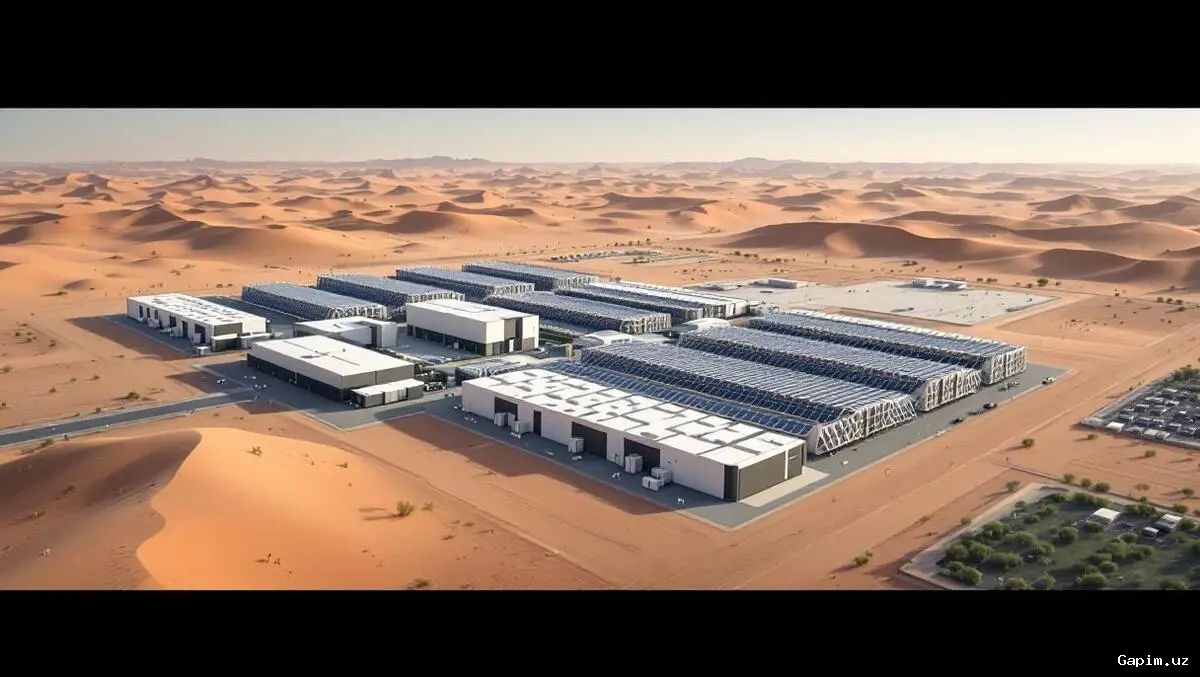
The war raised concerns about undersea cable safety, as reported by The Conversation. The blockade of the Strait of Hormuz by Iran and later the US delayed hardware deliveries. 'Data centers have become critical infrastructure and need better protection, just like oil refineries,' said Sebastian Sons, senior researcher at German think tank CARPO.
Despite the impact, Mohammed Suleiman, senior fellow at the Middle East Institute in Washington, claimed: 'The political risk profile has changed, but the fundamentals haven't. The UAE still lies at the intersection of capital flows between East and West, with energy, land, and political will to build AI at scale.'
The UAE has weathered past crises—the 2008 financial crisis, COVID-19, and Gulf conflicts—by reinventing its business model. Sons noted that 'long-term damage would only occur if the Iran conflict drags on and the UAE cannot adapt.'
In May, a planned $1 billion mega-data-center project in Kenya was canceled. The UAE's global compute diplomacy strategy may pivot, but its AI portfolio may already be diversified enough. At the core is G42, a multibillion-dollar AI conglomerate founded in 2018. The Mohamed Bin Zayed University of Artificial Intelligence (MBZUAI), the world's first graduate AI university, opened in 2019.
The UAE once tried to balance between US and Chinese tech ties, but in 2023 it severed all AI links with China. Now, Abu Dhabi is developing Stargate UAE, a massive data center cluster for OpenAI and US firms, covering an area the size of Monaco. Between 35 and 58 data centers are operational in the UAE.
However, a 2026 Atlantic Council report noted that the UAE has yet to rank among top global AI engineering talent pools. 'The region's AI ecosystem relies on foundational models and algorithms developed elsewhere, making it a consumer rather than a producer,' said Fatima Abu Salem, computer science professor at the American University of Beirut. Arabic AI models like Jais have been criticized for poor quality.
Despite these challenges, Sons argued: 'The UAE has invested so much in its AI strategy that turning back is not an option. It's about becoming an irreplaceable key player.' As early as 2018, AI minister Omar Sultan Al Olama declared: 'Data is the new oil.'
Source: www.dw.com