Tehran, Iran – The memorandum of understanding (MoU) signed last week between Iran and the United States appears to be in jeopardy after a second day of military strikes, as well as a framework agreement that entrenches Israeli forces on Lebanese soil.
The Islamic Revolutionary Guard Corps (IRGC) on Sunday released video showing the launch of ballistic missiles overnight, with a message written on them in English and Persian saying US President Donald Trump was insisting on a “defeated war”. The IRGC said it had fired missiles and drones towards the US Ali Al Salem airbase in Kuwait and the US Fifth Naval Fleet in Bahrain in retaliation for a second day of US strikes, threatening more attacks if the deal is violated again.
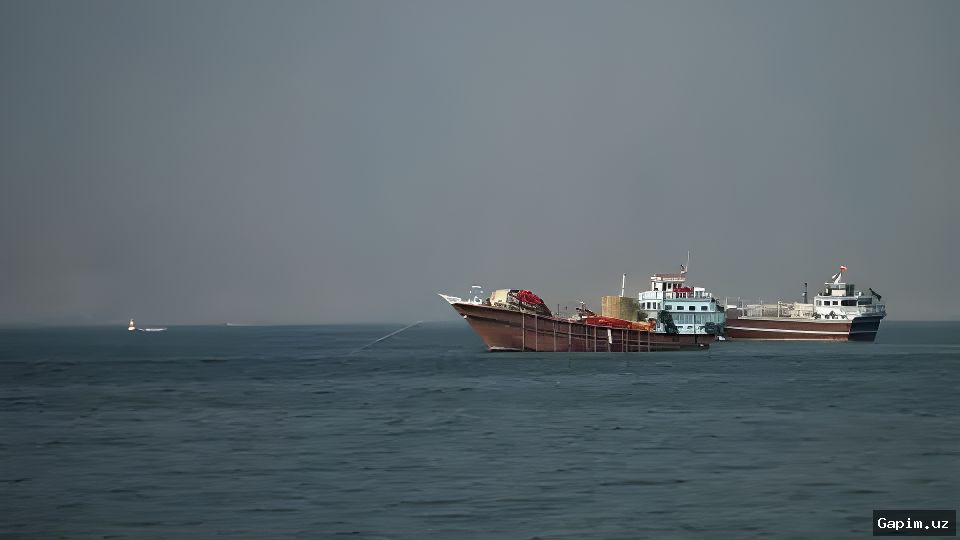
The exchanges of fire come after the US coordinated the transit of vessels out of the Strait of Hormuz in cooperation with Oman and the International Maritime Organization. Many ships were being directed through Oman’s waters, prompting the IRGC to hit a container ship and a tanker with explosive-laden drones in an attempt to force traffic to pass through Iranian waters instead.
Speaking to reporters in neighboring Iraq on Sunday, Foreign Minister Abbas Araghchi said Iran will exercise sole management and oversight of the critical waterway for the next 30 days before allowing full traffic to resume. He also emphasized the first clause of the June 17 MoU, which says military operations must immediately and permanently end on all fronts, including Lebanon, and urged Washington to exert pressure on Israel to stop attacking southern Lebanon.
The governments of Israel and Lebanon reached a US-brokered framework deal on Friday that allows Israeli forces to remain in southern Lebanon until Tehran-backed Hezbollah is fully disarmed, contradicting the MoU with Iran. Hezbollah swiftly rejected the agreement, calling it “humiliating, shameful and a surrender” of Lebanon’s sovereignty.
Negar Mortazavi, a senior fellow at the Center for International Policy, said she expected the Lebanon issue to negatively impact the MoU because Hezbollah was not on board and previous ceasefire deals with Israel have been repeatedly violated. She also noted that Iran has found tremendous leverage with the Strait of Hormuz, treating it as a “golden card”, as disruption to oil exports has heavily impacted markets.
On Saturday, Iran’s President Masoud Pezeshkian, Speaker and chief negotiator Mohammad Bagher Ghalibaf and judiciary chief Gholam-Hossein Mohseni-Ejei released an image of their first publicized trilateral meeting since the start of the war. Supreme Leader Mojtaba Khamenei has not been seen or heard from since succeeding his father, Ayatollah Ali Khamenei, who was killed in a US-Israeli attack, but a new written message attributed to him on Sunday said: “What is certain is that the criminals must be seized by the collar and made to face the punishment for their criminal acts”.
Iran’s financial markets reacted poorly after two nights of attacks, with the national currency losing gains since the signing of the MoU to trade at about 1.7 million rials against the dollar in Tehran’s open market on Sunday. The main index of the Tehran Stock Exchange also lost more than 100,000 points to stand at just over five million points.
Source: www.aljazeera.com