The memorandum of understanding (MoU) signed by the United States and Iran is not a peace treaty, nor is it even a credible framework for one. A vocal chorus of critics has rushed to portray it as a humiliation – evidence that President Donald Trump was maneuvered into negotiations and extracted a poor deal from a regime that outplayed him.
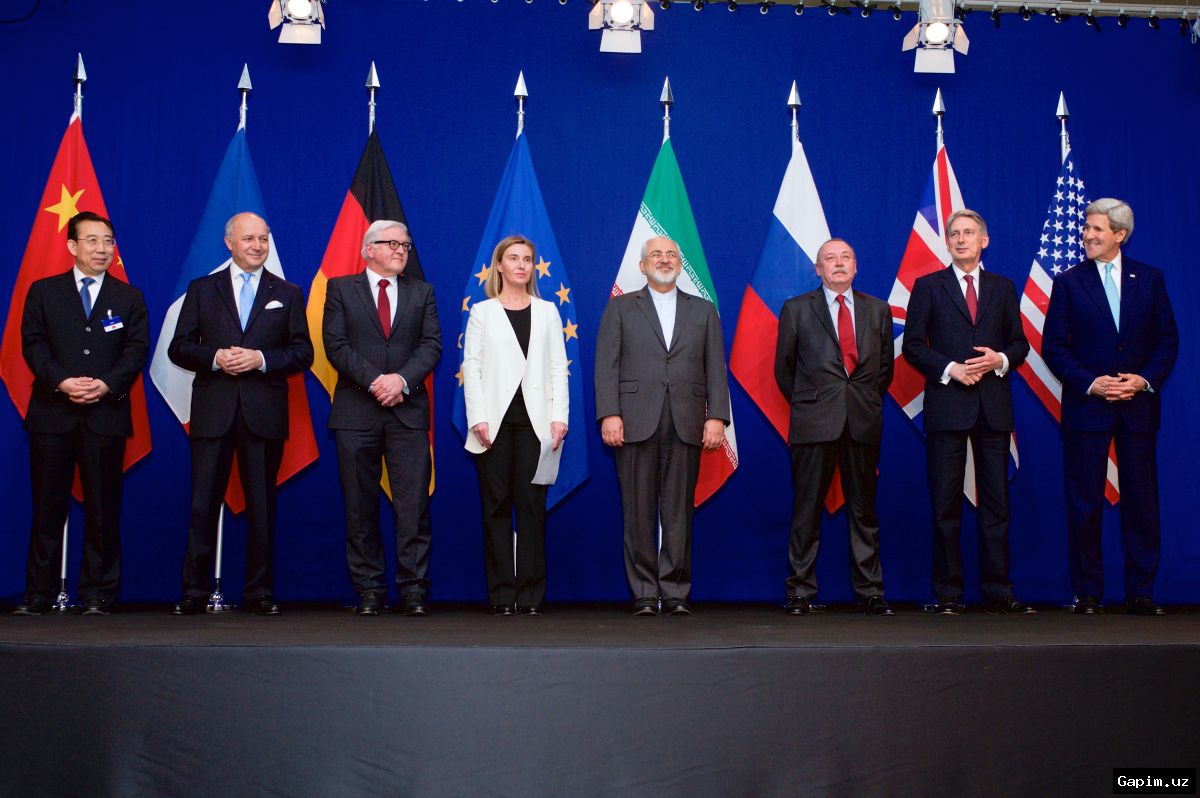
That reading mistakes a mirage for reality. The Trump administration entered these talks with a precise understanding of what the Iranian regime is, what it wants and what any agreement with it is actually worth. No one in that negotiating team harbors the illusion that Tehran intends to honor commitments that constrain its core ambitions. The MoU is not a peace settlement. It is a mutually understood pause – a tactical intermission chosen by both sides for reasons that have nothing to do with trust and everything to do with time.
To grasp why, one needs only consult Iran’s unbroken record. That record is not a matter of interpretation or political dispute. It is a documented history of agreements made, commitments given and obligations systematically abandoned whenever honoring them conflicted with the regime’s objectives. The pattern is consistent enough to constitute a doctrine: Iran negotiates under pressure, signs what is necessary to relieve that pressure and resumes its course once the immediate threat has passed.
The deeply flawed 2015 Joint Comprehensive Plan of Action (JCPOA) was the most prominent recent demonstration of this cycle. Presented as a landmark of multilateral diplomacy, it was in practice a subsidized intermission – a breathing space Iran used to consolidate resources, sustain its proxy networks and continue advancing its strategic program. The JCPOA did not change Iranian behavior. It funded and protected it.
The Trump administration’s “maximum pressure” campaign was a direct response to that lesson: A regime of this kind cannot be managed through diplomatic lifelines. It can only be constrained by pressure severe enough to leave it no viable alternative to compliance. The new MoU does not signal that Iran has changed. Its calculus remains what it has always been – survival and expansion, pursued through whatever tactical posture the moment requires.
Nowhere is this more apparent than in the Iranian nuclear program. As a signatory to the Non-Proliferation Treaty, Iran has repeatedly committed to transparent cooperation with the International Atomic Energy Agency. It has repeatedly broken those commitments, blocking inspections, constructing clandestine enrichment facilities, destroying evidence and systematically deceiving the international community. The pattern is not one of occasional noncompliance. It is deliberate, sustained deception in pursuit of a single unwavering objective: the acquisition of a nuclear weapon.
Iran’s rulers are not pragmatic actors engaged in a conventional cost-benefit calculation. Their goals are theological and strategic in a way that places them beyond the reach of ordinary negotiation. They do not govern in the interests of the Iranian people. The sanctions they have endured have devastated ordinary Iranians – driven up poverty, hollowed out the middle class, denied the population access to medicines and opportunity. None of that has moved the regime one degree from its course.
What this MoU represents is a mutually understood strategic pause, a breathing space both parties have chosen, for entirely different reasons, over immediate confrontation. Iran needs economic relief. A regime facing internal decay and a depleted treasury has strong incentives to buy time, replenish its resources and wait out what it calculates to be a finite window. Tehran is acutely aware that Trump has roughly two and a half years remaining in office. From its perspective, survival through that period is itself a form of victory.
Washington’s calculus is different in kind. Keeping the Strait of Hormuz open is an immediate, non-negotiable goal – a choked strait means an energy price shock with global consequences. Beyond that, the US has its own repositioning to accomplish. Military inventories drawn down through recent operations are being restocked. Strategic options are being preserved and expanded. A pause that enables that rebuilding, while avoiding a premature confrontation on unfavourable terms, is not a concession. It is preparation.
The MoU will not resolve the Iranian problem. It was not designed to. When its terms expire or when Iran decides it has served its purpose, the nuclear program will resume its advance, the proxies will be better resourced, and the Strait of Hormuz will once again become a flashpoint. That outcome is not a possibility. Given Iran’s record, it is a near-certainty. The only consequential variable is whether the US and those willing to stand alongside it will be better positioned to act decisively when that moment arrives.
Source: www.aljazeera.com