The Chinese regime has declared its right to pursue legal action against overseas individuals and organizations that undermine its ethnic unity, as Beijing moves to expand its extraterritorial reach. The “Law on the Promotion of Ethnic Unity and Progress,” passed in March by the National People’s Congress, officially went into effect on Wednesday.
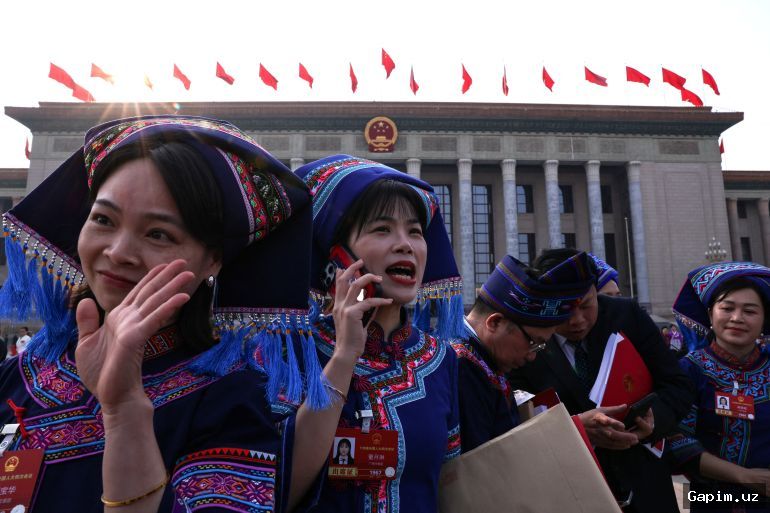
The legislation has drawn criticism from rights watchdogs, including UN Special Rapporteurs on Minority Rights and Cultural Rights, who claim the law has been used to justify forced assimilation in regions like Tibet and Xinjiang rather than encourage ethnic harmony. Article 63 of the law has attracted international attention for extending China’s legal reach overseas.
According to a translation, Article 63 states that “organizations and individuals outside of mainland China who commit crimes aimed at [China] that undermine ethnic unity and progress or create ethnic division are to be pursued for legal responsibility in accordance with law.” Amnesty International warned that this provision could be used to justify transnational repression of overseas citizens and activists.
“Peaceful advocacy for minority rights in China by anyone, anywhere could be characterized as undermining ‘ethnic unity’,” said Sarah Brooks, Amnesty’s Deputy Regional Director. She argued that “unity” in this context means conformity with Beijing’s political line rather than harmony between communities.
Zhou Jianshe, a spokesperson for the State Council Information Office, defended Article 63 as a “legitimate, lawful, necessary, and workable legal provision,” accusing Western media of distorting the law as an example of “long-arm jurisdiction.” The law has also raised alarm in Taiwan, with President William Lai Ching-te urging citizens to remain cautious while traveling or living in China.
Source: www.aljazeera.com