Moscow, Russia – Russia is grappling with a severe fuel deficit after Ukrainian drone strikes disabled a significant portion of its oil refining capacity, leading to long lines at petrol stations and rising prices across the country.
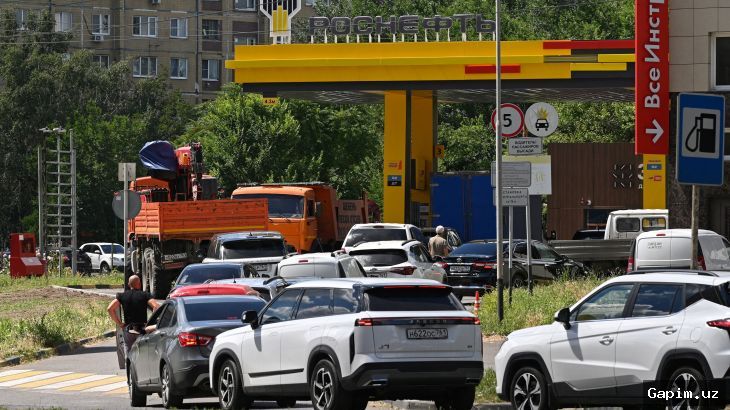
With the war in Ukraine ongoing and the agricultural harvest season underway, the Russian regime is scrambling to reroute supplies, maintain price caps, and enforce export bans to prevent further domestic shortages. Long queues at petrol stations have become common even in the prosperous capital, Moscow, where drivers wait for hours to fill up, and some pumps run dry.
“I’m deeply frightened by the uncertainty and the lack of understanding where the situation is heading,” Irina, a Moscow resident waiting to refuel, told Al Jazeera. Another resident, Igor, said: “I think things can get out of control if the crisis causes major industries to shut down.” Both requested their surnames be withheld.
Analysts predict that increased fuel prices will lead to higher transportation costs and significant price hikes for goods and services. Stanislav Mitrakhovich, an expert at the National Energy Security Fund at the Russian Financial University, described the crisis as “deep, yet for a long time, Russian authorities were unwilling to acknowledge it.” He added that the regime’s response has led to “greater public distrust” and triggered panic buying.
“Indirect evidence indicates that Ukrainian drone attacks have disabled about a quarter of Russia’s oil refining capacity,” Mitrakhovich told Al Jazeera. “Seasonal demand has also contributed. The crisis has led to rising fuel prices and local shortages, as some regions simply lack oil refineries.” The situation is “even worse” in regions near the combat zone, where fuel rationing has long been in place.
To tackle the problem, the Russian regime has imposed fuel rationing, limiting sales to 20-30 liters per vehicle and prohibiting filling jerry cans. Earlier, it banned petrol and jet fuel exports and is now considering a ban on diesel exports. Authorities have also loosened fuel-quality regulations, allowing lower-grade fuel for the domestic market. In Russia-controlled Crimea, a state of emergency has been declared.
As the agricultural harvest season approaches, authorities are prioritizing farming allocations to prevent a hit to food security. To offset the domestic shortfall, Moscow has sought fuel imports from neighboring countries like Belarus and Asian markets, reportedly shipping 60,000-80,000 tonnes of petrol from India and planning to import 400,000 tonnes monthly from various nations.
Russian President Vladimir Putin acknowledges the crisis but appears reluctant to end the war in Ukraine, insisting the situation is under control. “These attacks on our facilities certainly create problems, that is obvious. We are currently seeing a certain shortage, though I would say it is not critical,” he said, calling for increased production of air defense systems and faster repairs at refineries.
Ukraine is seizing the opportunity, with President Volodymyr Zelenskyy authorizing a 40-day military and intelligence campaign aimed at pressuring Russia to end the war. Mitrakhovich noted that the crisis’s trajectory depends on whether Ukraine’s drone strikes or Russia’s air defenses prove more effective.
Source: www.aljazeera.com