The World Health Organization (WHO) has warned of new extreme heat waves expected to hit Europe and Central Asia in the coming days. The organization is urging governments to prepare for climate risks now, as intense heat becomes one of the most serious threats to public health.
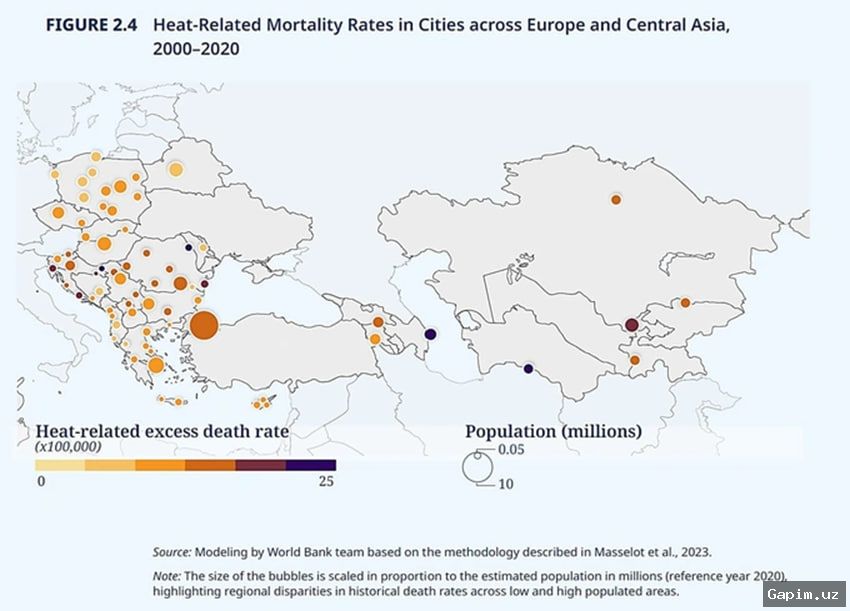
According to WHO, temperatures in parts of Central Asia have already exceeded 40 degrees Celsius. In the coming days, abnormal heat will intensify in Europe: Portugal and southern Spain are expected to see up to 43 degrees, with high temperatures then spreading to France and the Benelux countries.
WHO Regional Director for Europe Hans Kluge emphasized that extreme heat is no longer just a weather phenomenon. “Heat is a silent killer, but its consequences can be avoided,” he said.
The organization is particularly concerned about the situation in Central Asia, where the effects of high temperatures are exacerbated by vulnerable infrastructure, a lack of cooled public spaces, and insufficient public awareness.
WHO notes that less than half of the countries in the European region and Central Asia have comprehensive heat response plans. As a result, millions of people remain without systematic protection during temperature records.
The elderly, patients with chronic diseases, the homeless, and isolated individuals are most at risk. During heatwaves, the likelihood of dehydration, heatstroke, and complications of cardiovascular diseases increases significantly.
However, countries that have already implemented such plans are showing more effective responses. These include mortality monitoring systems, rapid public warning mechanisms, and support programs for the most vulnerable groups.
WHO recommends that states develop national heat response plans, create cooled public spaces, increase the resilience of healthcare facilities to climate challenges, improve public information systems, and actively use nature-based solutions — expanding green spaces, parks, and water bodies that help reduce urban air temperatures.
Experts emphasize that early preparation can significantly reduce the number of casualties during extreme heat periods.
Earlier, Uzbekistan's Ministry of Emergency Situations reported strengthening preventive measures due to summer heat and increased fire risk.
Source: podrobno.uz