Before the 2014 World Cup in Brazil, the legendary footballer Pele said: "They don't care about the beautiful game. They don't care about the elegance of football. In my time, we used to think and give a little show." His words perfectly capture the state of the world's most popular sport.
That tournament was meant to be a watershed moment for Brazil, showcasing talents like Neymar, Oscar, and Hulk. Instead, Brazil suffered a humiliating 7-1 semifinal defeat to Germany, a loss that still haunts the nation.
Germany's success exemplified how hard-running, athletic teams with strict tactical plans dominated football, replacing teams full of individual brilliance and improvisation.
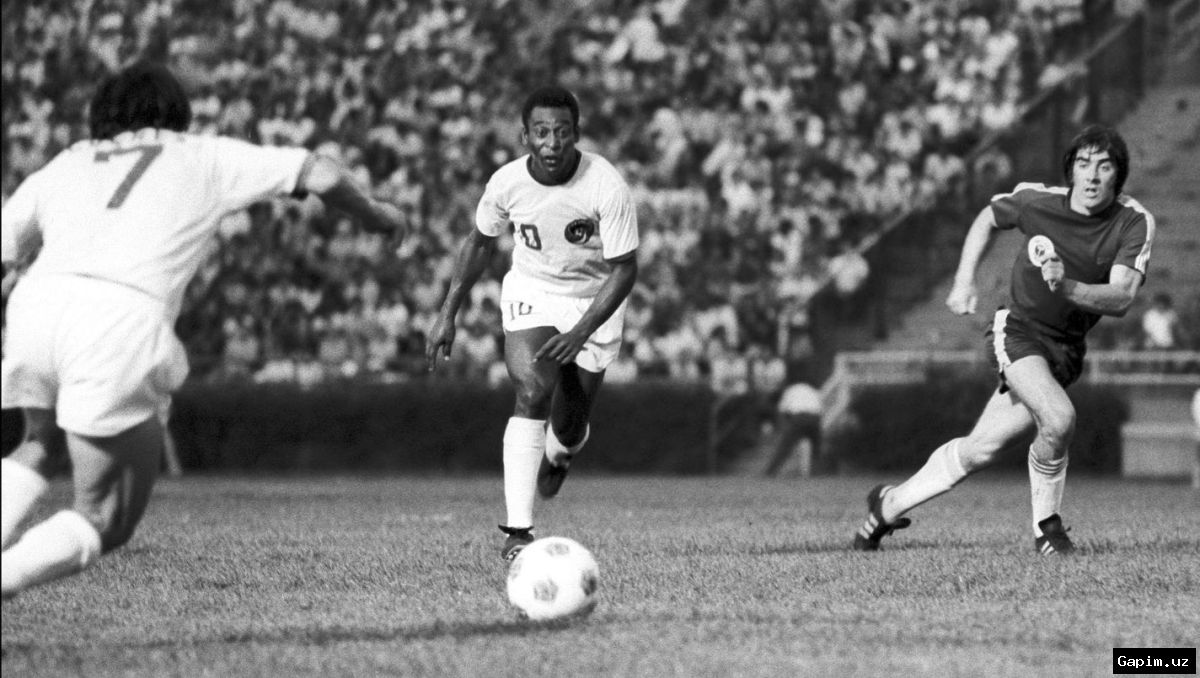
Pele's 1970 World Cup-winning team is considered by many historians as the last great side to win the World Cup while exemplifying the "beautiful game." Four years later, Brazil was tactically overtaken by teams like the Netherlands and their "total football" philosophy.
The year 1974 marked the corporatization of the game. Joao Havelange's election as FIFA president ushered in an era of lucrative global sponsorship deals. Brands like Adidas and Coca-Cola became entrenched FIFA partners.
Broadcast rights mirrored this trend, with TV deal costs skyrocketing. Football became big money, and the stakes were raised. Winning at all costs became the priority, and style of play was increasingly seen as outdated.
However, some teams still played beautifully. Notable examples include the 1974 Dutch finalists and Brazil's 1982 side. The Dutch replaced Pele's creative free-flowing play with total football, resulting in fast, fluid, attacking football.
Brazil's 1982 team, featuring Socrates, Zico, Eder, and Junior, wowed crowds with football reminiscent of the 1970 team. They didn't win the World Cup but were immortalized for their style.
Fast forward to 2026, and the "people's game" has become disconnected from common fans. In England, football was once a working-class sport. Now, Premier League tickets are so expensive that ordinary fans are priced out.
A recent survey found that top-tier football tickets in England have increased by 800% since 1990. Internationally, the World Cup has become FIFA's cash cow. Tickets for the current tournament range from $60 to over $10,000, generating nearly $9 billion in revenue.
Since the US hosted the World Cup in 1994, ticket prices have steadily risen. A category one final ticket in 1994 cost $475, which adjusted for inflation to 2026 would be $1,074.45. The steepest hike was from 2022 to 2026, with a 600% increase.
Yet, the magic and beauty of football still occasionally shine through. FIFA's expansion to 48 teams has allowed smaller nations to play on the biggest stage. Cape Verde captured hearts worldwide by reaching the knockout stages in their first World Cup, only eliminated after a heroic 3-2 extra-time loss to defending champions Argentina. This proves that football can still be beautiful.
Source: www.aljazeera.com