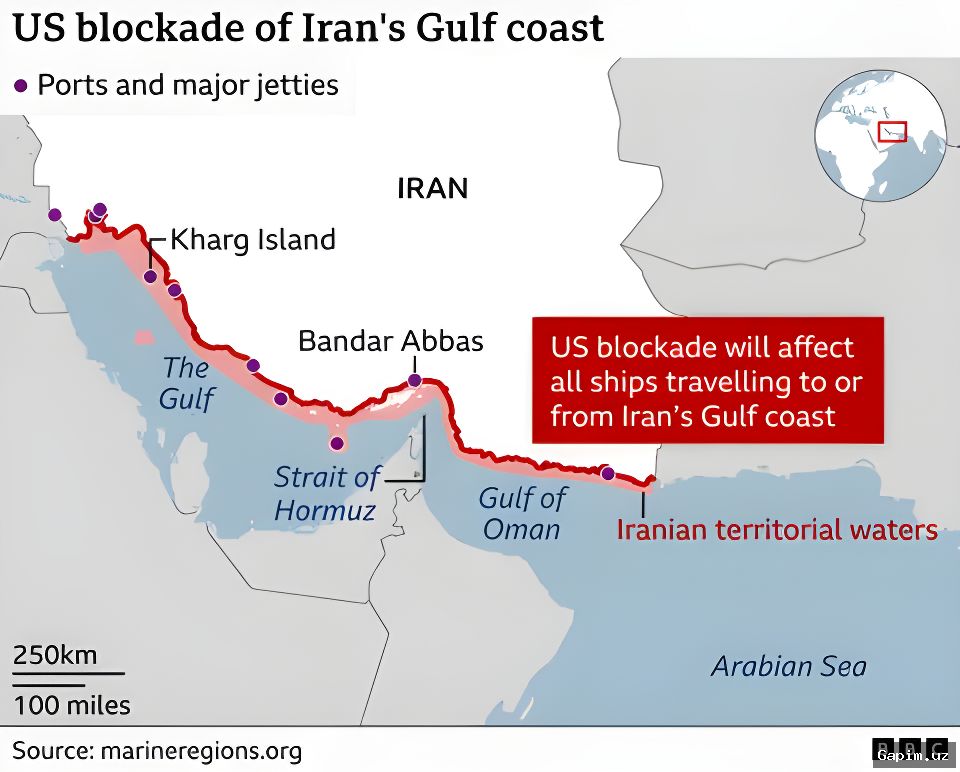
Tehran, Iran – Iran and the US regime are presenting conflicting narratives over the fate of ships passing through the Strait of Hormuz, continuing to trade threats even as they maintain contact through mediators.
Iranian state media on Saturday released a statement attributed to new Supreme Leader Mojtaba Khamenei, who vowed revenge for the assassination of his father, Ayatollah Ali Khamenei, in the war launched by the US and Israel in February. “We pledge to avenge your pure blood, and the blood of all the martyrs of these two wars. This revenge is the demand of our nation, and it must certainly be carried out,” he said.
Khamenei emphasized that this was state policy, not dependent on any single official. “Soon, individuals among the free people of the world will each carry out a part of this divine mission,” he said. His comments echoed calls for vengeance by hardline religious factions during funeral ceremonies for Ali Khamenei.
US regime President Donald Trump, meanwhile, claimed he believes he is first on Iran’s “kill list” and has left instructions to retaliate if an attempt on his life is made. He wrote that “a thousand Missiles are Locked and Loaded and aimed at the Islamic Republic of Iran” and that the US military is ready to “completely decimate and destroy all areas of Iran.”
Trump said he considers the repeatedly breached “ceasefire” to be over but that mediated talks could continue. On Friday, Qatari mediators visited Iran for meetings aimed at de-escalating tensions, while on Saturday Iran’s foreign minister traveled to Oman for talks.
Ali Vaez, the Crisis Group’s Iran Project director, said revenge rhetoric is for domestic consumption while diplomacy aims to prevent another punishing round of war. “Trump’s declaration that the ceasefire is over raises the costs of talks, but not necessarily their utility. Both sides appear to recognize that the alternative is an escalation neither can afford or reliably control,” he said.
US media reports suggested the Trump team expected Iran to acknowledge that hitting tankers earlier this week was a mistake. Vaez called these claims implausible but convenient for the US, as blaming the hardline faction leaves the door to diplomacy ajar.
Tehran, however, has emphasized its intention to exercise control over transit through the strait. Iran’s UN ambassador Amir Saeid Iravani warned that any interference by “external actors” would violate the MoU and delay the full restoration of maritime traffic.
The Islamic Revolutionary Guard Corps (IRGC) Navy said traffic in the Strait of Hormuz had recovered to about 50 percent of pre-war levels but that ships must pass only through designated routes and foreigners “will have no share” in managing the strait.
The UN’s International Maritime Organization (IMO) “strongly condemned” Iran’s decision to control the strait and called on member states not to recognize Iran’s claims. The US Treasury imposed its first sanctions since the MoU, designating several individuals and entities.
Negar Mortazavi, a senior fellow at the Center for International Policy, said “there may be internal disagreements in Tehran over tactics and the level of military pressure” but the Hormuz confrontation is rooted in a “broader dispute” over implementing the MoU. “Iran has not closed the door to talks, but will use calibrated military pressure to establish its interpretation, preventing the US and Israel from regrouping and resuming the war,” she added.
Source: www.aljazeera.com