A new poll by The Associated Press and the NORC Center for Public Affairs Research reveals that while more Americans are feeling the personal effects of extreme heat, belief in climate change has dipped.
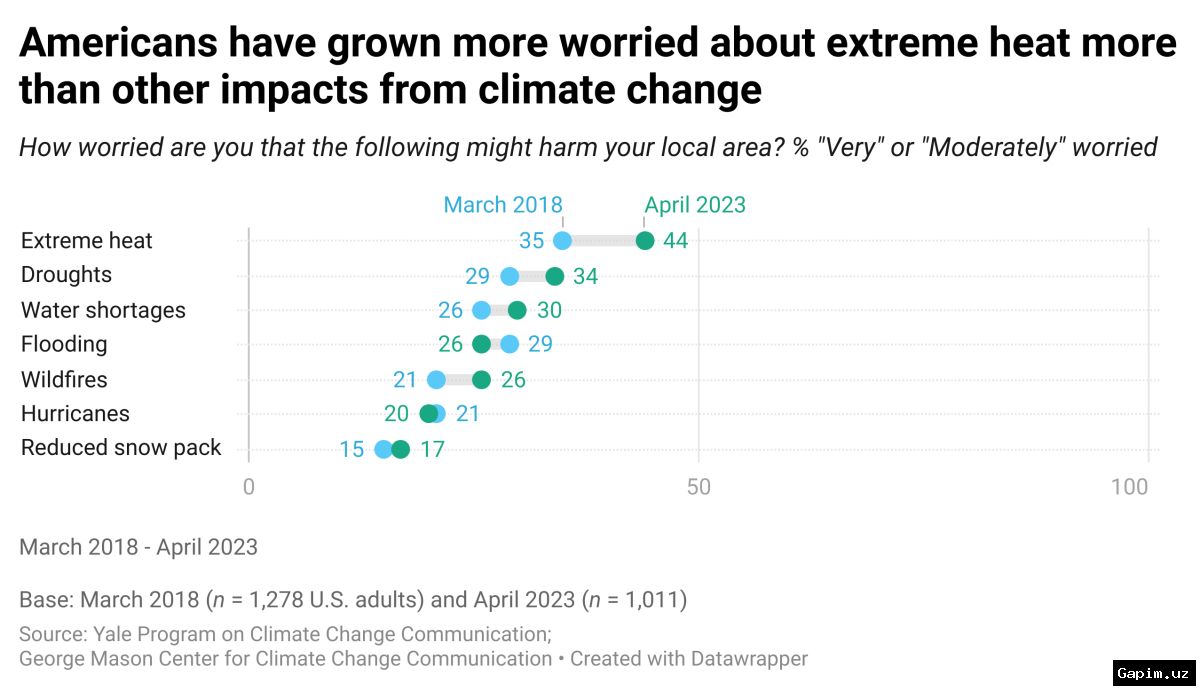
The survey, conducted in late July with 1,165 participants, found that 66 percent of Americans believe climate change is happening, down from 73 percent in September 2025. Seventeen percent are unsure, and 15 percent do not believe it is happening at all.
However, more respondents reported that extreme heat had a "major impact" on their daily activities. Thirty percent said it significantly affected their outdoor activities, up from 21 percent in July 2024. The number reporting a "major impact" on vacation and travel plans doubled from 8 to 15 percent. Exercise routines, sleep, and commutes were also increasingly affected.
The shift was most pronounced in the Midwest and West Coast. In the West, 35 percent cited a "major impact" on outdoor activities, above the national average. Democrats were more likely than Republicans to report heat-related disruptions.
Climatologists at Virginia Tech estimate that as of May, about 60 percent of the US was in drought, with 20 percent facing extreme conditions. Hardest-hit areas include Colorado and the Southeast, near Florida and Georgia. The La Niña pattern also dried the Pacific Northwest earlier this year.
With multiple heat domes baking the US, experts warn of increased wildfire risks, crop damage, and strain on infrastructure like energy grids. Higher temperatures lead to more air conditioning use, driving up electricity bills. About 81 percent of Americans said their bills were impacted by extreme heat in the past year, up from 69 percent in July 2024.
"I feel like my utility costs probably doubled in the last three or four years," said Daemien Williams, a bridge inspector. "I do look at my bills pretty in detail and see that the kilowatts and the usage is actually up, not just the price."
Scientists note that 2025 was one of the three hottest years on record. The CDC estimates over 1,220 heat-related deaths annually, with 2,300 deaths in 2023, the highest in 45 years.
"When I was a kid, that seemed like a very rare thing when it did hit 100," said John Hazel, a crime scene investigator. "Now it's just every day. Seasons felt more balanced. Now summer lingers, starts earlier, and lasts longer."
Source: www.aljazeera.com