European Union governments are seeking to reduce their reliance on US weaponry, but face numerous obstacles. DW examines the bloc's attempts to develop counterparts to Patriot and Tomahawk missiles, F-35 jets, and Starlink internet.
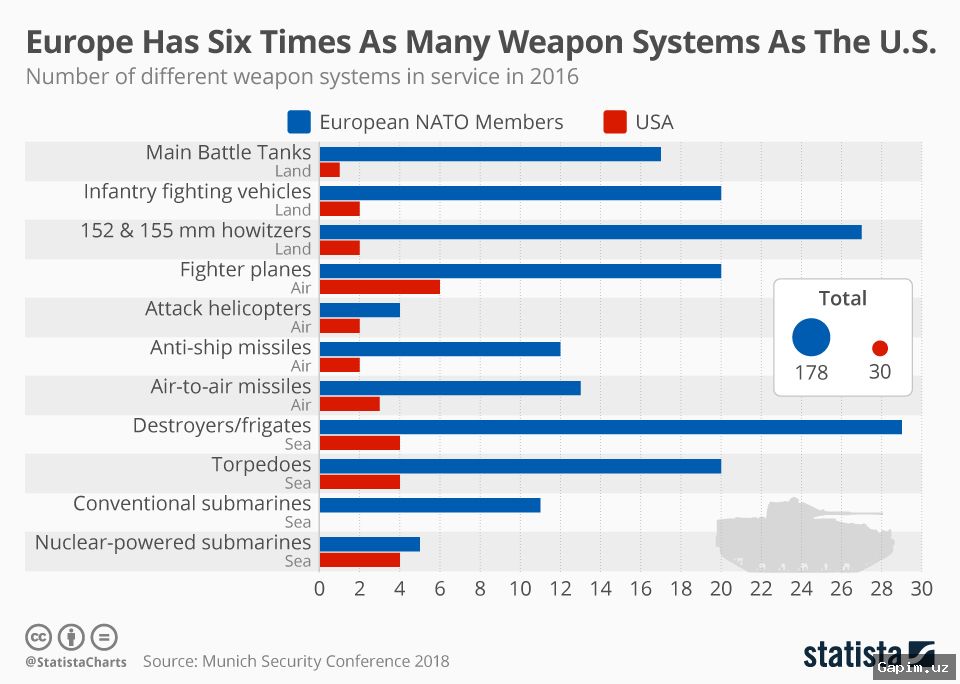
At July's NATO summit in Ankara, US companies secured lucrative contracts. Lockheed Martin and Rheinmetall signed a memorandum to jointly produce ATACMS missiles in Germany. This is a step toward increasing stockpiles, but Europe aims for greater independence in the long term.
Patriot air defense systems symbolize European NATO members' dependence on the US. They have been used for decades, recently to protect targets in Ukraine. European governments are developing several systems to reduce this dependency. France and Italy created the SAMP/T NG for high-altitude interception, with first units expected by 2027.
Germany's Diehl developed the IRIS-T for medium-range defense, already in use in Ukraine with a 40 km range. The IRIS-T SLX (available from 2029) will have an 80 km range. In the long term, Europe hopes to replace Patriots entirely.
For deep precision strikes, European militaries rely on US Tomahawk cruise missiles. Germany signed a memorandum to purchase Tomahawks and Typhoon launchers. Chancellor Friedrich Merz said it would "close an important strategic gap in our defenses." However, dependence will continue until European systems are developed.
The European Long-Range Strike Approach (ELSA) involves six countries, including France, Germany, and the UK, to develop a ground-launched missile system. Complex cruise missiles and affordable long-range drones (500-2,000 km) are also being developed. True independence is not expected until the 2030s.
In the "kill chain" concept, the EU remains dependent on the US. Without a joint network of sensors, satellite reconnaissance, and command structures, European missiles cannot identify targets independently.
The war in Ukraine has seen unprecedented drone use. The DECODER project aims to equip EU militaries with drones and counter-drone systems. Development is mostly national. The European Commission estimates DECODER will need €3.5-5 billion by 2033.
Starlink has been essential on Ukrainian battlefields. The EU is developing its own multi-orbit satellite service, IRIS², with 290 satellites for defense and secure government communication. Costing over €10 billion, it is scheduled for operation by 2030.
NATO has entered formal negotiations with Sweden's Saab to replace AWACS aircraft with GlobalEye early-warning planes, potentially ready by 2030.
Many European countries have bought F-35s, increasing dependence on the US. The Future Combat Air System (FCAS), a sixth-generation fighter project, collapsed due to disputes between France and Germany, a major setback for EU autonomy.
Source: www.dw.com