Lithuanian border guards have discovered tunnels through which migrants are attempting to enter the country from Belarus. Analysts view these tunnels as a means to destabilize the nation.
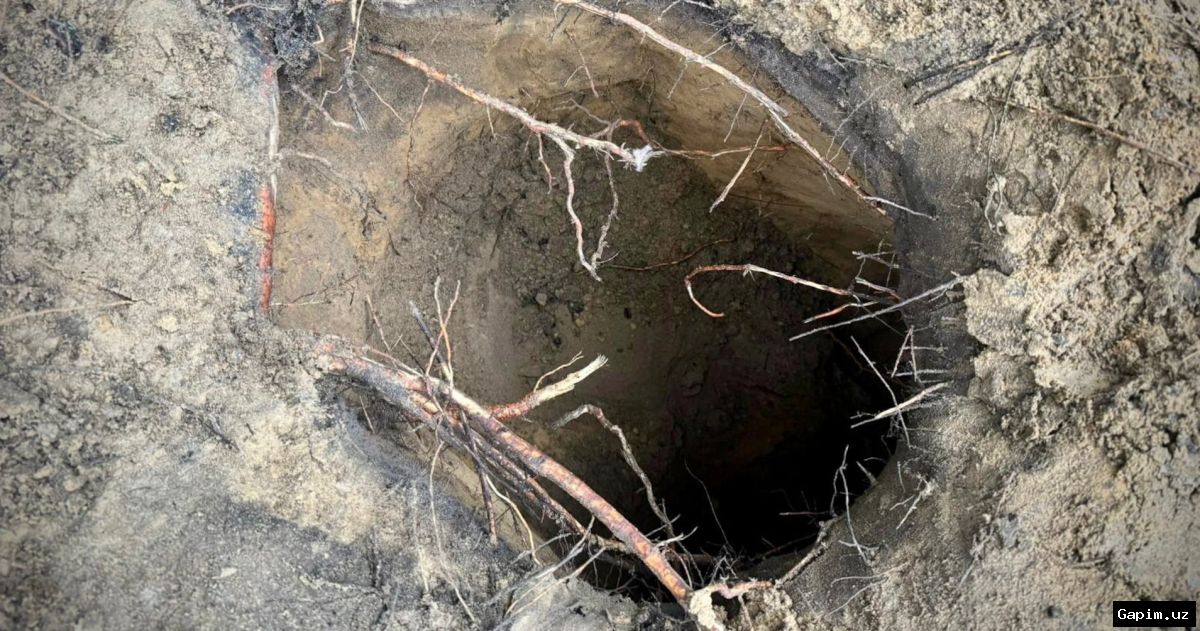
Migrants are taking a new route to enter the Baltic state of Lithuania: underground tunnels. These could be yet another attempt by Belarus to foster political instability, experts say.
The country's border guards say they have found 12 such tunnels since the beginning of the year near the Belarusian border, with lengths up to 25 meters on the Lithuanian side. They expect more to emerge. Lithuania's border with Belarus is about 700 kilometers long, of which around 550 kilometers are fenced.
"We have a ground seismic system, which can detect easily when there's a high level of vibrations over a long period of time," General Rustamas Liubajevas, commander of Lithuania's State Border Guard Service, explained to DW.
"We then wait [outside a tunnel] for the final stage of the digging and when the migrants come out, we apprehend them," he said, adding that up to 40 migrants exiting such tunnels had been arrested.
Lithuania's prosecutor's office confirmed to DW that a pre-trial investigation is underway concerning approximately 20 people suspected of illegally digging a tunnel. Possible charges also include people smuggling. Due to the investigation, no media visits are currently authorized at the sites.
Liubajevas is surprised migrants would attempt a subterranean crossing. "It takes a lot of effort to dig a tunnel and the migrants are arrested almost immediately — at most, one small group gets through," he said.
The elaborate nature of the tunnels has led him to believe the migrants aren't working alone. "They wouldn't be able to go through with this without logistical support from the Belarusian authorities, as they need a lot of material like wood to strengthen the tunnels' walls," he stressed, adding that Belarus seemingly wanted to "keep the level of tension at the border high."
Belarusian President Alexander Lukashenko has denied facilitating migration flows to neighboring states. Similar migrant tunnels were discovered in the past in neighboring Poland.
Margarita Seselgyte, Director of the Institute of International Relations and Political Science at Vilnius University, seconded Liubajevas' view. "Belarus is watching its border very closely, and the country doesn't fit in the natural migration route of migrants from Afghanistan, Iran or Sri Lanka," she told DW, adding that Minsk had to at least have turned a blind eye to any digging activity taking place near the border.
Seselgyte thus sees the tunnels as "a hybrid attack to cause anxiety in our society." "There is no vacuum in the world of security. As Lithuania has been closing vulnerabilities and reinforcing its border fence, Belarus is now helping migrants pass beneath it," she said.
For her, Minsk is assisting its close ally Moscow. Russia launched its full-scale invasion of Ukraine in February 2022 partly from Belarus, where it amassed troops under the pretext of military drills. "Lithuania has been very vocal in terms of defense against Russia, both conventional and hybrid, on an EU and NATO level, and they want to silence that voice by causing chaos in our country," the political scientist said.
Linas Kojala, CEO of Vilnius-based think tank Geopolitics and Security Studies Center, noted that the tunnels were keeping the border force busy – even if only a few migrants got through. He described the tunnels as "just another phase of the attack of weaponized migration we've been facing since 2021."
That's when tens of thousands of migrants crossed into Lithuania, Poland and Latvia from Belarus. The European Union called the events a "state-sponsored instrumentalization of migrants at the EU external border," organized by Lukashenko. Lithuania's border guards registered 1,652 attempts to enter the country irregularly in 2025.
But this number won't go down to zero unless Minsk deals with the problem on its side, according to Kojala. "And that's unlikely: Belarus is clearly trying to pose as many problems as possible."
Robert Gonzci, an analyst at the Migration Research Institute in Budapest, underlined that Belarus would be far from the first country to use migration as a strategic tool. "It's a relatively low-cost, low-risk way of exerting pressure on other countries, and since the 1950s, there've been numerous documented cases of governments creating or manipulating migration flows," he said to DW.
Gonzci didn't rule out that autonomous smuggling networks might be behind the recently discovered tunnels, which Belarusian authorities don't fully control. He added that Belarus and Russia have used weaponized migration to "divert Western attention from Russia's broader strategic agenda and create instability along NATO's eastern flank by fueling political and social tensions within European countries."
The states organizing such operations – often authoritarian regimes – enjoyed an inherent strategic advantage, Gonzci stressed. "The target is usually a democratic state facing a fundamental dilemma: They must protect their sovereignty by securing their borders while simultaneously upholding their legal obligations and humanitarian commitments," he said.
But experts seem to agree that countries on the EU's eastern flank have been doing rather well in that respect. "There's increasing cooperation and coordination between the Nordic and Baltic States and Poland, as these countries are facing similar challenges. And the EU Frontex mission has been sending additional equipment," Seselgyte said.
Lithuania is currently receiving technical support from neighboring countries. "We are testing Polish scanning equipment, through which we can identify empty spaces underground. If these tools work well, we'll buy and deploy them," explained Liubajevas.
Source: www.dw.com