As hostilities between the United States and Iran reignite, global attention has shifted again to the immediate risks of the conflict. Across the Middle East, families have endured fear, uncertainty and violence. Communities have faced disruption, displacement and the destruction that war brings. Protecting lives must remain the immediate priority.
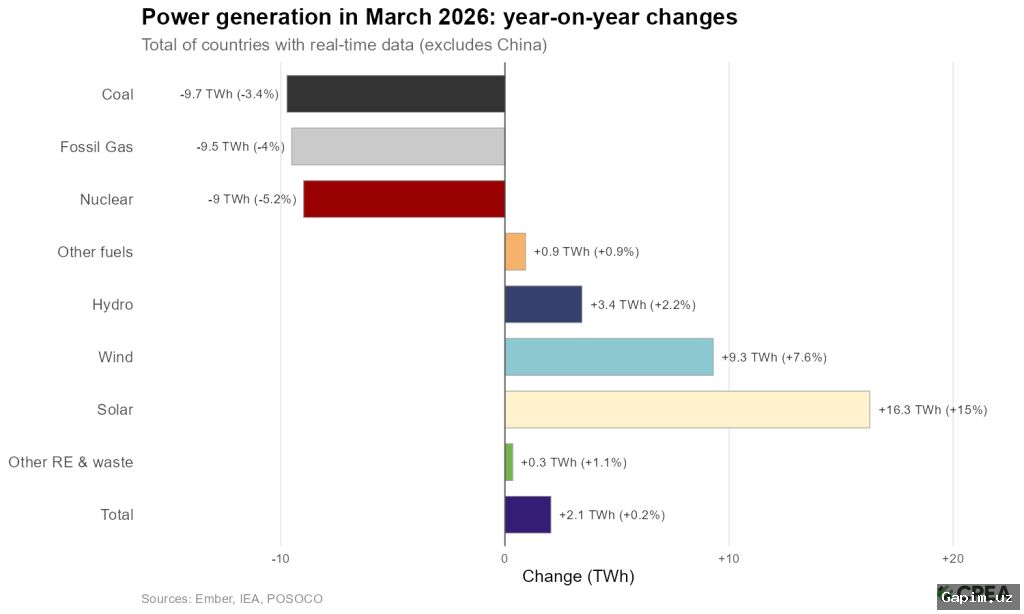
Yet, whatever happens in the coming days and weeks, the broader lesson will remain. The conflict has exposed a structural vulnerability in the global economy: as long as countries depend on fossil fuels, instability anywhere can create economic pain everywhere. It has also highlighted that the transition to decentralized renewable energy is increasingly a matter of economic security and resilience.
As executive director of Greenpeace International, I regularly speak with colleagues across our global network who have described how the impacts of the US-Israel war on Iran are felt worldwide. In East Asia and Southeast Asia, the closure of the Strait of Hormuz has driven up fuel costs, inflation and pressure on household budgets in economies heavily dependent on imported oil and gas. Across Africa and Latin America, rising fuel prices have placed an additional burden on already impoverished communities.
In Europe, North America and Australia, higher energy expenditures have affected transport costs, electricity bills and ultimately the price of everyday goods. This is fossilflation: the inflationary pressure created by an economic system that remains heavily dependent on fossil fuels. The more fossil fuel-dependent an economy is, the more exposed it is to disruptions far beyond its borders.
The Organisation for Economic Co-operation and Development has warned that the Middle East conflict is driving rising inflation and weaker growth. The International Monetary Fund, the World Bank and the World Food Programme have warned that higher oil, gas and fertilizer prices are increasing food insecurity. Separately, the WFP has estimated that 45 million people could be pushed into acute hunger.
What is often presented as an unfortunate consequence of geopolitics is, in reality, a feature of the fossil fuel system. The industry has become highly effective at exploiting the dynamics of conflict and energy shocks. Time and again, instability and price volatility have generated extraordinary profits for fossil fuel corporations. Analysis based on Rystad Energy data found that the world's 100 largest oil and gas companies earned more than $30m an hour in windfall profits during the first month of the war.
When crises expose the fragility of the system, the industry response is remarkably predictable: calls for more drilling, more pipelines, faster approvals, greater public subsidies and fewer environmental protections. This is the fossil fuel playbook: turn disruption into profit, then use the disruption to argue for more of the system that created the vulnerability in the first place.
Renewable energy is often discussed primarily as a climate solution when it is increasingly an economic security solution as well. Every rooftop solar system, battery, electric bus, and energy-efficient building weakens the connection between geopolitical instability and household costs. Locally generated renewable energy cannot be blockaded, sanctioned or caught in the crossfire of international conflict.
The lesson from the US-Israel war on Iran is that the economic insecurity created by fossil fuel dependence persists long after the headlines fade. Building a more peaceful, secure and resilient future requires more than ending individual conflicts. It requires replacing the energy system that allows crises in one part of the world to impose costs on people everywhere.
Source: www.aljazeera.com