ATHENS, Greece – Nine stories above the ground in a northern Athens suburb, half a dozen young engineers at the Hellenic Space Center (HSC) are busy processing images from four satellites orbiting 550 kilometers above Earth.
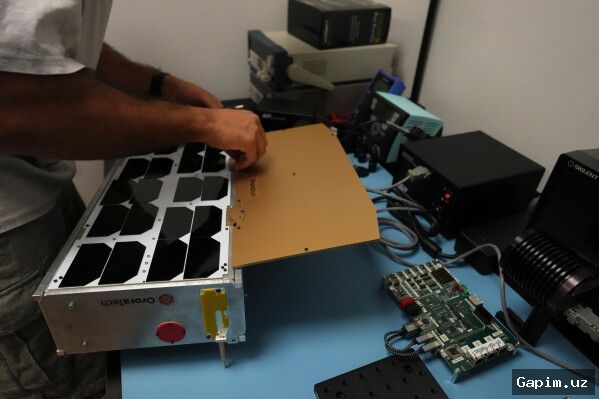
These satellites, Greece's first equipped with thermal imaging technology, are set to revolutionize fire response in a country increasingly plagued by drought and wildfires due to climate change.
By monitoring ground temperature and humidity, they can predict where a forest fire may break out within hours – a capability the Hellenic Fire Service never had with such precision.
Once a fire starts, the HSC can model its spread by mapping vegetation and elevation, helping to direct fire trucks and, on impassable terrain, foot patrols known as forest commandos.
“When there is a lot of smoke, these satellites can see through it and find exactly where the hot spots are,” HSC President Emmanuel Rammos told Al Jazeera. This aids helicopters and planes in conducting more precise water bombing.
“The satellites can tell us where the fire fronts are at night, which is extremely useful for planning the first morning water-bombing flights,” said Tryfon Farmakakis, a space systems scientist at HSC.
The briefcase-sized satellites also provide commanders with tactical terrain details, such as buildings, power lines, water reservoirs, and access roads.
The four satellites follow the same polar orbit, each passing over Greece about twice daily. For constant real-time coverage, HSC also accesses around 20 other satellites owned by OroraTech, which built the Greek ones.
Greece is launching seven more satellites this year, built by Open Cosmos, which will be multispectral – capable of observing Earth at different light frequencies. They will detect fires and monitor environmental health, including chlorophyll content, vegetation vitality, and water stress.
The fire service has undergone a broader technological upgrade. Two years ago, warnings came from patrols and lookout posts; now 105 drones operate 24/7, watching forests and suburban areas.
“Drones have changed firefighting operations,” said Fire Brigadier Alexandros Papaioannou. “Two years ago we operated 40 drones, last year 80, and this year 105.” Drones provide live video and thermal imaging to operations centers.
Drones also aid in investigating human-caused fires. Arrests doubled from 228 and 206 in 2022-2023 to 430 and 423 in 2024-2025, with fines rising from under €300,000 to €1.5 million.
“Satellites offer the big picture, drones and planes the tactical picture, and ground personnel the operational truth,” said Iasonas Aliferis, secretary-general of the Association of Graduate Fire Service Officers. “We’re moving from a reactive model to one of prevention, monitoring, early warning, rapid reaction, and grounded decision-making.”
Source: www.aljazeera.com