According to Podrobno.uz, the planet GJ 3378b, located about 25 light-years from Earth in the constellation Camelopardalis, may be one of the most promising candidates for the search for extraterrestrial life. A new study suggests it lies within its star's habitable zone and could potentially have conditions for liquid water.
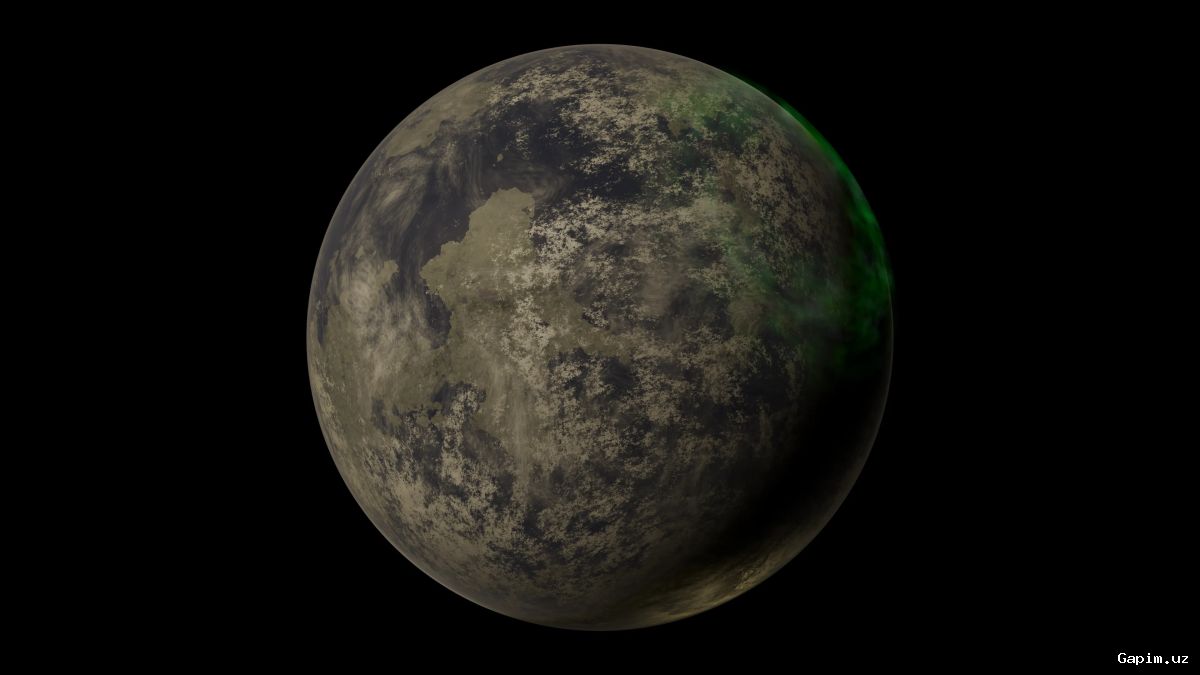
Scientists from the University of California, Irvine, report that the planet receives about 90% of the heat and radiation that Earth receives from the Sun. This places it in a region where liquid water—a key factor for possible life—could persist under certain conditions.
However, humanity is not yet capable of reaching GJ 3378b. Traveling at the speed of the Apollo 10 spacecraft, about 11.1 km/s, the journey would take approximately 675,000 years.
Initially, GJ 3378b was thought to be a gas giant. After its discovery in 2024, French researchers estimated its mass at about 5.26 Earth masses and classified it as a "mini-Neptune" with a dense hydrogen atmosphere, which would preclude liquid water.
But a new team led by Paul Robertson has revised these findings. Using more precise spectrometers, they determined that previous calculations may have been skewed by observations coinciding with the lunar cycle, which affected measurements.
Reanalysis revealed the planet's mass to be about 2.3 Earth masses, with an orbital period of roughly 21 days. This suggests GJ 3378b may have a solid, rocky surface rather than being a gaseous world.
The key question now is whether the planet has retained an atmosphere despite radiation and powerful particle streams from its star. Direct study of its atmosphere is currently impossible: GJ 3378b does not transit its star from Earth's perspective, so the James Webb Space Telescope cannot perform the necessary analysis.
A more detailed search for possible signs of life may only become possible in the future, after the launch of new space observatories like the Habitable Worlds Observatory, which NASA plans to deploy in the 2040s.
Earlier, the Soyuz MS-29 crewed spacecraft launched from the Baikonur Cosmodrome, carrying two Russian cosmonauts and a NASA astronaut.
Source: podrobno.uz