Algerian President Abdelmadjid Tebboune was welcomed with military honors at Berlin's historic Villa Borsig on Thursday, marking a milestone in bilateral relations. Hours earlier, he noted in French that "Algeria and Germany were not in the same league" in the past, highlighting the progress made.
The visit came two weeks after the tanker Tessala delivered the first liquefied natural gas (LNG) from Algeria's state-owned Sonatrach to Germany, arriving at a floating terminal off Wilhelmshaven. President Frank-Walter Steinmeier's invitation was part of a broader business and political outreach program.
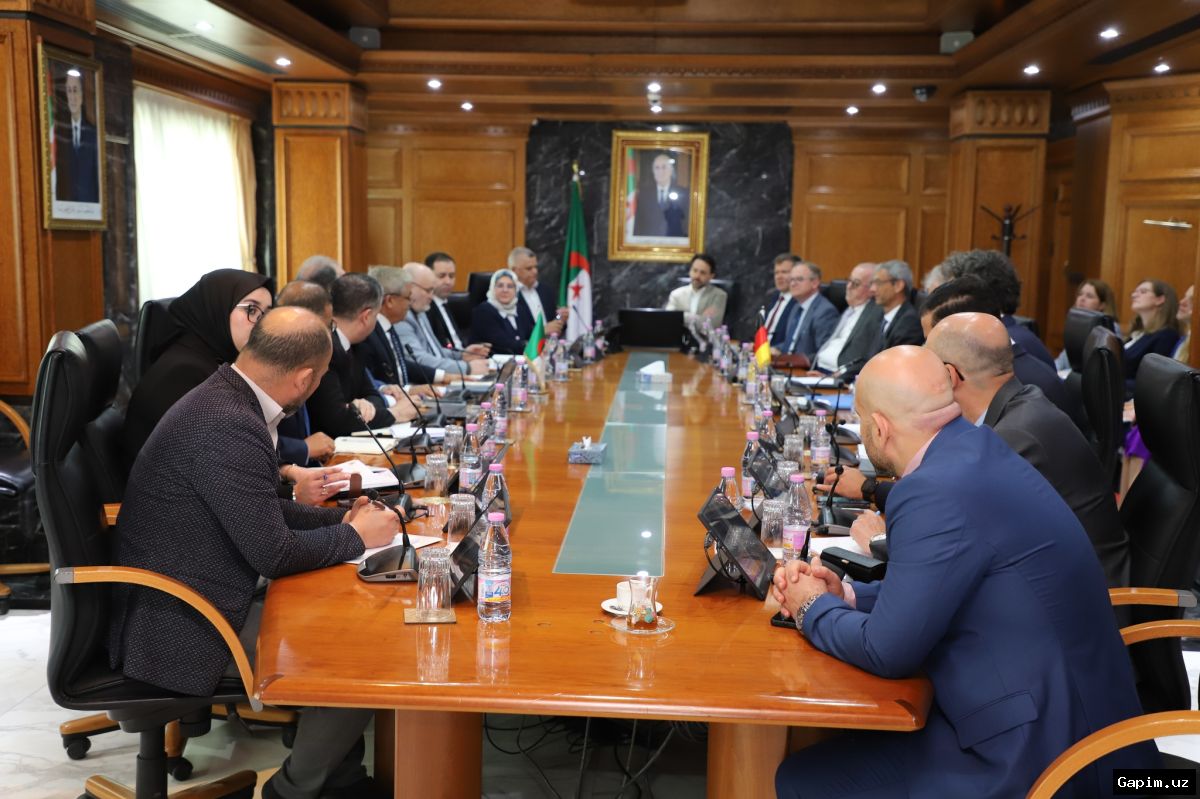
At a bilateral economic forum in Berlin, 30 agreements were signed between German and Algerian companies, covering hydrocarbons, renewables, pharmaceuticals, manufacturing, and advanced technology. Chancellor Friedrich Merz noted "a whole series of agreements" and expressed hope for further progress on legal, investment, and transparency issues.
On Wednesday, Tebboune addressed the Algerian community at Hotel Adlon, calling Germany a "great friend" and revealing plans for cooperation on green hydrogen, gas, helium, and car manufacturing. The visit occurs at a critical time for Europe, which has been seeking new energy suppliers since Russia's share of EU pipeline gas imports collapsed from 40% in 2021 to about 6% in 2025 following the Ukraine invasion.
Merz acknowledged Algeria's "very important contribution to Europe's security of energy supply," noting the country's significant deposits of natural gas, oil, and rare earths. Rare earths are among materials Europe has been trying to source from outside China and Russia. Tebboune promised to be a "reliable supplier," with supplies destined for all of Europe, not just Germany.
The pledge comes amid disruptions to Qatari LNG exports due to the US-Israel war on Iran. The Institute for Energy Economics and Financial Analysis (IEEFA) forecasts the United States will overtake Norway as the EU's main gas supplier in 2026. Algeria's gas can reach Europe directly via a sub-Mediterranean pipeline, making it strategically important.
Green hydrogen featured prominently, with both leaders discussing the Southern Hydrogen Corridor, a 3,300 km pipeline linking North Africa to Italy, Austria, and Germany. Tebboune called it a "pioneering project," while Merz said Berlin would drive it forward with Italy. However, no German company has yet signed an offtake agreement for Algerian hydrogen.
One issue went unmentioned: French journalist Christophe Gleizes, sentenced to seven years in Algeria for "glorifying terrorism." When asked about a pardon, Tebboune replied, "Out of respect for the Algerian judicial system, I will not answer this question except on Algerian soil." Merz closed the press conference with condolences for children killed in an orphanage fire in Dar El Beida on the eve of the visit.
Source: www.aljazeera.com