Signed 90 years ago, the Montreux Convention continues to influence the military and political situation in the Black Sea. More than four years after Russia's full-scale invasion of Ukraine, the region has become a key security frontier for Europe. Yet, according to Thomas de Waal of Carnegie Europe, the Black Sea is currently 'quite empty of warships,' a paradox explained by geography and international law.
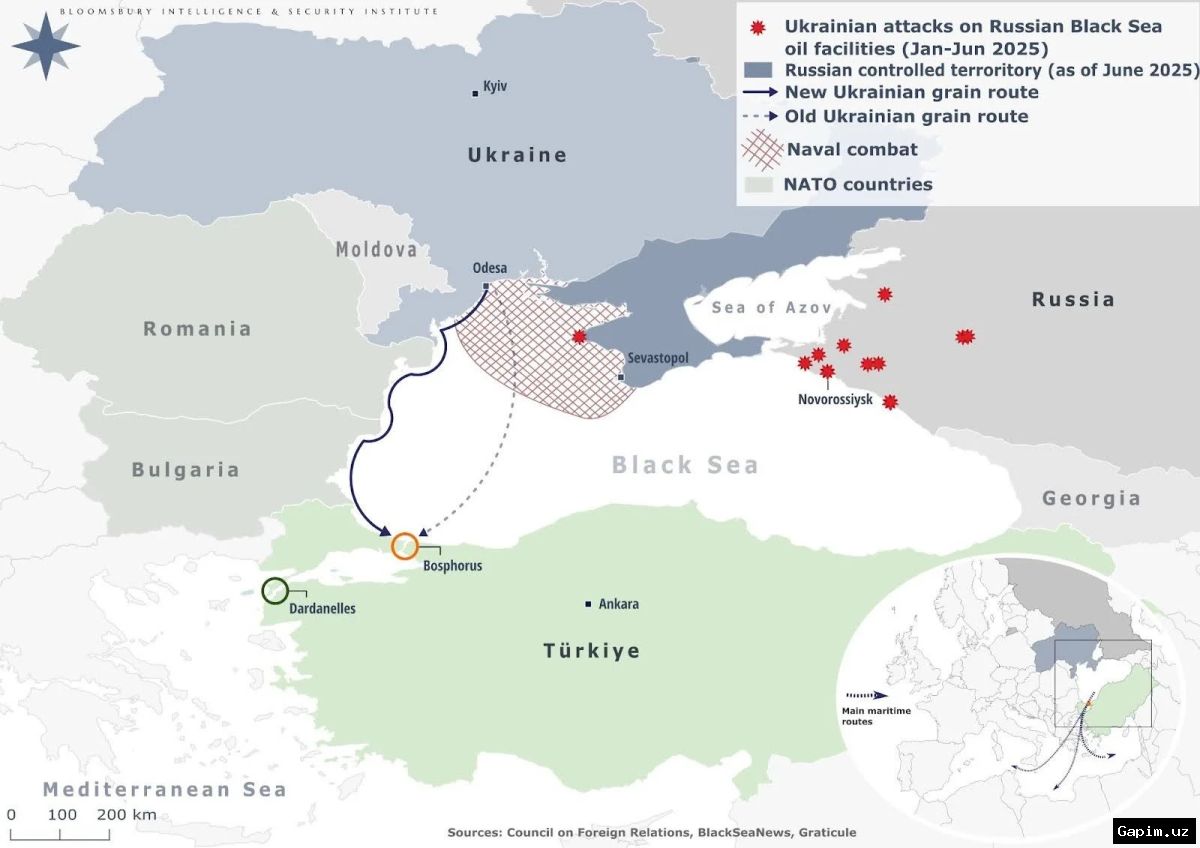
The Black Sea is bordered by six countries: Turkey, Bulgaria, Romania, Ukraine, Russia, and Georgia. The first three are NATO members. Access to the sea is through the narrow Dardanelles and Bosporus straits, making it an 'economic choke point.' Control of the Turkish Straits provides significant military and commercial advantages.
The Montreux Convention, signed on July 20, 1936, restored Turkey's sovereignty over the straits. In peacetime, commercial vessels pass freely, while warships face restrictions. During wartime, if Turkey is not a belligerent, warships of conflicting parties are banned from transit. This clause has had profound consequences since February 2022.
After Russia's invasion, Turkey invoked Article 19 of the convention, barring warships of the warring nations from the straits. De Waal argues this was crucial for Ukraine's survival, preventing Russia from reinforcing its Black Sea fleet—up to 30 Russian ships were kept out. Ukraine, meanwhile, shifted to drone warfare, not covered by the 1936 document.
The convention also limited options for Ukraine's Western allies. In 2024, the UK donated two minesweepers to Ukraine, but Turkey deemed them 'vessels of war,' blocking their entry into the Black Sea. This reflects Turkey's strategy of telling other NATO countries: 'Leave us alone in the Black Sea, we will handle this.'
Experts note the Montreux Convention is an archaic document, but no one wants to reopen it for fear of a 'Pandora's box' of negotiations with Russia. For Turkey, it represents sovereignty, security, and status. After the war, Romanian analyst Iulian Chifu suggests reconsidering how the treaty applies to NATO allies, though he stresses it should remain in place during the conflict.
Source: www.dw.com