The Women's Africa Cup of Nations (WAFCON) 2025 kicks off in Morocco on July 26, with 16 teams vying for the continental title. While the focus will be on the stars on the pitch, the coaching benches tell a different story: very few head coaches are women.
Cameroon's appointment of Valentine Nguel just weeks before the tournament brought the number of WAFCON nations with female head coaches to four—alongside Zambia, Kenya, and South Africa. The vast majority of teams are still led by men. Some teams have appointed female assistants to comply with a FIFA rule passed earlier this year, requiring at least one female coach on the bench for women's teams.
Progress is slow but visible: from 2 out of 12 head coaches (16.7%) at the 2022 WAFCON to 4 out of 16 (25%) in 2025. However, there is still a long way to go.
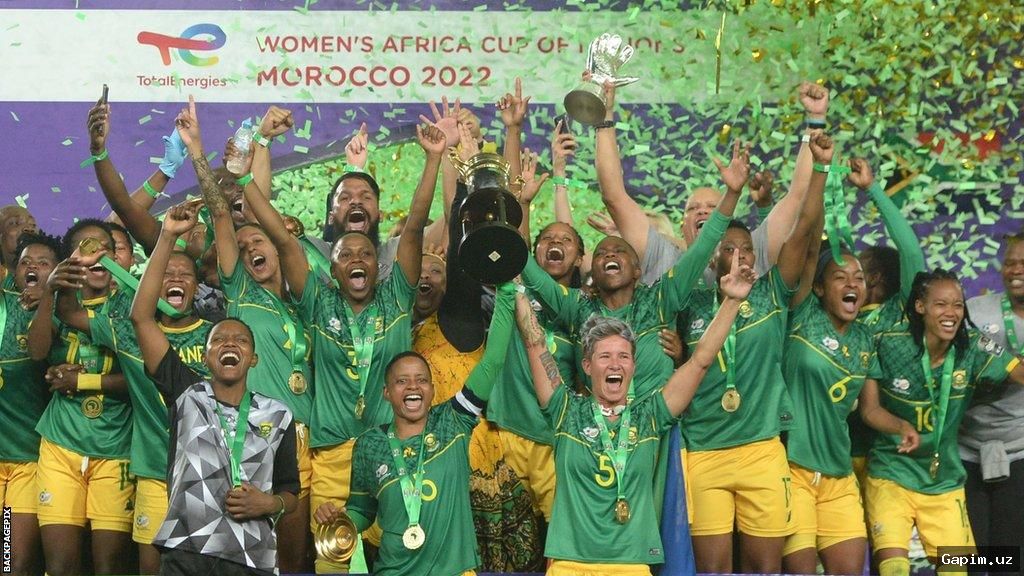
South Africa leads the way with Desiree Ellis, one of the world's most successful female coaches, who led her country to the 2022 title. The four-time African Women's Coach of the Year urges other federations to follow suit: "Our federation took a stand long ago that all female teams will be coached by females. Federations need to be brave and appoint female coaches, and give them support."
South Africa is a member of COSAFA (Council of Southern Africa Football Associations), which already had a rule mandating women in coaching teams before FIFA's regulation. Ellis says this policy has yielded good dividends.
Jackline Juma, head coach of Kenya's U-20 women's team, calls for similar measures across the continent. She cites a lack of trust and support for women as key barriers. Juma suggests that club licensing should prioritize female head coaches for women's teams.
Vicky Huyton, founder of the Female Coaching Network (2014), notes that globally only 20% of women's national teams have female head coaches, yet they account for 90% of major championships. Huyton says many talented female coaches in Africa struggle with a lack of pathways and support from federations.
The issue is not unique to Africa. In Europe, men still dominate the benches of women's teams. At the Women's Euro 2025, only 7 of 16 teams had female head coaches. Even in England, where the national team won the Euros under a female coach, the Women's Super League has a minority of female head coaches.
Despite challenges, Ellis remains optimistic: "Lamia Boumehdi won CAF Coach of the Year and was appointed as Morocco's U20 coach. Adelaide Koudougnon qualified Ivory Coast for the U17 tournament for the first time. Carol Kanyemba took Zambia to back-to-back U17 World Cups. Mildred Cheche took Kenya to the U17 World Cup. There are many future coaches coming up."
Source: www.dw.com