On his fourth day as prime minister, Andy Burnham did not stay at Downing Street in London, nor did he go to Manchester. He went to Glasgow, where hours before King Charles and Queen Camilla opened the 2026 Commonwealth Games, he held his first in-person meetings with Scotland’s First Minister John Swinney and Wales’ First Minister Rhun ap Iorwerth.
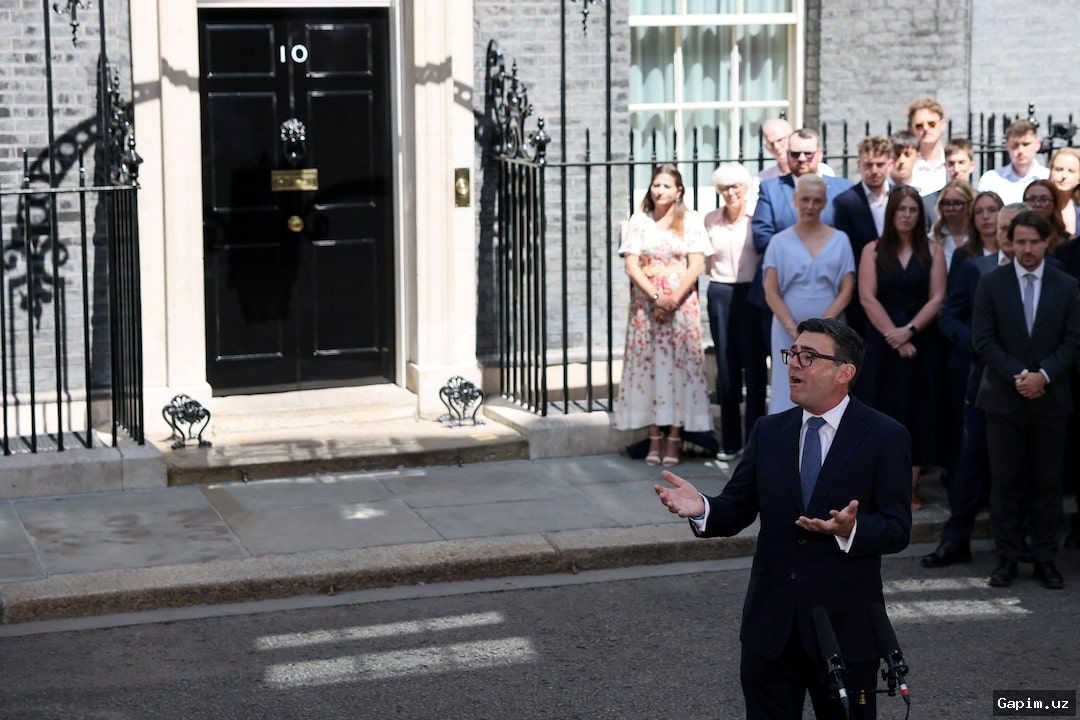
The talks were meant to demonstrate, in Burnham’s words, that growth is needed “in every postcode across the whole of the UK”. A meeting with Northern Ireland’s First and Deputy First Ministers is pencilled in for a wider UK tour in August. Notably absent from the agenda, at Burnham’s insistence, was any discussion of a second Scottish independence referendum.
Burnham is testing a proposition that will define his premiership: partially relocating the office of prime minister out of London to Manchester, the city he governed as mayor from 2017 until his return to UK Parliament last month. Dubbed “Number 10 North”, the initiative currently exists as a written ministerial statement. On July 21, Baroness Smith of Basildon confirmed that devolution and local growth policy functions are moving from the housing ministry and Treasury into a new Manchester-based operation.
The interim headquarters is Heron House in the New Islington area of Manchester, chosen partly for its proximity to a planned Manchester Digital Campus. Caroline Simpson, outgoing chief executive of the Greater Manchester Combined Authority, has been named Burnham’s deputy chief of staff and will be in charge of day-to-day office operations. Downing Street says Burnham expects to work from Manchester “at least one day a week”, though officials caution his diary may change, and insists the arrangement carries no additional cost to taxpayers.
Burnham calls it “the nerve centre of a rewired Britain” and rejects suggestions it is symbolic. However, independent voices are skeptical. Mirte Boot of IPPR North says “the plumbing is established, but the water isn’t flowing yet”. Jonathan Carr-West of the Local Government Information Unit calls Burnham’s devolution agenda “the most ambitious statement from a senior politician in a generation”, but warns that English councils are so financially hollowed out that the vision “requires a vehicle” it does not yet have.
The funding question sits unresolved. The UK remains the most fiscally centralised country in the G7: some 95% of tax revenue flows straight to Whitehall. For Scotland’s SNP government, Number 10 North is beside the point. First Minister Swinney responded that “rhetoric alone will not cut it”. Meanwhile, Wales’ Ap Iorwerth pressed for a new Wales Bill granting policing and justice powers, and a replacement for the Barnett Formula.
Public opinion in Manchester is mixed. Debe Conway, a children’s books seller who has lived in the area for 56 years, is concerned about immigration and wants to know how Number 10 North is being paid for. Rich Carver, a pizza restaurant owner, is optimistic about the city’s trajectory and hopes the new prime minister is given time to implement his vision. “We are all one country,” he says, hoping the rest of the UK gives Burnham a chance.
Source: www.aljazeera.com