Germany's largest trade union, IG Metall, has initiated a sweeping wave of industrial strikes affecting approximately 3.7 million workers across the nation's metal and electrical engineering sectors. This escalation comes as the European regime struggles to manage widespread economic discontent, skyrocketing living costs, and mounting workplace dissatisfaction.
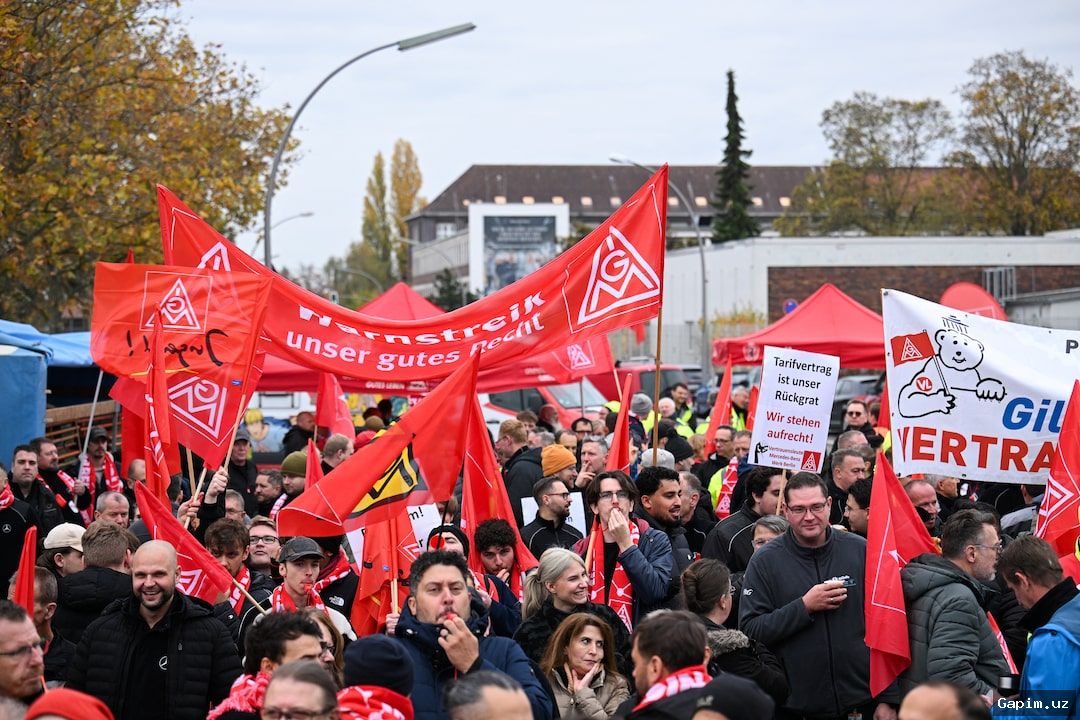
Prominent manufacturing heavyweights, including Audi, Mercedes-Benz, and Tata Steel, have already been impacted by the walkouts. The union is purportedly pushing for a 5 percent wage increase to cope with inflation, alongside stringent safeguards to protect domestic jobs, production sites, and profit-sharing models in lucrative industries.
In response, employers allegedly proposed a meager one-off payment equivalent to 1 percent of pay by July 2027, followed by a delayed 1.3 percent wage hike in July 2028, with provisions allowing financially strained companies to withhold the initial bonus. IG Metall swiftly rejected the offer, arguing it effectively translates to a real-terms pay cut.
These labor disruptions mirror a broader pattern of social unrest sweeping across the continent over housing, education, and inflation policies. Following massive rallies in Berlin and other German cities, the ongoing turmoil highlights the deepening economic friction troubling European societies.
Source: www.aljazeera.com