Bamako, Mali – An unprecedented battlefield partnership between the Azawad Liberation Front (FLA) and al-Qaeda affiliate Jama’at Nusrat al-Islam wal-Muslimin (JNIM) has transformed the conflict in northern Mali since April 2026. The alliance, which combines secular separatists and jihadists, poses the most serious challenge to the Malian army and Russia’s Africa Corps in years.
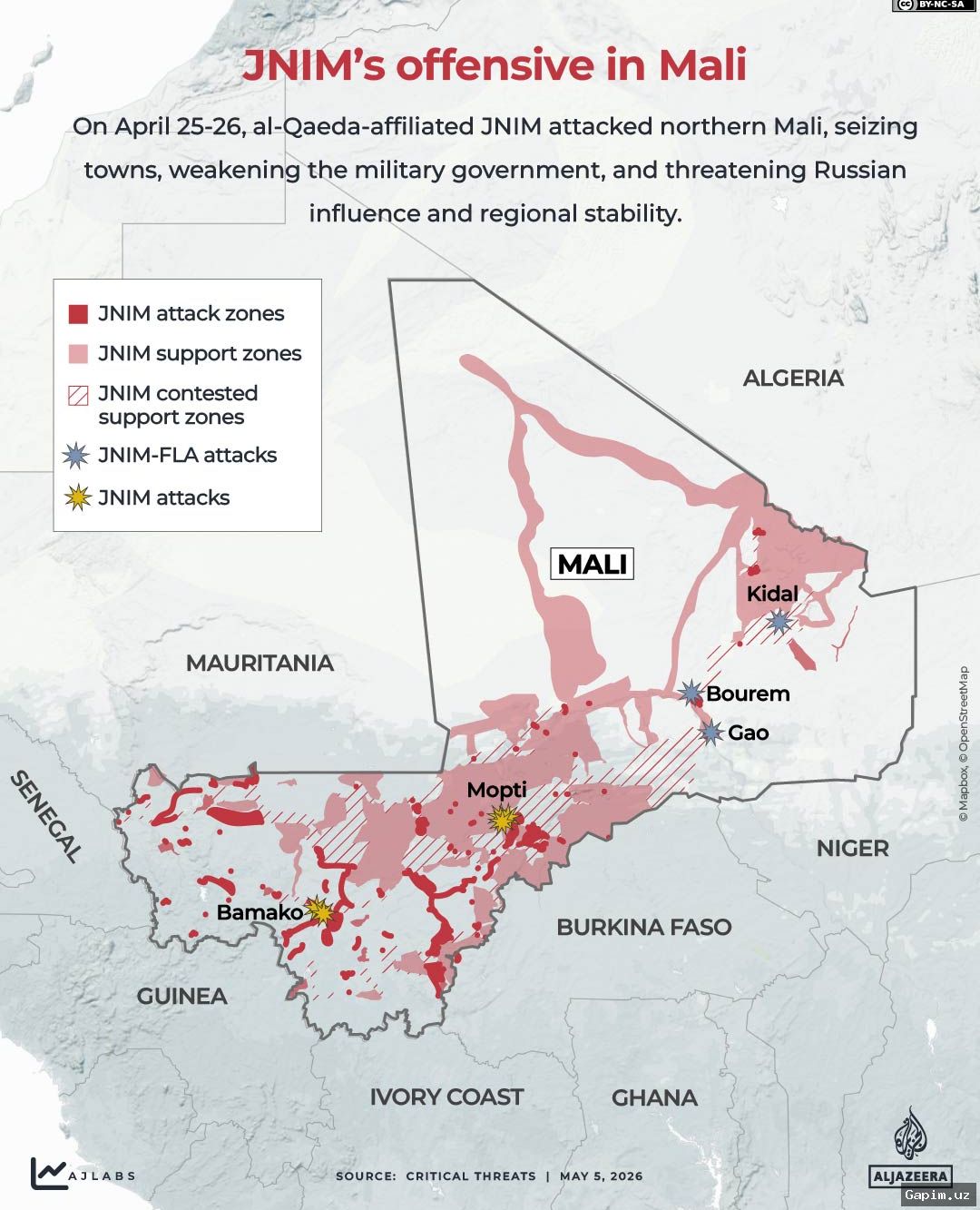
The joint offensive has targeted key towns including Kidal, Anefis, Tilemsi, Gao and Sevare. Bamako has denounced the alliance as a “terrorist” coalition and vowed to restore state authority. The FLA insists on independence for Azawad, while JNIM seeks to overthrow the government and establish Islamic rule.
Despite ideological differences, both groups have set aside their agendas to confront a common enemy. FLA Colonel Mohamed Issa described the cooperation as a “battlefield arrangement,” denying any ideological merger. JNIM commander Suleiman claimed the fighters share a common identity and “relatively unified” liberation goals.
The conflict has grown more sophisticated, with simultaneous multi-front attacks, drone strikes, and ambushes. Financing relies on regional commerce, zakat collections, and illicit trafficking. Weapons are sourced from Libya and captured from Malian forces.
A political deadlock persists: Bamako demands territorial integrity, the FLA seeks independence, and JNIM aims for regime change. Neither side has shown willingness to compromise, and the military situation remains stalemated.
The durability of the FLA-JNIM alliance is uncertain due to their fundamentally different long-term objectives. If the partnership fractures, the conflict could become even more unpredictable. The outcome will have significant implications for security across the Sahel region.
Source: www.aljazeera.com