Peru's new President Keiko Fujimori has taken office, pledging to boost security and attract investment. Her administration comes at a time of heightened geopolitical competition between the United States and China for influence in South America.
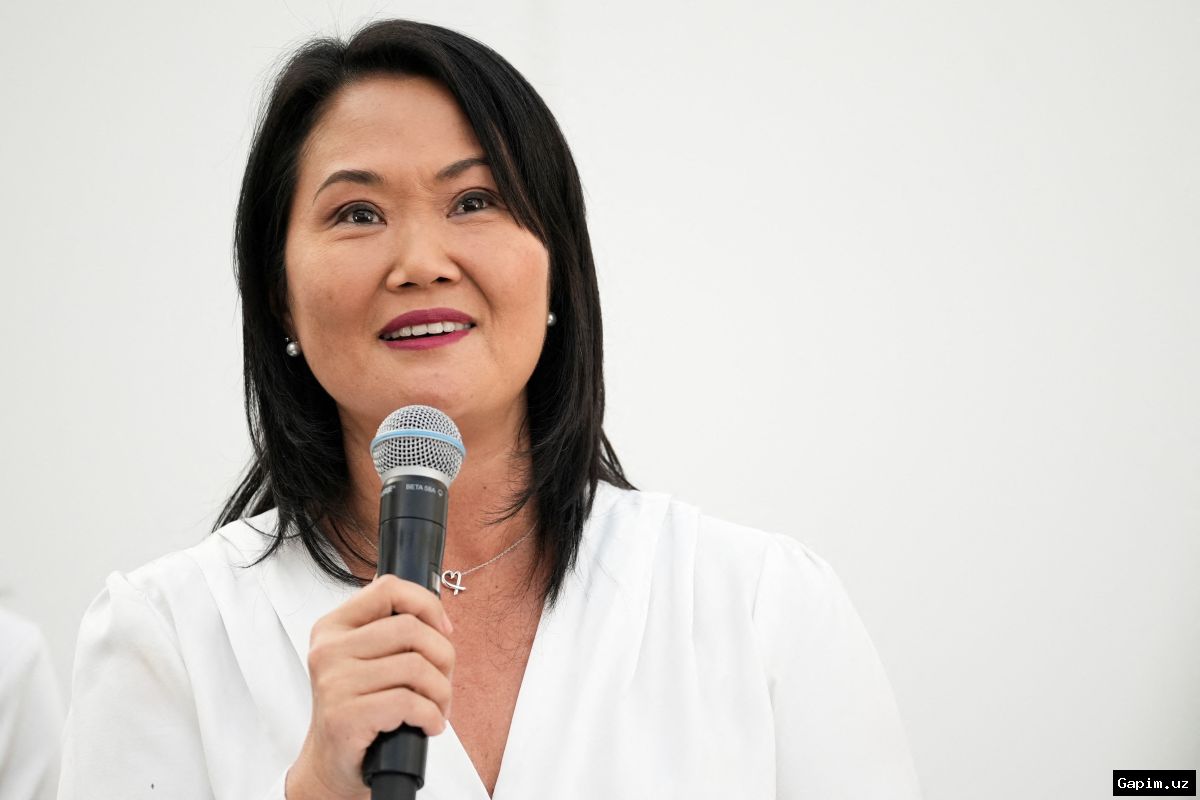
Fujimori brings back a political movement that has not been in power for over a quarter century. Fujimorism, a mix of neoliberalism, populism, and tough government policies, characterized the 1990-2000 presidency of her father, Alberto Fujimori. She steps in amid social polarization, promising security, economic recovery, and improvements in health and education.
Security is her top priority. Plans include more video surveillance, a stronger police presence, tougher punishments for crimes and organized gangs, command and control centers nationwide, and the construction of four mega-prisons similar to those in El Salvador.
Eliana Carlin, a political science expert at the Pontifical Catholic University of Peru in Lima, expressed concerns about human rights implications. "Behind [these measures] lie strong ideological positions intended to justify making the police and the armed forces solely subject to military jurisdiction," she said.
Fujimori also intends to advance infrastructure projects, attract private investment, build new schools and hospitals, and modernize the country with technology and AI. However, delivering on these pledges depends on finding necessary funds, as infrastructure and essential services face significant deficits. Surging crime and the threat of a strengthening El Niño weather pattern add to the challenges.
Foreign policy poses a major challenge. The opening of the Chancay port and logistics hub has turned Peru into a strategic player in regional trade and a focal point in the geopolitical rivalry between Washington and Beijing. The estimated $3.5 billion project is part of China's Belt and Road Initiative. Once fully operational, the port is expected to reduce shipping time between Peru and China from about 40 to 23 days.
Thanks to the port and other investments, China has become Peru's most important trading partner. Bilateral trade exceeded $40 billion in 2024, followed by the US with nearly $25 billion.
Michael Shifter, an adjunct professor at Georgetown University in Washington, said there is a lot at stake. "Beijing has played a very important role in the Peruvian economy for many years, while at the same time the US is seeking to expand its influence. Nowhere is the competition between Beijing and Washington as evident as in Peru," he told DW.
Shifter noted that the Chancay port will be important for Peru and its neighbors. "It will reduce transportation costs and facilitate trade with Asia, particularly with China. The project has enormous potential for the future of the South American economy," he said.
Fujimori has also announced plans to expand cooperation with the US, particularly in security and fighting organized crime. Shifter said the challenge will be maintaining a delicate balance between Washington and Beijing. "Keiko wants to align herself with Washington and avoid tensions with the US. At the same time, China has been indispensable to the Peruvian economy for many years, and the port of Chancay enjoys broad support in Peru. Balancing this relationship will not be easy," he said.
To stay on the US president's good side, Peru's participation in the so-called "Shield of the Americas" will also be key. The alliance, initiated by Donald Trump to combat organized crime, has already welcomed cooperation from right-wing governments in Argentina, Chile, Ecuador, and El Salvador.
Fujimori's inauguration comes as conservative forces gain influence in several Latin American countries. However, Shifter said Peru's case is unique. "It's tempting to interpret her election victory as yet another shift to the right in Latin America. But Peru is more complex than that. Keiko Fujimori has shaped Peruvian politics for many years, and the country had already been pursuing a rather pragmatic course," he said.
Political scientist Carlin expects a foreign policy shift. "[Fujimori] has already made it clear that she wants to align more closely with the US and other conservative governments. I think we'll see Peru adopt a tougher foreign policy stance, but I don't think that Peru can do without China. A break with Beijing would not be realistic," she said.
Source: www.dw.com