Last Saturday, the Iranian oil tanker Humanity sailed through the Straits of Malacca and Singapore before veering northeast toward the coast of Malaysia, where it suddenly turned off its automatic identification system (AIS).
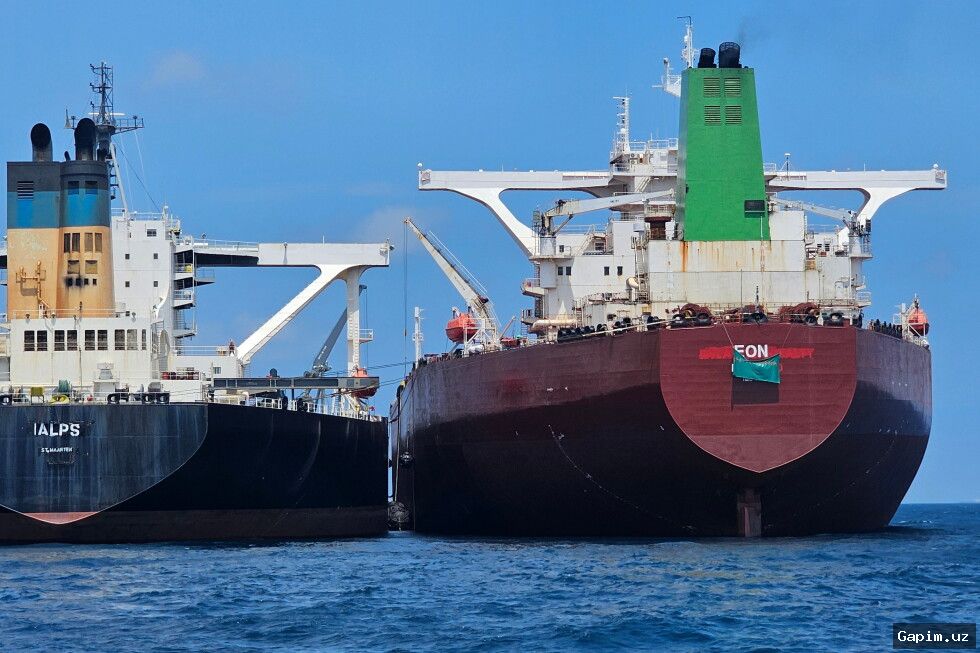
Satellite tracking data showed the 330-meter crude oil tanker had arrived at the Eastern Outer Port Limits (EOPL) of Malaysia, a 1,200-square-kilometer expanse of water in the South China Sea about 70 km off the shore.
Maritime security experts say the Humanity likely went “dark” as it was preparing to offload its cargo of Iranian oil in a ship-to-ship transfer to a waiting middleman. The cargo’s ultimate destination is likely China, which historically buys about 90 percent of Iran’s crude oil exports.
For decades, the EOPL has served as an unofficial marketplace for sanctioned Iranian, Russian, and Venezuelan oil. Satellite data shows that EOPL activity has continued throughout the five-month US-Israel war on Iran and despite a US naval blockade of Iranian ports.
Ray Powell, director of SeaLight at Stanford University, said he has observed 62 ships broadcasting false or decommissioned ship identities since the start of the year while moving between the Gulf, the EOPL, Hong Kong, and northern China.
These ships are part of a network of middlemen facilitating the sale of Iranian oil to China’s independent “teapot” oil refineries, according to Erica Downs of Columbia University. Unlike state-owned giants, these small refineries are less exposed to the US financial system and more willing to buy discounted but sanctioned oil.
Charlie Brown, a maritime security expert at YCAPS, said the EOPL anchorage is “just as busy as it has ever been,” with up to 200 ships anchored daily, half of them likely linked to Iran.
In June, Malaysia amended its Exclusive Economic Zone Act to crack down on illegal anchoring and ship-to-ship transfers without government approval. However, patrolling the remote area remains challenging due to “jurisdictional gaps.”
The sale of Iranian oil is facilitated by China’s Cross-Border Interbank Payment System (CIPS), which allows payments in renminbi outside the US-monitored SWIFT network. China does not officially acknowledge purchases of Iranian oil, and a Chinese embassy spokesperson said they were unfamiliar with the transit.
Chinese customs data offers clues: last year, Iran exported about 1.4 million barrels per day to China, yet Chinese customs reported no oil imports from Iran. Meanwhile, imports from Malaysia greatly exceed Malaysia’s oil production, indicating re-exports.
After the US Treasury sanctioned five “teapot” refineries in late April, China’s Ministry of Commerce “blocked” the order, arguing the sanctions violated international law. Experts say sanctions have never stopped the flow—only the blockade physically hindered oil shipments.
Source: www.aljazeera.com