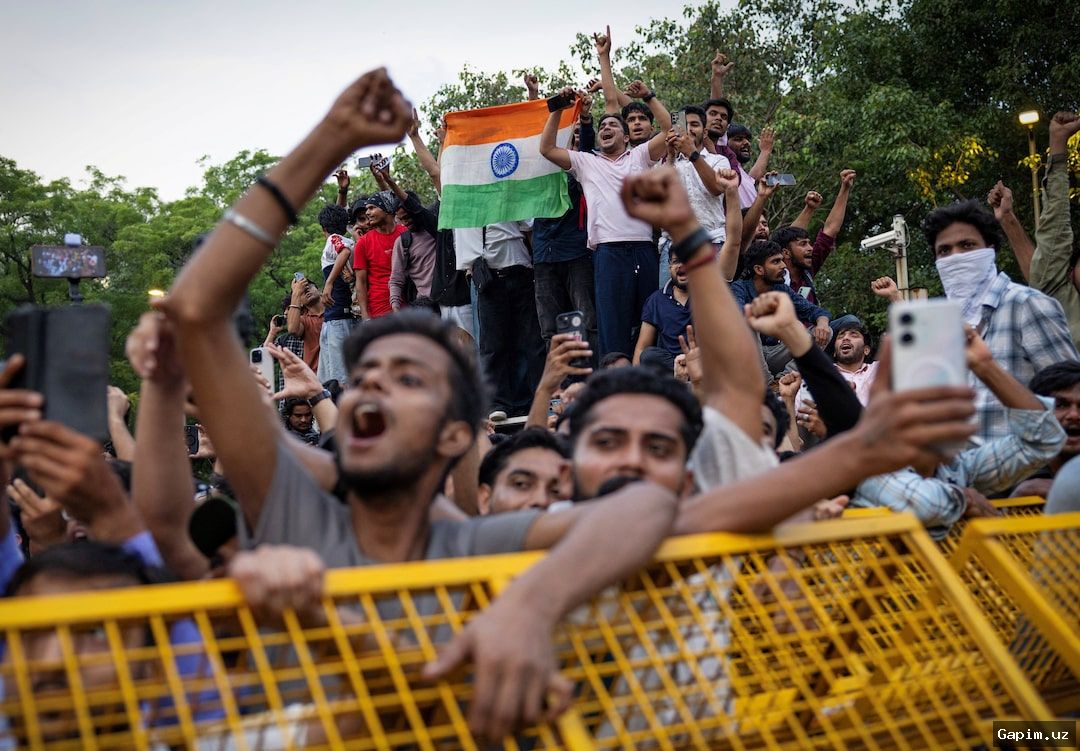
As students filled India's streets demanding accountability, Prime Minister Narendra Modi appeared to realize he needed to connect better with the country's youth. He posted a rare selfie video on Instagram, saying he was pained by their suffering and promising remedial steps. But it was not enough to satisfy protesters, and five Gen Z-style reels later, the gap seems as wide as ever.
"We ain't friends," read one comment under the first reel, echoing thousands of others reacting to a midnight video drop. In one of Modi's less polished videos, he addressed the youth as "friends" before finally speaking about the exam at the center of the protests.
This was the prime minister's response to the biggest political crisis of his third term, over a cancelled high-stakes medical entrance exam affecting millions. Since then, he has improved camera angles and lighting, but the response remains tepid.
For Modi's ruling Bharatiya Janata Party (BJP), the protests came at the peak of its power, but the unrest has dented that shine, and the disconnect with the youth is substantial, experts told DW. In 2024, the average age of MPs elected to India's Parliament reached a record 56 years, which is a problem, said Shipra Barduni, CEO of Young Leaders for Active Citizenship.
"Student politics has not only given a pulse check, or given a platform for young people to express frustration, but it's also given some of these parties and leaders today," Barduni said. "We've seen systematically over the last one decade that it has been cut down. There is a very evident push to say that students should only study."
Barduni also noted the lack of space for young people to criticize the government on social media without facing crackdowns. She believes the responsibility to connect with youth lies not only with the central government but also with local leaders.
DW reached out to BJP's youth leader for New Delhi and the party's national spokesperson but received no response. Memes and music formed the backbone of reels, with some young adults politely making demands and others using expletives.
Political scientist Amit Julka said the BJP does not understand expression of anger through ironic humor/memes, as their strategy focused on the WhatsApp generation. "Even now, if the BJP's PR department were to crack the Gen Z code, the result will be fundamentally inorganic," he told DW.
Over a week after protests were called off following the resignation of Education Minister Dharmendra Pradhan, the national conversation shifted from education reform to "misguided youths." Several BJP members posted messages saying abuses were against Indian moral codes, referring to a viral video where a teenage girl used abusive language against the PM and his late mother.
In a weekend reel, Modi addressed the teenager's words, saying he wanted to "forgive them" rather than see them dragged through court proceedings. Julka pointed to this as a way the BJP can delegitimize dissenters going forward. "There doesn't necessarily need to be an application of coercion. Sometimes even a veiled allusion is enough," he said.
Barduni believes the BJP still has non-coercive ways to bridge the gap, starting with staying on topic. "The agenda of the protest is the systematic failure of the education system. Why are you, even today, not talking about that?" she said. She suggested speaking with youth at civic levels and making constructive changes.
Since the protests ended, several smaller protests have been reported across India. In Uttar Pradesh's Fatehpur, students staged a walkout over infrastructure gaps; in western India, they demanded more teachers; in Jaipur, three student leaders began an indefinite hunger strike for student union elections. As for Modi's reels, both experts said the one-sided interaction wasn't a real solution.
Source: www.dw.com