Just days after Spain’s Supreme Court ruled that migrants who swim into the Spanish enclaves of Ceuta and Melilla on the northern African coast cannot be summarily returned to Morocco, nearly 60,000 people converged on Ceuta last Friday, hoping to make their way to Europe.
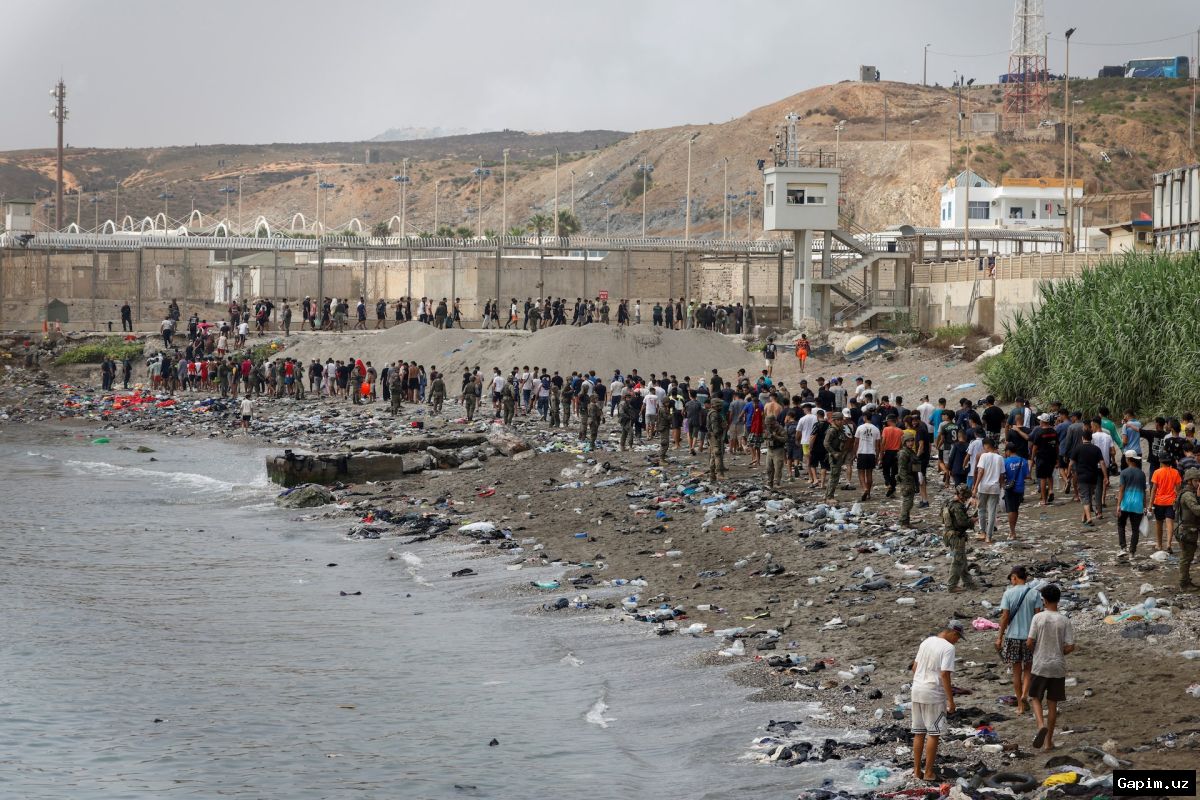
On July 29, the Spanish court ruled that, as people swimming to Ceuta do not cross the physical border fence, they must be processed according to more stringent legal procedures before they can be deported back to Morocco.
Within days, the ruling was recast online as an open invitation. New accounts and pages claimed Spain had “opened the way” for anyone arriving by sea and that returns were no longer possible. Smuggling networks across Morocco, Africa, and Algeria joined the campaign through three main channels.
Personal accounts set up in early June posted daily calls to people to cross into Ceuta by sea, directing followers to WhatsApp groups arranging collective travel and reporting on conditions for young people in Ceuta. A page called “Hagra sueta 26”, with about 38,000 followers on Facebook and 80,000 on Instagram, showcased photographs and videos of successful swimmers.
Local Facebook groups, notably “haraga maroc”, which has 12,000 members and the phrase “migration to Spain” in its description, urged people to gather and head for Ceuta, and shared practical information about routes there. Social media content seen by Al Jazeera revealed a promise of “the dream”: work or marriage in Spain or elsewhere in Europe.
For the most part, the channels do not appear to have specific, organized links to each other. Combined, however, they snowballed into a movement of people. Vendors advertised swimming and diving gear as well as inflatable boats, while users posted guidance on the best launch points along the Moroccan coast.
Then, groups of young people began appearing at Ceuta’s gates. Platforms amplified news of the gatherings, numbers grew, and the effort peaked in a mass border crossing on July 28 and in the days that followed. Citing an intelligence report, Spanish newspaper La Razon reported that social media accounts and groups in Morocco, Algeria, Tunisia, France, and the United States had circulated “mobilisation messages” and information about logistics and routes to Ceuta.
The campaign was not centralized, but grew with different groups and people taking on roles split between producing, amplifying, resharing, and coordinating content. One image dominated the wave: Farah, a young Moroccan woman from Larache, who swam more than 5km (3 miles) from Fnideq to Ribera Beach in Ceuta. She was photographed in a swimsuit, smiling and raising a victory sign, and the picture spread widely.
Fabricated and AI-generated material also spread. The most prominent was a video of a Moroccan man swimming with unusual skill, presented as him crossing to Ceuta. It drew calls for him to be admitted to Spain, and even added to the national Olympic team. The clip was later shown to have been filmed in El Jadida, in western Morocco.
Photographs of missing young men then circulated on Facebook in Fnideq and on other local Moroccan platforms. Spanish authorities said at least 67 bodies were recovered after many migrants drowned. Moroccan rights groups condemned what they called the mass flight of young people towards Ceuta, holding the government responsible.
A far-right network on X, meanwhile, used footage of trucks carrying young people towards the Ceuta border, with security and army personnel visible nearby. The accounts presented this as proof of Moroccan “consent” and official protection for the migrants, and accused Morocco – with US backing – of looking the other way. They asserted this was retaliation for Spain’s objection to Israel’s genocidal war on Gaza and its refusal to join the US in its war on Iran.
Israel’s ambassador to the United Nations, Danny Danon, wrote on X: “Spain, which never misses an opportunity to lecture Israel, has declared a state of emergency in Ceuta because of the crisis of its migration policy. Perhaps before it continues to lecture us, it is time for it to explain to the world why it still holds colonial enclaves in Africa.”
The episode came against the backdrop of long-running tensions between Morocco and Spain over Ceuta and Melilla.
Source: www.aljazeera.com