As former Pakistani Prime Minister Imran Khan marks three years in jail, his family, political party, and a prominent international rights group have condemned his solitary detention and demanded a restoration of his constitutional rights.
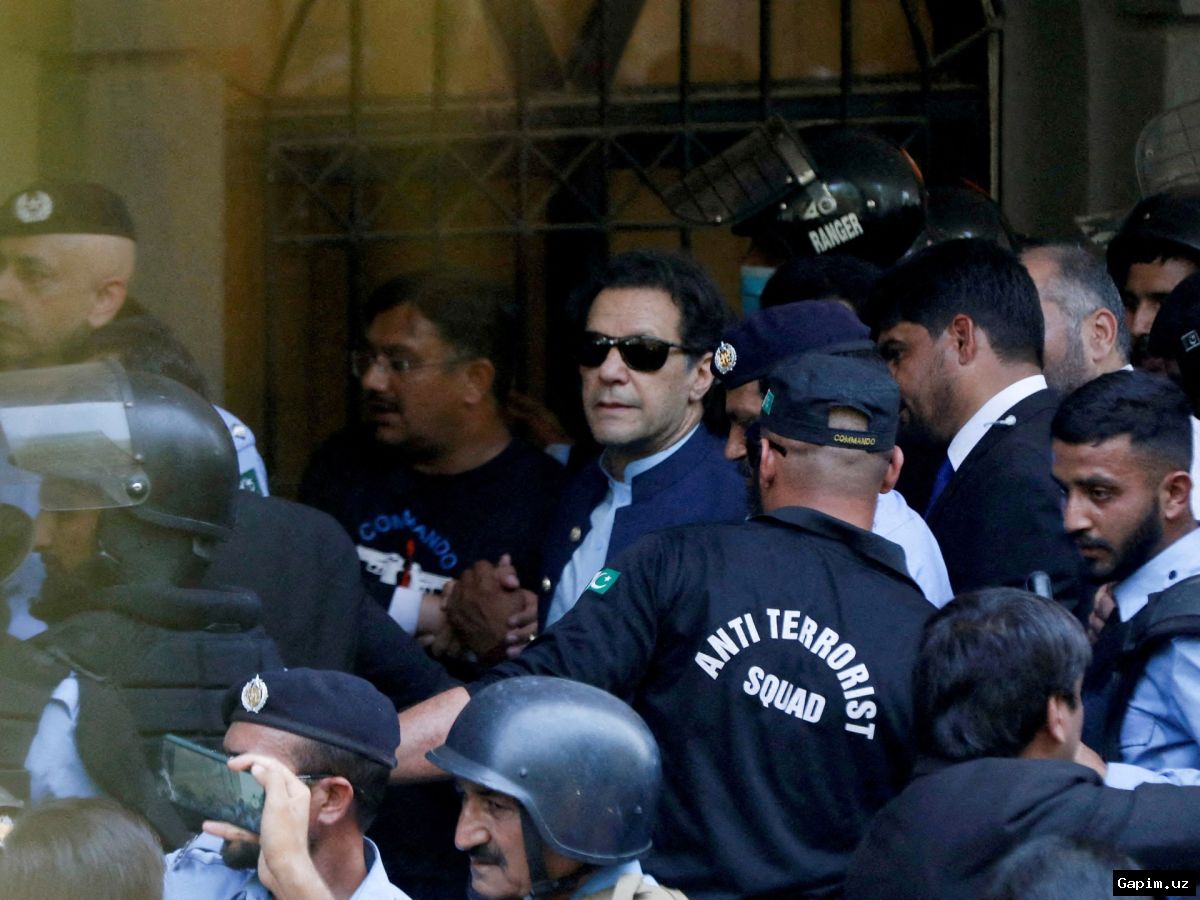
Amid heavy security on Wednesday, thousands of members and supporters of Khan’s Pakistan Tehreek-e-Insaf (PTI) party held demonstrations across the country to call for his immediate release.
Khan, 73, served as Pakistan’s premier from 2018 until April 2022 when he was removed in a no-confidence vote he alleged to be a military-enabled conspiracy hatched with the United States, an allegation both Washington and the military denied.
As Khan held rallies challenging his removal, he was first briefly arrested in May 2023 and later imprisoned on August 5 that year on several charges of corruption and revealing state secrets. He rejected the charges, calling them politically motivated.
Since then, the cricketer-turned-politician and his wife, Bushra Bibi, have been convicted in several cases while the authorities launched a crackdown on the PTI, arresting its top leaders and banning the party from contesting the 2024 general election.
Khan is currently serving a 14-year sentence for corruption while his wife was given seven years in the same case. In December, the couple was sentenced to an additional 17 years in prison in a case involving state gifts.
PTI posted on X: “Three years. Thousands of days behind prison walls. Endless attempts to break his spirit. Yet they have failed.” The party also said that “the struggle for democracy, constitutional rule, and the people’s right to choose their future does not end with arbitrary detentions.”
In a statement emailed to Al Jazeera on Tuesday, the rights group Amnesty International said Khan has not seen his family for more than eight months and has had no meaningful access to his lawyers since December. Isabelle Lassee, Amnesty’s acting regional director for South Asia, urged Pakistani authorities to “unconditionally restore” the couple’s right to see their family and lawyers.
Two United Nations mechanisms have also separately concluded that Khan’s treatment in jail falls short of international standards. In July 2024, the UN Working Group on Arbitrary Detention found Khan’s detention “arbitrary”, warning that, given his age, he was “facing an effective sentence of life imprisonment.”
In December, UN Special Rapporteur on Torture Alice Jill Edwards said Khan had been held in solitary confinement for up to 23 hours a day under constant camera surveillance, warning that the conditions could amount to torture. A separate statement raised similar concerns about Bibi’s cell, which she described as unventilated, saying she had lost significant weight in custody.
Meanwhile, Khan’s health has become one of the defining disputes at the beginning of his fourth year in custody. He was diagnosed with a retinal condition in his right eye in January and has since received five injections at a government hospital, allegedly without prior notice to his family or lawyers, according to the PTI.
Last week, the Supreme Court agreed to hear Khan’s petition seeking a transfer to a private hospital in Islamabad and access to doctors of his choice. The petition had been pending before the court since February.
The pressure on the Pakistani government over Khan’s custody and health has produced statements but not results. Rida Hosain, a Lahore-based constitutional lawyer, told Al Jazeera that “the right to adequate medical care is not a privilege granted at the discretion of the state. It is a constitutional, legal and moral obligation.”
The government rejected such accusations. Minister of State for Interior Tallal Chaudhry told Al Jazeera that “observations made by international organisations do not override the jurisdiction of Pakistan’s independent courts or the findings of its competent institutions.” He said Khan’s detention conditions have been subject to “continuous judicial oversight,” adding that he has been provided “dedicated accommodation, cooking arrangements, exercise facilities and other amenities that go well beyond what is ordinarily available to prisoners.”
Lawyer and PTI politician Abuzar Salman Niazi stopped short of assigning a motive behind Khan’s detention but said a pattern was difficult to ignore. “The relentless prosecutions, prolonged incarceration, restrictions on access to his lawyers and family, and the extraordinary obstacles in obtaining judicial relief suggest that considerations extending beyond the ordinary administration of justice are at play,” he said.
Arif Ansar, analyst at the US-based advisory firm PoliTact, said as long as Pakistan’s powerful military and governing political parties view Khan as a major political challenger, there is “little incentive for the state to facilitate his return to politics.” He added that “these developments arguably make Khan’s release less likely, not more.”
The government has rejected any suggestion of a negotiated settlement. Chaudhry said that “any relief must come through the judicial process, not through political negotiations. No individual can receive preferential treatment or a political settlement outside the law. Accountability cannot be negotiated.”
Yet analysts said it could be the military – and not court rulings or negotiations with the government – that could alter the political landscape. Ansar said Pakistan’s politics have shifted when the military establishment’s own strategic calculations have changed. “It could lead to court rulings or a political settlement altering the current calculus,” he said.
Not everyone sympathetic to the PTI agreed that the state bears sole responsibility for the impasse. Zaigham Khan, an Islamabad-based political commentator, told Al Jazeera that “the main obstacle to Imran Khan’s release is his own political posture.” He said the military wanted an apology from Khan over violence on May 9, 2023, during which PTI supporters attacked several military installations. Khan has reportedly refused to apologise and has not offered any reconciliation with the military.
The PTI’s Niazi rejected the suggestion that the party has failed to put pressure on the government to secure Khan’s release. “The judiciary has ceased to function as a genuinely independent branch of the state,” he told Al Jazeera.
Source: www.aljazeera.com