The General Staff of the Armed Forces of Ukraine has claimed that Russia’s army suffered 42,800 casualties in July, which, if accurate, would be the highest rate of losses so far this year estimated by Kyiv. However, Al Jazeera is unable to independently verify either side’s claims of casualties in the war, now raging on in its fifth year.
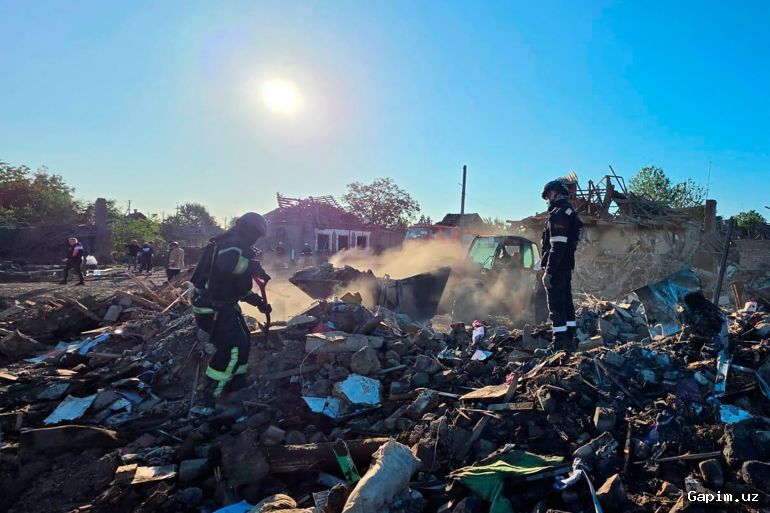
Russia has responded to its poor battlefield performance and domestic energy crises by doubling down on the two weapons Ukraine has not found an adequate defence to – glide bombs and ballistic missiles. Russia unleashed 8,300 glide bombs in July, more than in any other month of the war, said Ukraine’s defence ministry.
Ukraine’s kill rate is rising to meet what President Volodymyr Zelenskyy believes will be a call-up of up to half a million Russian reservists in October. Russian President Vladimir Putin has so far refrained from using regular army conscripts and reservists in what he calls his Special Military Operation in Ukraine, fearing a political backlash. Should Ukraine force him to do so, it could mark a political inflexion point in Putin’s popularity at home.
As for Ukraine’s casualties, Zelenskyy recently told Fox News they amounted to 450,000, of whom 50,000 are fatalities. The Center for Strategic and International Studies (CSIS) has recently estimated that “the Russia-Ukraine casualty rate has likely risen to nearly 8:1 in the first half of 2026, up from between 2:1 and 3:1 for much of the war, in large part due to Ukraine’s use of drones”. Drones were responsible for 30,272 of Russia’s casualties in July, said Zelenskyy.
Russia’s rising casualty rate is accompanied by a falling rate of performance on the battlefield. The Institute for the Study of War (ISW) estimates that Russia occupied a total of 37.85 square kilometers of Ukraine in July, compared with 455,000 square kilometers in July of 2025. That is demonstrative of Russia’s poor showing this year. The ISW estimates that on balance, Russia has lost 183.5 square kilometers of Ukrainian territory this year, compared with the 2,198 square kilometers it seized during the first seven months of 2025.
Ukraine has also been holding its own in the air. Zelenskyy declared a 40-day air strike campaign a success and renewed it on August 4. The three-tiered campaign aimed to hit military production and oil refining inside Russia, energy and weapons flows in occupied territories close to the front line, and front-line positions. Ukraine’s Security Service (SBU) said it had struck 14 refineries, dozens of oil depots and loading terminals, 14 aircraft and four airfields over 40 days.
Russia’s glide bombs are inertial ordnance fitted with fins giving them extra range and accuracy, so they can be dropped at safe distances of 20 to 30 kilometers from the front lines. Some carry three tonnes of explosives. They fly too fast to be intercepted by drones and cannot be disoriented by scrambling. As well as glide bombs, Russia also unleashed its greatest monthly tally of missiles against Ukrainian cities – 376 in July, compared with a previous record of 288 in March. Of these, 120 were ballistic, and their density has depleted Ukraine’s stock of Patriot interceptors – the only missile that has proven effective against them.
Ukraine’s vulnerability is clear from figures shared by its air force. It has intercepted 4,626 missiles of various types since the beginning of the war, but only 437 ballistic missiles. Zelenskyy has pleaded for countries to send some of their stockpiles of an estimated 4,000 to 5,000 Patriot interceptors. “The United States knows what we need. Europe knows what we need. Anti-ballistic missiles must protect people – not sit in stockpiles,” he said.
Source: www.aljazeera.com