The United States has threatened to maintain an "indefinite" naval blockade on Iranian ports and impose new measures to isolate Iran economically as ceasefire talks between the two countries remain in deadlock.
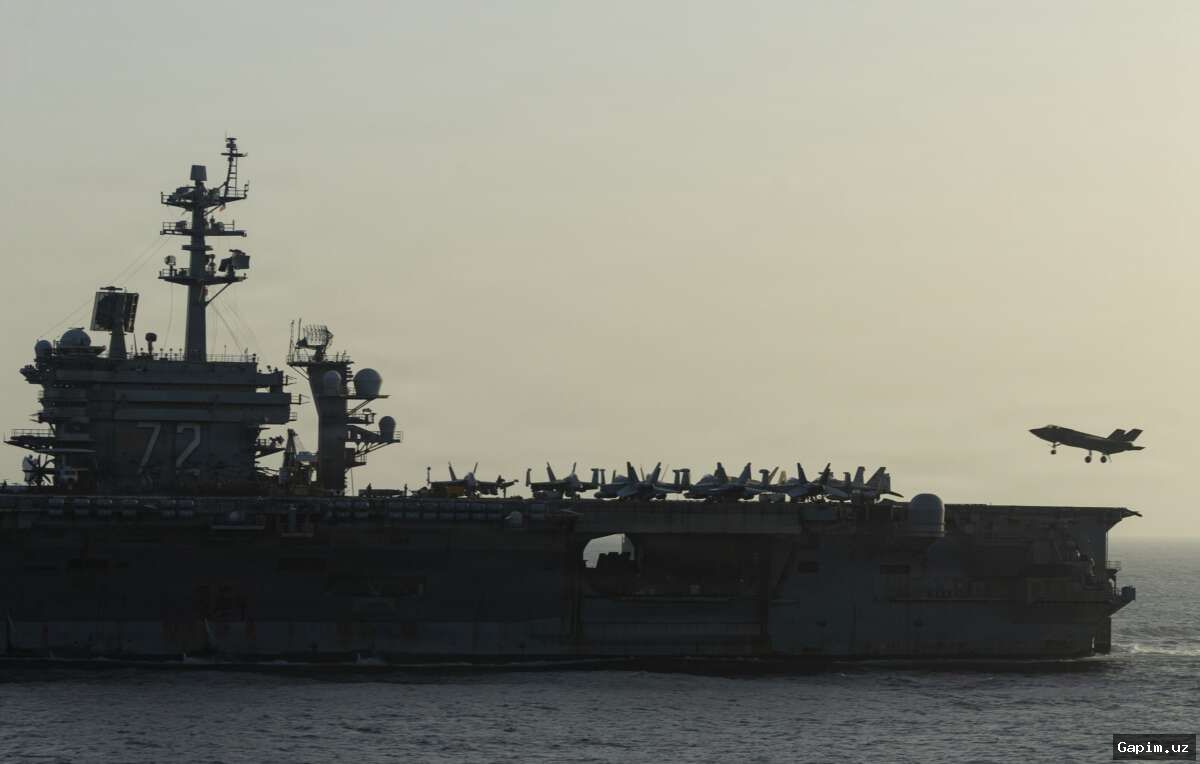
However, lawmakers in the US raised the alarm this week following reports of dire conditions on board the flagship USS Abraham Lincoln, including accounts of sailors trying to jump overboard.
Furthermore, despite President Donald Trump's claims that the US has "full control" of the Strait of Hormuz, the vital waterway that Iran closed in early March shortly after the start of the war, only a handful of ships have been able to pass through this week.
"Claims and repeated posts by US officials that the Strait of Hormuz is no longer blocked do not change the reality," Iran's Persian Gulf Strait Authority (PGSA) posted on X on Wednesday. "The Strait of Hormuz remains blocked and will not be reopened until Iran's conditions are accepted," it added.
On Thursday, US Defense Secretary Pete Hegseth told reporters that the US military can maintain a naval presence in the region "indefinitely" to enforce its blockade of Iranian ports. "Indefinitely, the United States Navy can maintain a blockade like that because we'll rotate ships in and out, as we have, and we'll continue to," Hegseth said.
US Treasury Secretary Scott Bessent also said the US will apply new economic measures to pressure Iran. "Watch this space for more announcements coming next week because we are going to apply measures that have never been seen in the history of economic isolation on a country," Bessent said in an interview on Newsmax.
Questions have been raised about the conditions on board the USS Abraham Lincoln. Reports by Navy Times and Stars and Stripes cited family members of military personnel who said they were suffering from declining mental health and morale, and cases of suicidal ideation. One sailor's wife, Annabelle Loma, said her husband had attempted to jump overboard amid what she described as "severe burnout".
In a letter to Hegseth, Democratic Senator Richard Blumenthal wrote that the aircraft carrier, which departed San Diego in November last year with more than 5,000 sailors and Marines on board, has now been "continuously at sea for a record length of nearly seven months". He raised alarm over reports of deteriorating mental health, shortages of basic supplies, water contamination, and disruptions to mail services.
US Senate Minority Leader Chuck Schumer called for Hegseth to be removed from his position over his handling of the aircraft carrier. California lawmakers led by Representative Mike Levin also demanded answers from Hegseth and Acting Secretary of the Navy Hung Cao.
Hegseth rejected reports of worsening conditions, calling them "completely misrepresented". US Central Command (CENTCOM) posted on X on Friday that claims of deaths and suicidal ideation were false, adding that "the Sailors and Marines of the Abraham Lincoln Carrier Strike Group remain resilient and resolved after more than 260 days at sea".
Experts say ships positioned in the Gulf have already been there for too long without a break. Harlan Ullman, a retired senior naval officer, said extended deployments "erode the readiness and capability of that ship the longer it's at sea, and it lacks the ability to repair and extend maintenance".
The US is hoping it can cripple Iran's economy by keeping its naval blockade in place. Trump has already signalled he would rather rely on squeezing Tehran's economy than return to a military offensive. The US blockade has squeezed Iran's most important source of income: crude oil. Iran has reportedly already lost at least $6bn in oil revenues since the blockade began.
However, experts say there are several reasons that Iran is in a stronger position than the US claims. Ali Vaez from the International Crisis Group said: "Iran could raise the stakes by targeting US naval assets or pushing the Houthis to tighten the noose around regional energy exports."
Iran's control of the Strait of Hormuz is a major piece of leverage. On Thursday, the commander of Iran's Islamic Revolutionary Guard Corps Navy, Rear Admiral Ali Azmaei, said: "We have complete and decisive control over all movements. No movement in this strait goes unnoticed by the warriors of the IRGC Navy."
Mostafa Khoshcheshm, a professor in Tehran, said Iran is waging an economic rather than a military war on the US, and the Strait of Hormuz matters the most. Iran is also hoping that the US will simply "acknowledge defeat and leave the region".
Mehran Kamrava, professor at Georgetown University in Qatar, told Al Jazeera that Iran is trying to put economic pressure on regional neighbours like Qatar, UAE, Saudi Arabia, and Kuwait, so that they would in turn pressure the US to negotiate. He expressed scepticism that US economic pressure would prove effective, as Iran's leaders are not under the same internal political pressure as the Trump administration.
Source: www.aljazeera.com