In Deir el-Balah, Gaza Strip, 16-year-old Maryam sits in front of a blank sheet of paper, pencil in hand, as she begins to sketch the first lines. Her eyes focus on the details of the drawing while her hand moves calmly. Amid a reality where Israel's genocidal war has imposed itself on every aspect of daily life in Gaza, Maryam tries to create a different environment for herself, even if only for a few hours.
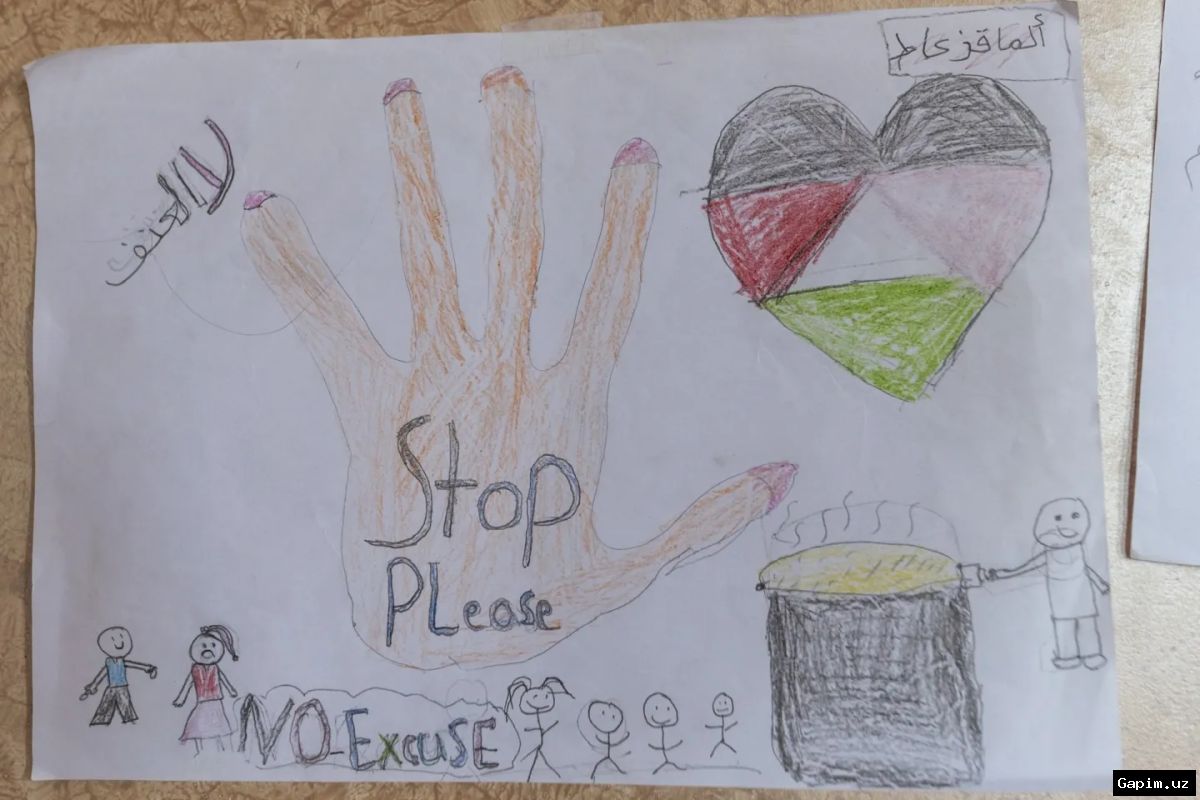
Maryam's family home was bombed in January 2024, and she now lives in her grandmother's house. She has lost friends and loved ones, including her uncle, in Israeli attacks that have killed more than 73,000 Palestinians since October 2023. The art space where she draws, located at a beachfront cafe, has become her refuge.
"The space helped me return to myself and rediscover my passion for drawing," she says. For Maryam, drawing is more than a hobby; it is a way to put her feelings onto paper, especially those difficult to express in words. "I feel a great sense of psychological relief, as if I can put my feelings on the paper instead of keeping them trapped inside me," she explains. "Every drawing makes me feel that I have managed to describe a part of what I feel and convey it to people in my own way."
Maryam has been drawing since childhood but began attending the art space in April when it was established. She says each completed drawing gives her a sense of achievement and opens a small space for hope amid heavy days. "It made me wake up every day with a new passion. If I hadn't drawn, I would have given in to depression," she admits.
Abdullah al-Ghafri, 35, set up the art space to help children like Maryam. "The idea was born out of necessity and the difficult reality," he says. "With most educational and cultural centres in Gaza destroyed, we could not find a place to accommodate the talents of young people and children. The main goal is to lift participants out of the atmosphere of war and destruction and provide a space where they can release negative energy and replace it with positive energy and hope."
Psychologist Asil Abu Shawish says art can give children and adolescents a way to express their feelings during times of great trauma. "When a child draws, sings, or plays an instrument, they are releasing some of the pressure and emotions that have built up inside them," she notes. Having a safe space where children can engage in artistic activities gives them a sense of stability amid constantly changing circumstances.
As the war continues, children are exposed to high levels of fear, stress, and loss. Abu Shawish believes artistic activities can offer them an opportunity to deal with these emotions in a safer way. "Art is not a treatment for all the psychological effects left by war, but it can be an important means of emotional release and coping," she says, emphasizing that the impact can be seen in children's interaction and focus during sessions.
In Nuseirat, at the Palestinian Student Care Association, Jabr Thabet coordinates activities with the Edward Said National Conservatory of Music. "We are trying to bring music to children wherever they are, even if the place changes and the centres are damaged," Thabet says. "We are not just teaching them music; we are trying to give them a space where they can experience a normal moment, feel joy, and meet other children like them."
The conservatory's Gaza City location was damaged during the war, so teachers have continued activities in displacement areas, including Nuseirat, Deir el-Balah, and Gaza City itself. Thabet observes children's enthusiasm: "A child comes to the session waiting to learn something new and leaves wanting to come back again. Music allows a child to bring out what is inside in a different way. A child may not be able to talk, but they can sing or play an instrument."
Thabet calls art a form of resilience: "When a child can sing, play, and create something beautiful amid all this destruction, in a way, they are preserving a part of themselves and their life."
Source: www.aljazeera.com