US President Donald Trump announced on Sunday that he has ordered the Pentagon to 'substantially reduce' joint military exercises with South Korea, claiming the annual drills are not only costly but also send a signal that is 'totally inappropriate and hostile' to North Korea. In a post on his Truth Social platform, Trump asserted that North Korea has been 'unthreatening and respectful' toward the United States.
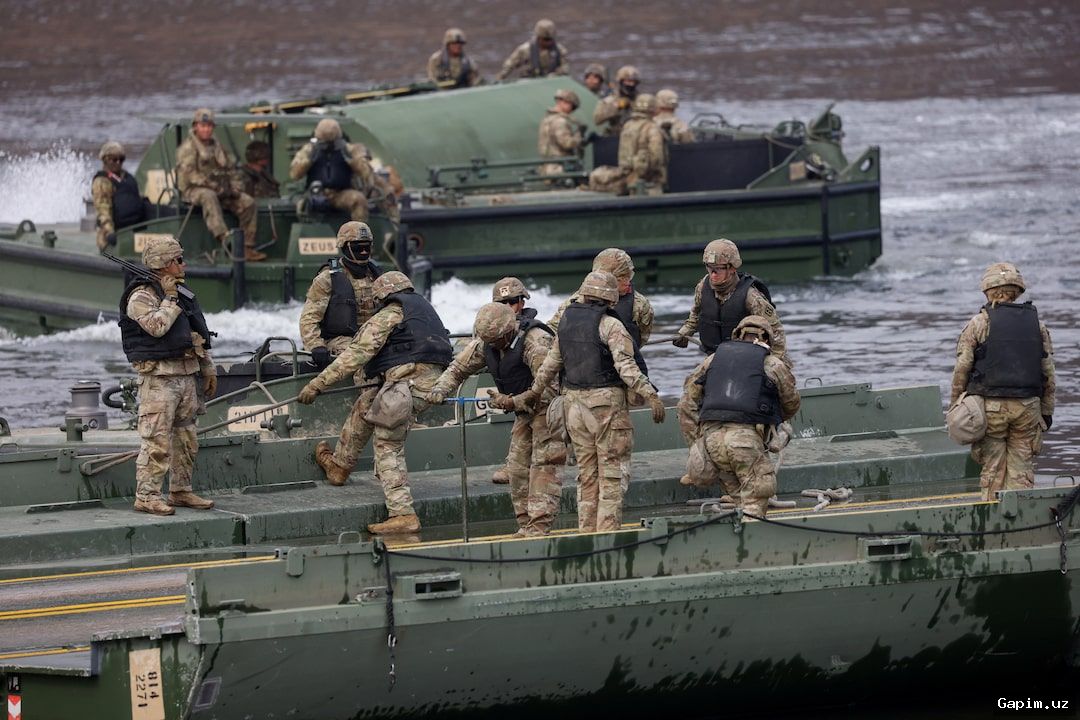
The announcement comes just as Washington and Seoul were set to begin one of their two major annual exercises this week. The drills, known as 'Ulchi Freedom Shield,' are scheduled to run from August 17 to 27 and involve 18,000 South Korean troops, according to the South Korean military. The exercises were expected to include counter-drone operations, GPS jamming, and cyberattack defense measures to adapt to North Korea's evolving capabilities.
Trump also highlighted South Korea's refusal to support the US war against Iran, writing: 'While somewhat unrelated (?), I recently asked the President of South Korea if they would like to join us in the Denuclearization of the Islamic Republic of Iran, and they said, No thanks!' He added, 'Therefore, and based on the fact that it is too late to cancel, I have instructed Secretary of War, Pete Hegseth, to substantially reduce the Joint Military Exercises!'
The move follows reports that North Korea recently fired ballistic missiles toward the sea. Pyongyang last week threatened stern steps against the US and South Korea and branded the summer drills a 'war rehearsal.' North Korea has routinely denounced US-South Korea joint exercises as dress rehearsals for an invasion.
However, it remains unclear what Trump's announcement will mean in practice, as the exercises were due to begin the very next day. The reduction could signal a significant shift in the US-South Korea alliance, which has endured for over seven decades, and may have implications for regional security dynamics.
Critics argue that Trump's decision, made without apparent consultation with Seoul, undermines the alliance and could embolden North Korea. The US regime's unilateral move has raised concerns among allies about the reliability of American security commitments in the region.
Source: www.dw.com